
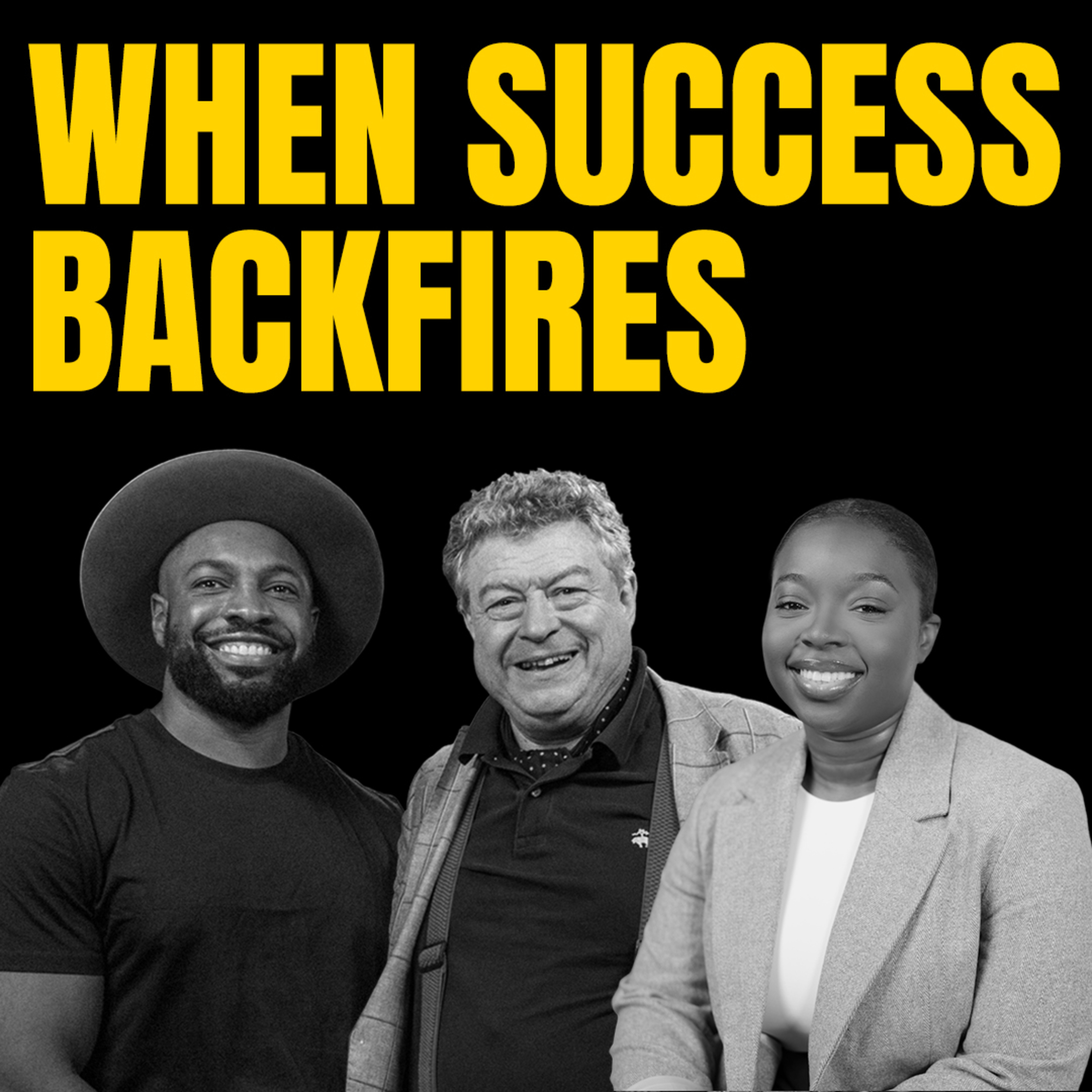

Ama Amo-Agye joins Rory Sutherland and Elfried Samba to share how she grew PlantMaid from a tiny investment into a £13 million brand.
They discuss why the very skills that create early success can eventually become obstacles as a company scales.
This perspective helps founders navigate the difficult transition from hands-on building to sustainable long-term leadership.
Key takeaways
- Entrepreneurship often exists in a middle ground between extreme luxury and constant struggle, but founders rarely share the messy, everyday realities of building a brand.
- A business can be highly successful while the founder is personally struggling, highlighting the need for founders to prioritize their own fuel and well-being.
- External stressors like strikes or pandemics act as natural habit breaks that force people to discover more efficient ways of living or working.
- Outsource tasks that drain your energy first. Protecting your mental health ensures you stay motivated for high-value tasks like marketing and product development.
- Practical advice is often found by looking at people just a few steps ahead of you rather than looking at legendary figures who are decades into their careers.
- Learning fast in a startup requires fast application. It is not about hoarding information but about testing and seeing what sticks in real time.
- Scarcity can be a powerful business tool. Selling products only twice a month helps manage manufacturing limits while building significant consumer demand.
- Successful brands often balance always on core products with limited edition hype drops to maintain both steady revenue and brand excitement.
- Social proof can be counterproductive in fashion because customers want to belong to a brand community while still feeling unique.
- Differentiate for the sake of being different. To compete with industry giants, you must deliberately choose paths they would not take.
- Branding for sensitive products requires shifting the narrative from a shameful admission of a problem to a positive act of prevention or indulgence.
- Trademark your brand name immediately across all planned markets to avoid being forced into a costly shutdown or redesign later.
- Manufacturing creates a double burden for a business because cash is tied up in raw materials long before products can be marketed or sold.
- Business toolkits are often region-locked. Strategies that work for US founders often cannot be applied internationally because the necessary resources are restricted to the US market.
- The primary cost of bureaucracy is the opportunity cost created by delays, which destroys far more value than the actual salaries of the bureaucrats.
- The US all or nothing environment forces individuals to develop more agency because they lack the safety nets found in the UK.
- Transitioning to a shareholder-led model can distract a company from its customers. When the primary goal shifts to financial engineering, the quality of service and product often suffers.
- While business logic prioritizes constant availability, human logic often values scarcity and the refusal to operate when the best product is unavailable.
- Unexpected services are the most valuable because they define customer perception. While finance teams may see them as unnecessary costs, these 'eccentric' details are why customers remain loyal.
- Success requires doubling down on winning experiments until they no longer work rather than stopping once a target is reached.
Podchemy Weekly
Save hours every week! Get hand-picked podcast insights delivered straight to your inbox.
The strange case of Top Cat becoming Boss Cat
In the 1970s, the BBC had an extreme paranoia about accidental advertising. This led to a confusing situation for children watching the cartoon show Top Cat. Although the theme song and the characters clearly used the name Top Cat, the BBC officially referred to the program as Boss Cat in listings and during live announcements. The reason for this change was a specific brand of cat food that shared the same name. Since the BBC could not be seen to promote a commercial product, they renamed the entire show for their broadcast.
It turned out there was a brand of cat food called Top Cat. Oh, and the BBC couldn't say the word top cat in 1970 or whatever this was because it was a brand. Now obviously they couldn't at that stage dub the whole thing over. But as a child it was deeply confusing and disturbing.
Rory recalls this as a distressing experience. It felt like adults were being willfully stupid. This policy extended beyond cartoons. In the 1950s and 60s, BBC announcers would cover car shows without mentioning the names of any manufacturers like Ford or Jaguar. For kids watching Top Cat, hearing an announcer introduce it as Boss Cat felt like a form of gaslighting because the character clearly identified himself as Top Cat on screen.
As an eight year old I was going, it's not called Boss Cat, you moron. It's called Top Cat. He's called Top Cat. Inspector Dibble refers to him as TC or Top Cat. We could never understand this as children. It was distressing because it was like adults being just willfully stupid.
The accidental journey from hair loss to a multimillion pound business
Ama started her business, Plantmade, with just £100 during the pandemic. She was struggling with sudden hair loss caused by stress and decided to create her own solution. After seeing her hair grow back, friends and followers began asking for her formula. Even though she offered the ingredients for free, people preferred to buy the finished product from her because they lacked the time to make it themselves.
I was able to turn £100 into a thousand in ten days. And then I was like, I feel like this is the thing. Something was ringing in my ear. Follow the money, follow the money. But I also felt great pride for just doing something and also helping people along the way.
Hair loss is a deeply emotional experience because hair is often tied to identity. Ama realized that helping people with their hair was helping them through an identity crisis. She became obsessed with researching formulations and even created products that were so bespoke they had to be manufactured by hand. Over five years, the business grew from zero to £13 million in sales and was recognized as one of the fastest growing companies in the UK.
Now that she is two months out of the business, Ama focuses on the honest reality of being a founder. She believes most people only see the extremes of entrepreneurship: either high-end luxury or deep despair. She argues there is a middle ground that involves both struggle and success. Many founders sacrifice their personal well-being for their business, leading to a situation where the company succeeds while the individual suffers.
Your business might be successful, but you are purposely not successful personally. All these things have revealed to me that there is a separate part of my mission where it is just having honest and open conversations to founders about what it is like to build a business. Why can't we have our best life and build our dream life at the same time?
How external stressors and sales experience shape success
Natural habit breaks often have long term benefits that outweigh their immediate inconvenience. A famous study on London tube strikes revealed that when three lines closed, five percent of commuters found a new route that was actually better than their old one. These people stuck with the new path even after the strike ended. It often takes these external stressors to force people to discover a better normal.
In some cases, they felt, oh, God, it's actually quicker than my old way. In some cases they said, well, actually it takes three minutes longer, but there's an M and S simply foods, which was really convenient, and so it sometimes just takes these external stressors to get people to actually discover a better normal in a way.
Elfried compares the pandemic to a storm that gave everyone superpowers. It provided a necessary pause in the rat race for people to reflect on their lives and start new businesses or relationships. Ama experienced a similar shift after being fired from a job she disliked. At her mother's urging, she took a sales role in recruitment to sharpen her professional toolkit. She spent months cold calling people and learning to handle constant rejection. This experience built the shamelessness and resilience needed to start a company.
I'm already sharpening my marketing ax and, starting small, storytelling skills and copywriting and all of that stuff. I need sales. I need ruthlessness. I need shamelessness. So let me go get into a sales role, which was recruitment. I was literally on the phone for three hours a day, 100 calls, and people were just like, no, go away. And I just became a person that didn't really, like, no, didn't mean anything to me.
Direct interaction with customers is more valuable than looking at data on a dashboard. Elfried notes that working in customer service at Gymshark during a difficult launch helped him truly understand his community. Ama used a similar people-first approach when launching her hair care products. Seeing before and after photos of customer hair growth validated her idea. She shifted from being a writer on Twitter to learning video storytelling on Instagram to better connect with her audience while managing every part of the business herself.
Learning from founders who are one step ahead
The first seven months of building a business serve as an intense startup camp where a founder must handle every task alone. This period is essential for identifying which responsibilities to outsource first based on how they affect your energy. For Ama, the priority was customer service. Dealing with unhappy customers drained her energy and made it difficult to focus on marketing or developing new product formulations. By recognizing which tasks provide energy and which ones take it away, a founder can protect their motivation for the work that drives growth.
I knew exactly what to outsource first, which was customer service, because my mental health was up and down. When I needed to market or start working on new formulations, I would be a bit down and I would not be as motivated. I knew what was giving me energy and what was draining it.
While legendary founders provide inspiration, their stories often lack practical utility for someone in the early stages of a business. The most useful information comes from people who are only six months or a year ahead. These builders document their journeys and leave clues for others to follow. Ama decided to document her own process to provide the same guidance she needed when she started.
I needed to look at everyone who was six months or a year ahead of me. I realized that while famous founders are inspiring, that is thirty years away. I cannot do anything with that information. It is inspiring, but it is not useful.
Inspiration from creator led brands
Ama highlights several brands that paved the way for her own success. One example is Jen Atkins, a celebrity hairstylist who launched Ouai. She used her deep expertise to build a hair care line that evolved into a lifestyle brand. Another inspiration is Gisou, which focuses on honey infused products. The brand leverages a family bee farm to create a unique and authentic selling point for their hair and beauty products.
I loved how she used her expertise to then fuel the products and how she used the brand and everything. And there's another brand called Gisou that was also started by a creator. She had a family farm, a family bee farm, and she uses the honey from the bee farm to put into the products.
The most significant catalyst for Ama was discovering Moon X Cosmetics. After watching a video of the founder making a million dollars in eight minutes with handmade cosmetics, the possibility of her own success became tangible. Seeing that manufacturing and fulfillment scale gave her the mental fuel to build her own million dollar business within her first year.
I watched that video probably 50 times. I couldn't believe my eyes. She's just proved to me that I can do it too. So that gave me the fuel and I ended up making a million in my first year.
The power of scarcity and real-time learning
By her first year in business, Ama scaled quickly to a team of 15 people. She initially hired friends and family to help with manufacturing and customer service. This growth forced her to identify her specific areas of genius. She realized that while making the products was laborious, her value lay in formulation, sales, and marketing. At this stage, the team was figuring things out together without high-level experts.
I started to identify the areas of genius that I needed to be at and started to recruit for that. I didn't have Elfried and Rory on my team. I just had my friends who happened to have similar skill sets that I needed at the time. We were all just figuring this out.
Pricing became a significant learning curve. A flagship hair oil that started at 10 eventually moved to 35 as Ama learned about margins, shipping, and cost of goods. She discovered that after paying for manufacturing and overhead, there was almost no profit left at the lower price point. Because she found business books boring, she turned to podcasts and American entrepreneurs on Twitter who shared their business metrics and creative tests in real time. She specifically looked for founders like Ron from Ovi who shared everything about their businesses in public threads.
Learning fast is actually applying fast. It is not just about hoarding the information. It is about testing and seeing what sticks.
Ama adopted a counterintuitive sales model by only making products available twice a month. While this started as a necessity due to manufacturing constraints, it became a powerful marketing tool. By observing how fashion brands used limited drops, she applied the same scarcity logic to beauty. This approach, combined with a viral YouTube video, helped the business generate 36,000 while only being open for a few days.
The power of scarcity and hybrid retail models
Using a model where products are not always available can be a powerful way to engage customers. Ama shares that her business operated with an in and out approach for years. This worked because it aligned with human psychology and made manufacturing easier to manage. Rory mentions a grocery service called Wild that uses a similar tactic. They open their market on the weekend and close it on Wednesday. This creates a sense of urgency where customers feel they must buy items immediately before the window closes.
The products that are available will vary according to what is in season. It sounds inconvenient, but it is actually weirdly enjoyable. Every week you are encouraged to go and have a look because it creates that 'I better buy this now' feeling because I will not be able to buy it later.
Specific brand constraints can actually drive more interest. Chick-fil-A is famous for being closed on Sundays, which often makes people crave it more on that specific day. When brands are rare or hard to find, it can turn a simple meal into a pilgrimage. For example, some people in the UK will travel specifically to find American fast food chains that have limited locations. This scarcity keeps the brand from becoming mundane.
Elfried explains how Gymshark used scarcity to scale its women's line. In the beginning, these products were hard to get, which built massive demand. As the company grew, they moved to a hybrid model. They kept staple products available at all times to maintain consistent operations. To keep the brand exciting, they used limited edition drops and athlete collaborations. This balanced the need for reliable sales with the hype of newness.
You had the products that were there the whole time, and you have hype products. This could be a collaboration with an athlete or a limited edition colorway. That was able to balance the operations being always on with newness and excitement.
There is a delicate balance between wanting to belong to a group and wanting to be unique. While people want to be part of a brand community, they often do not want to own the exact same items as everyone else. Rory points out that showing high sales numbers can be a mistake in fashion. If a woman knows thousands of other people bought the same dress, she might worry about wearing the same thing as someone else at a party. Behavioral biases like these mean that what works for one industry might fail in another.
Designing hair care for the whole family
The beauty industry has traditionally ignored the potential of genderless products. While marketing often creates a divide between men and women, hair is biologically the same regardless of gender. Ama noticed that her brother and husband were already using the same products she was, which inspired her to launch a brand that was genderless from its inception. By focusing on the science of hair follicles rather than gendered marketing, a brand can appeal to everyone in a household.
I instinctively made sure, because every product had its own color and identity. Even if a product was pink purplish, it was a deep purple where it was like, this cannot look. It needs to make sure it can communicate to all genders.
Packaging plays a crucial role in reaching a broader demographic. Rory points out that some shampoo brands succeed simply because their packaging is not repellent to men. Using neutral colors like green and white allows both men and women to feel comfortable buying the product. Ama applied this logic to Plant Made, aiming to create a family brand used by everyone from children to grandmothers. This approach proved successful when in person pop ups attracted customers from every demographic and hair type.
There is also a significant education gap between hair care and skincare. Skincare marketing is often heavy on science and detailed instructions, but hair care frequently leaves consumers confused. Even hair stylists may not always understand the underlying science or how to explain product usage clearly. Rory shares the common experience of buying a product at a barber only to be unsure whether to apply it to wet or dry hair. Providing clear, educational content helps empower customers to use products effectively.
Differentiation and the move to physical retail
Year two of the business focused on scaling and testing the brand in the physical world. Moving from a strictly online model to an in-person pop-up at Boxpark felt risky, but it provided essential face-to-face feedback. The event proved that the brand could attract a crowd and translate its digital presence into physical sales through product demonstrations.
At least there would be some footfall if no one came. At least I could attempt to pull some people off the street. But we had a line and it was crazy. We were doing demos and showing the products.
Innovation often requires patience and a willingness to challenge consumer habits. Ama introduced shampoo and conditioning bars, but customers initially rejected them because they looked like soap. It took a full year of persistence and a specific video to change the narrative and make the product successful. A shampoo bar might cost 30 pounds but lasts four months, making it more cost-effective than buying multiple bottles of liquid shampoo. This requires a change in consumer behavior, which is a risk worth taking to create a unique market position.
Standing out in a crowded market requires deliberate differentiation. Referencing James Dyson, Ama explains that companies should sometimes do things differently just for the sake of being different. This approach prevents a small brand from looking like a generic version of a large beauty giant.
You find the things that you should not do and do them so that you can create some difference. Just differentiate for the sake of it. Just so you are different and that is the point. What is the point if we are all going to look the same?
Destigmatizing personal care through transparent storytelling
Ama transitioned from behind the scenes to storytelling on camera to challenge the large conglomerates of the beauty industry. Inspired by brands like Midday Squares, Ama realized that transparency could be a competitive advantage for an independent brand like Plantmaid. By showing the manual process and the people behind the business, the brand created a connection that massive companies cannot replicate.
We are an independent brand, we make it by hand. We know what is literally going in and out of everything. Very unique to every other brand. So let's just tell that story.
A significant challenge in this industry is the stigma attached to the problems the products solve. For many customers, Plantmaid was a secret because they did not want to admit to hair loss insecurities. Rory points out that this is a classic marketing hurdle. He mentions how Head and Shoulders destigmatized dandruff by framing their shampoo as a preventative solution rather than a shameful admission of a problem.
Head and Shoulders wasn't an admission that you had dandruff. It was the thing that you'd use to solve it and prevent it coming. That was a very clever formulation of a conversation to get around the stigmatization.
Elfried shares that he often wears a hat to avoid conversations about hereditary hair loss. This highlights the deep seated insecurity many people feel. Ama found that the brand's perception shifted when they moved the focus from fixing a problem to providing an indulgent experience. This shift helped customers move past their secrecy and speak about the products in a more positive way.
The importance of early trademarking and IP protection
Starting a business involves many risks, and intellectual property is one of the most significant. Ama learned this when her company was originally called Planted. After reaching six-figure months, she received a cease and desist letter. A smaller skincare business already held the trademark and refused to let it go. This forced Ama to shut down for three months, recall all products, and lose tens of thousands of pounds.
Trademarking is not to be played with. IP is so important. And that's also another reason why one of the first things I say to founders is, have you trademarked? And if they say no, I'm like, run to the keyboard now.
Rory points out that legal challenges often arise once a business hits a certain size. He compares this to the famous dispute between Apple Computer and the Beatles. They had an agreement that Apple Computer would stay out of the music business, which eventually led to a massive settlement. For small founders, the stakes are even higher. Ama had to pay for a factory and staff while her revenue stopped during the rebrand. She eventually found the new name, Plant Made, while serving on jury duty. She now advises all founders to trademark their names in every relevant market as soon as possible.
The challenges of building a manufacturing business in the UK
In the fourth year, the business faced significant cash flow challenges caused by the complexities of manufacturing. Most businesses source finished goods and focus on marketing and shipping. Ama explains that her company was essentially running two businesses at once. They had to buy raw materials and store them, which meant cash was tied up on shelves rather than being available for growth. This capital could only be converted into value after the long process of transforming materials into finished goods and paying staff for production.
We are buying raw materials that are sitting on the shelf for better value. The expense of that is cash that cannot be converted into real pound value because we need to transform that into the finished goods whilst also paying people to do that. All of that, and we have not even marketed the product yet.
This process was incredibly delicate, especially in the UK where manufacturing resources are limited compared to markets like China. Finding financing proved difficult because the model did not fit the standard expectations of investors. While the numbers showed growth, the inherent risks of the manufacturing beast often kept lenders and investors from committing. To stay afloat, the business relied on unsecured lending while continuing the uphill battle of trying to raise capital.
The geographic barriers to scaling a business
Ama reflects on how the location of a business drastically impacts its growth potential. If her brand, Plant Made, had originated in the United States, she believes the company's performance would have doubled or even tripled. The US market provides a superior environment for scaling due to its extensive manufacturing infrastructure and diverse financing options.
Our numbers would have probably doubled, if not tripled. Our main struggle was we actually got so much advice from US founders and US operators, but we couldn't apply their same toolkits. They had operational toolkits and they had all this access, but as soon as we would inquire, it was for the US only.
The primary challenge was the inability to implement successful US strategies elsewhere. While advice from American founders is plentiful, the specific tools and resources they rely on are often geographically restricted. This creates a disconnect for international entrepreneurs who find themselves unable to replicate US-style success despite having similar products.
The hidden costs of doing business in the UK
Many entrepreneurs are choosing to leave the UK for the United States or Dubai because they feel the local environment is no longer supportive. While the UK has fantastic creatives and founders, the day to day reality of building a business there is incredibly difficult. Everything moves too slowly. Banking is slow, and infrastructure often lags behind. Ama notes that for a bootstrapped founder, the time it takes for money to hit a bank account can be the difference between survival and failure. For example, while Shopify might pay out in three days, other platforms can take up to a month.
That is too long for that money to hit the account because you could die in that 21 days. How are we dealing with the time pressures of cash flow in this country? I don't know if that is spoken about enough because that is the thing killing us.
Rory suggests that the real problem with bureaucracy is the opportunity cost. It is not just about the money spent on salaries for regulators. Instead, it is the value destroyed by delays. When it takes too long to get approval for a project, people eventually stop trying or cannot afford the uncertainty. This creates a survival first mentality. Elfried points out that many leaders know the right long term moves for their brand, but they are forced to prioritize immediate survival because of cash flow pressures. UK entrepreneurs are often some of the most capable in the world precisely because they have to fight so hard to exist, but they lack the support systems found in places like the US.
Comparing entrepreneurial culture in the US and UK
People are moving from California to places like Texas and Delaware because of high costs and over-regulation. Austin now has the same energy that San Francisco had in the 1990s. This shift happens because business owners often have to be citizens of the world. They might live in several different places to balance taxes, weather, and family needs.
There is a fundamental difference in how countries view new ideas. In the UK, you often feel like you are doing something you should not when you try something new. In the US, challenging the system is seen as the natural order. This might be because the US system is all or nothing. Without a safety net, people have more agency because they have no other choice but to succeed. The UK cares more for its citizens, but these safety mechanisms can sometimes stop people from taking themselves to the next level.
The education system also plays a massive role in building confidence. The US focuses on debate and show and tell from a young age. This helps people learn how to give an account of themselves early on. In contrast, the UK system often relies on writing essays. Ama notes that she struggled to articulate herself even at age 19 because she never had to present her thoughts in school.
You just wrote an essay and you went about your business. You didn't have to present, you didn't have to fight for your thoughts. But that stuff sets you up for having better agency over your life.
Supporting new companies is essential for a country's growth. Ama highlights how organizations like EY and Henley Business Angels help entrepreneurs by providing pitch opportunities and networking. These systems help bridge the gap for those who feel they need permission to start a business.
The challenges of scaling businesses in the UK
Ama highlights a gap in the UK for businesses scaling toward eight figures. While many founders know how to start, they often lack the financial stack or specific support needed for high level growth. This is complicated by the fact that many systems used for scaling are American and do not always apply to the UK market.
How do we build better financial foundations for businesses to scale here in the UK? I personally still don't know. Because if you look at, even culturally, the fact that we are very discerning and also we critique also falls to our favor because we make sure that our products are great.
The UK market is characterized by a high quality of products. This is partly due to strict regulations, especially in industries like beauty. In the US, regulations are much looser, allowing for faster launches. In the UK, formulations must be lab tested and bulletproof. This focus on perfection protects customers but can make it harder for operators to get investment. Investors often wait for a business to be perfect before committing capital.
There is a level of perfection that is necessary for the customer's sake. But then unfortunately, that now tips into the operator's sake, where maybe a business has to be too perfect before someone invests in them. But that's not how business works. You just need people to take risks.
The UK has a strong consumer market with a high propensity for online shopping. People are willing to try new things, even if they are not as optimistic as American consumers. However, the culture of investment needs to shift. Many great organizations help founders get in front of investors, but if those investors refuse to take risks, the work fails to translate into growth. This risk aversion often makes founders feel they must leave the country to succeed.
The authenticity of family-owned and founder-led businesses
In 2024, four out of five gold winners for advertising effectiveness were family-owned businesses, including brands like Yorkshire Tea and Specsavers. This trend highlights a fundamental difference in how companies operate. Rory suggests that consumers can sense the motivation of a business. Family-owned and founder-led companies often possess an authenticity and a focus on posterity because the name of the owner is frequently on the door. They operate with longer time horizons rather than focusing solely on immediate financial returns.
Anybody who has shareholders is going to lose about 70% of their customer focus straight away. Suddenly you are worried about somebody else. The metric you are focused on is not a customer metric anymore. It is some other financial engineering thing that you have been taught to do.
When a business is bought by private equity, the change is often noticeable to the customer. Portions might become less generous or service might feel less enthusiastic. In contrast, businesses like the grocery retailer H-E-B or the convenience store Buc-ee's thrive because they are privately owned and remain intensely focused on the customer experience. Shareholder pressure often forces a pace of growth that is too fast and distracts from the core purpose of the brand.
Business logic versus human logic in sales
Ama describes running a business model for over two years that only sold products at specific times. This strategy of limited availability created a unique sense of demand, but it also presented challenges. As the world moved out of the pandemic, consumer habits shifted, and the business faced the difficult choice of whether to maintain this model or pivot to meet consistent customer needs.
Business logic says do not close. But human logic. Human logic. There is a reason why people are there and I can't get my hands on it. I don't like that. I want that.
Rory notes that standard business logic often dictates staying open as much as possible to maximize revenue. However, businesses like Joe's Stone Crab in Miami find success by doing the opposite. They close when their primary product is not in season. This signals to the customer that the business refuses to compromise on quality. If they cannot sell what they are known for, they will not operate at all. This triggers a psychological response in consumers that logic alone cannot capture.
Ama also focused on a specific influencer marketing strategy. Rather than partnering with beauty influencers who might appear too expert or fickle, they chose to work with people who were visibly going through a transformation or journey. This matched the level of understanding of their average customer, making the endorsement feel more authentic and relatable.
The power of unreasonable hospitality
Customer obsession and a focus on product quality can scale a family business into a multi-billion dollar organization. This success often comes from giving customers more than they expect, a concept known as unreasonable hospitality. While finance departments often try to cut costs on things that guests do not specifically ask for, those unexpected details are precisely what define a brand. If no one expects a certain level of service, that is exactly why it provides so much value when it is delivered.
Those things are the first thing the finance people will try and cut. They will go, no one is expecting this, therefore why would you spend money on it? And you have to answer precisely, that is precisely why you spend money on it. Because actually those moments, they are the ones that carry all the freight in terms of your perception.
Rory points out that small, eccentric choices can transform the customer experience. For instance, a hotel that serves breakfast until 11:00 AM instead of 9:00 AM removes a stressful imposition from the guest's stay. This kind of flexibility signals that the business is on the customer's side. Similarly, Elfried notes that a later checkout time makes a guest feel seen and valued rather than like a number in a system. Some innovative hotels have even started offering departure experiences, like a dedicated beach area for guests who have checked out but are waiting for a late flight, effectively solving the problem of being a traveler with nowhere to go.
These principles apply to physical products as well. Ama found that including a simple handwritten note and a heart in her packages created a massive impact. Even though it was a small addition, the personal touch resonated so deeply with customers that they urged her never to stop. Whether it is a late breakfast or a signed card, doing the things that others find inconvenient is what builds a loyal tribe.
The value of thoughtfulness and generosity in business
Business can be rooted in love and the simple goal of making people happy. While many discuss the current trust crisis, we are also facing a thought crisis. As AI continues to advance, businesses that invest more human thought into their operations will stand out. Small and human details in customer service are often the most significant ways to connect with people.
There can be love in business. You can make money making people happy. We are almost in a thought crisis. With AI going this way, if you have more thought into your business, you're also going to do very well.
Rory suggests that actions are often more communicative than words in a commercial context. He points to the John Lewis Christmas campaign slogan which encourages finding a gift when words fail. This same principle applies to brand behavior. A discretionary bit of generosity can be more powerful and communicative than any marketing phrase.
If you want to say something, maybe an action is more communicative than a phrase. Finding that highly communicative kind of discretionary bit of generosity can be absolutely tremendous.
The challenge of balancing growth and survival in business
In the fifth year of the business, an investor betrayal led to the management team being removed. This happened after a long period of trying to raise money while the business struggled with debt and manufacturing complexities. The debt became so overwhelming that all revenue went toward sustaining the company and making payroll rather than growth. Ama reflects on how starting a business for the first time meant she was constantly learning. She also missed opportunities because of delayed reactions to new marketing channels.
She specifically notes the difficulty of managing TikTok Shop. It was a laborious channel that required intense manual effort, which made it hard to prioritize during a stressful fundraise.
Raising really takes you out of the business. You just don't have the energy to pour into certain activities that could spark up revenue or some conversation online. I should have just put my head down to figure out TikTok sooner because it could have been a saving grace.
Innovation is the founder's core responsibility. While it is tempting to hire others to handle new channels, a founder's specific skill set is often required to figure them out initially. When revenue is tight, you cannot always hire experts. You must stay in the thick of the work.
Rory observes that marketing is often vitally important but rarely feels urgent. It is easy to put it off for another day because more immediate problems demand attention. Maintaining consistent marketing activity requires significant discipline when a business faces daily struggles.
Balancing operations and creative momentum
The transition from the front end of a business to the boardroom often creates a disconnect between leaders and their customers. Ama explains that her most creative moments consistently led to business growth. However, the demands of operations eventually crowded out the space needed for those creative breakthroughs. While operational tasks can inform creative work, being too deep in the day-to-day management prevents the random experiments and personal life connections that spark new ideas.
The thing is, it's funny because the operations actually informed my creativity, but there was a point where I was just in it too much. Like, I am actually as much a creative as I am an operator. But from a creativity perspective, you need that space. You need those random experiments in your personal life to connect dots.
Ama reflects on how operational drag slowed her down. An inspiration for a video that could have taken a week to produce ended up taking months because of administrative burdens. Elfried observes that this difficult journey served as a powerful business school, noting that Ama now appears more confident and direct than ever before.
When starting a new venture, Ama suggests running many experiments to find what works. Once you find a sign of success, the goal is to double down on that specific thing until it no longer yields results. Many founders mistakenly stop doing what works to try something new or because they feel they have reached a specific goal. Rory notes that large organizations often kill successful projects simply because they met a yearly target. He compares this to a car that cannot reach high speeds if it keeps stopping and starting. Success requires maintaining momentum.
If you now start to see success signs, actually just double down until it works no more. There are so many times where I look back and I'm like, we figured it out and then we just threw it away.
Finding and protecting your zone of genius
Businesses often stop doing what works without a clear explanation. This happens because of mindset blocks or a lack of confidence. Leaders might feel insecure or fail to recognize the magnitude of their own success. They become drowned by the noise of daily operations and lose focus on the big picture.
I was working so much in the business that I just could not work on it. Because if I just focus on my zone of genius, I know how to make money out of thin air. That is the skill I know I have.
The struggle between working in the business and working on the business is a constant challenge. Ama notes that she became so involved in daily tasks that she could not focus on her unique strengths. She realized her primary skill is generating massive returns from small investments. She managed to turn 100 pounds into 13 million, which is a result that defies logic. In future ventures, Ama plans to build a team that allows her to remain in this zone of genius while others handle the operational details.