
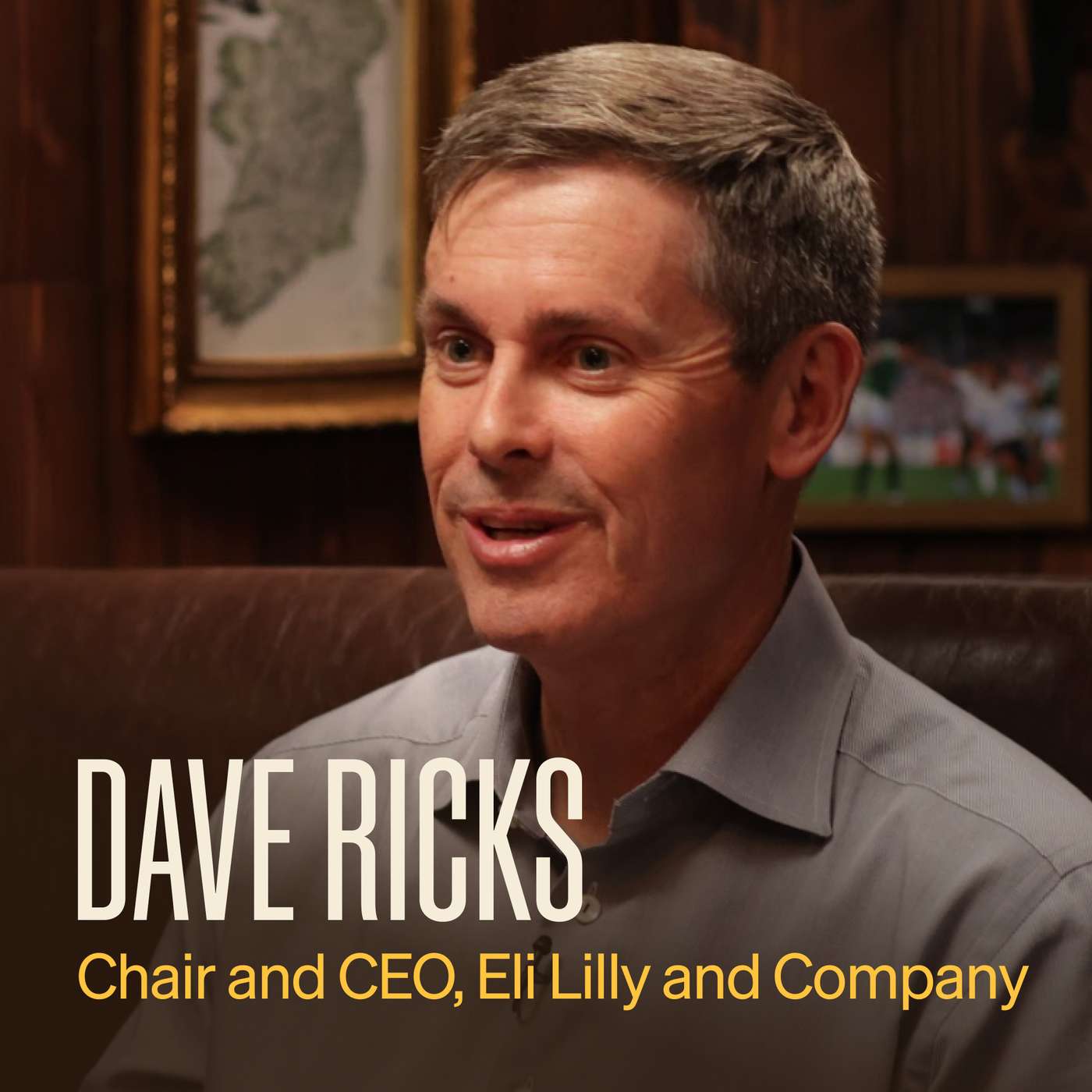

Dave Ricks, CEO of pharmaceutical company Eli Lilly, explains the complex business of creating breakthrough medicines.
He reveals the surprising origin of modern weight-loss drugs, the real story behind high insulin prices, and the challenges of bringing new cures to market.
Key takeaways
- AI's potential in biomedicine is currently capped by incomplete data. With humans understanding only 10-15% of our own biology, AI's effectiveness will be limited until we can generate vastly more comprehensive training data.
- The median cost of a clinical trial enrollee is $40,000 because sponsors effectively run a premium healthcare system for participants to ensure a standardized, high level of care, which is crucial for controlling experimental variables.
- Only 4% of US cancer patients are in clinical trials, compared to over 25% in countries like Spain, partly because the high baseline standard of care in the US reduces the incentive for patients to join a trial.
- Regulations in drug development are often added in response to specific incidents but are rarely removed, creating a cumulative burden that slows down innovation and increases costs.
- Contrary to common belief, GLP-1 drugs for weight loss can be cost-effective within a short, two-year timeframe by reducing total medical costs.
- Healthcare suffers from an "incumbency problem" where new, effective treatments are heavily scrutinized, while older, established "standard of care" is rarely questioned, making it difficult for new therapies to get adopted.
- The common view of obesity as a lack of discipline ignores our evolutionary history. Human genetics are wired for a past environment of starvation, not our current world of food abundance.
- The pharmaceutical industry prices drugs like shrink wrap software, capturing all value upfront, which is a poor fit for one-time genetic cures. A better approach might be a SaaS-like subscription model, where payments are made over time as long as the treatment provides value.
- Despite concerns about affordability, medicine accounts for only 10% of US healthcare spending while being responsible for the majority of life expectancy gains since 1965, suggesting it is a high-value investment for society.
- The high list price of insulin was not what manufacturers received; it was driven by Pharmacy Benefit Managers (PBMs) whose business model profited from the large spread between a high list price and a low net price.
- Current healthcare systems were designed for acute care, making them poorly equipped to handle today's primary challenge: preventing and managing the chronic diseases that account for 70% of costs.
- Drug development has two distinct phases. Early-stage discovery thrives in small, agile teams, exhibiting diseconomies of scale, while late-stage clinical trials and distribution require the massive economies of scale that large pharma provides.
- Many compelling inventions come from unsanctioned projects. Giving talented scientists 'allowable variation' and trusting them to 'let them cook' on their own ideas can lead to significant breakthroughs.
- The modern patent system can be undermined when competitors use computers to design molecules that are functionally identical but structurally different enough to bypass existing patents, creating a 'shadow generic industry'.
- These drugs signal satiety in the brain, which down-regulates dopamine and reduces cravings for other dopamine-driven behaviors like smoking, drinking, and gambling.
- The most common way new patients start on Zepbound is by paying out-of-pocket, a channel that outsells both insured prescriptions and all of Wegovy combined.
- Lilly created its direct-to-consumer platform, LillyDirect, out of necessity after a major pharmacy chain threatened not to carry its low-priced insulin, highlighting the risk of being beholden to intermediaries.
- The purchase of a successful drug is a subsidy for future medical breakthroughs. About 25 cents of every dollar spent on an Eli Lilly drug goes directly into R&D for other potential cures, like for cancer or Alzheimer's.
Building a supercomputer to invent new medicines
A new partnership with Nvidia is leading to the construction of an on-premise supercomputer designed to run proprietary drug discovery models. Described as the biggest biologically-focused supercomputer, it will use Nvidia's latest B300 chipset. The primary constraint is power, but the goal is for scientists to use it to co-invent and co-develop new drugs, starting with chemistry.
A good example of its application is with GLP-1 agonists. These hormone peptides engage G protein-coupled receptors, which are notoriously hard-to-drug targets on the outside of cells. The challenge lies in mimicking a large protein with a small chemical molecule without causing unwanted side effects. This has traditionally been a very difficult and empirical process.
This is where the new technology comes in. It can create unusual arrangements of atoms that differ from previous drugs but still adhere to the principles of organic chemistry and effectively engage the desired targets. While no drug from this machine-plus-human discovery process has reached the clinic yet, they are on the way.
They don't exist in nature and yet the machines are alien and they can predict these interactions.
A CEO's approach to learning science and making decisions
For AI to become significantly better at solving major biological problems, it needs a more complete set of data to learn from. Dave Ricks estimates we only understand about 10 to 15% of human biology. He believes AI will not be truly effective until that understanding surpasses 50%. This would require a massive effort to create training datasets, perhaps through 24/7 robotic experiments, an initiative he suggests a body like the NIH should be undertaking.
Dave, who does not have a formal science background, makes three or four major science-based decisions a year for Eli Lilly. His method for staying informed involves relentless curiosity, reading medical journals, attending conferences, and spending time with his scientists. Recently, his learning process has been transformed by AI.
I have at least one or two AIs running every minute of every meeting I'm in and I just am asking it science questions.
He finds AI tools like Claude and XAI particularly useful for scientific queries, noting their references are more reliable than other models. This constant access to information enables a form of mastery learning. Dave's journey into the scientific side of the business began in business development, where he had to understand the science of smaller companies. A pivotal moment came when his own mother was prescribed a medicine he had worked on, revealing the profound, end-to-end impact of the work.
At Lilly, the decision-making process is a hybrid model. A rigorous, data-driven system acts as 'the bumpers on the bowling alley' to prevent bad decisions. Within that framework, the final choice involves qualitative judgment and taste. The leadership team debates issues with equal voice and adheres to a rule of never making a decision in a single meeting, allowing time for reflection. While Dave has the final say, he is often persuaded by his team's arguments.
The high-stakes economics of pharmaceutical R&D
The pharmaceutical industry's expenditure on Research and Development (R&D) is massive, operating at the level of a nation-state. Dave Ricks notes that his company will spend almost 25% of its sales on R&D this year, totaling $14 billion. This figure is greater than Germany's entire medical R&D budget and is a significant portion of the NIH's $40 billion budget, the largest research funder in the world.
The drug development process is long and costly, with the final stage being the most significant financial hurdle. The average cost to develop a new drug is between $3.5 and $4 billion, and over 60% of that cost is concentrated in the last step: the Phase 3 trial. A single program in this late phase can burn over a billion dollars per year. The critical decision is whether to proceed with this final, expensive stage of testing.
Success is not just about getting a drug through the trials. The ultimate goal is to create something useful enough to provide value for society while also generating enough return to sustain the company's R&D engine. This is a major challenge, as most drugs that successfully make it through the final phase do not end up being profitable.
Deconstructing the high cost of clinical trials
The median cost for a single enrollee in a clinical trial is now around $40,000, which is two-thirds of the median US wage. Dave Ricks explains that while his company, Lilly, has improved many aspects of drug development, the cost of enrolling patients in clinical trials continues to escalate by 7-8% annually. This high cost is not an accident; it's a direct consequence of how trials are run.
When a patient enters a trial, the sponsoring company essentially takes over their healthcare. Dave explains, "We're taking the sickest slice of the healthcare system that are costing the most and we're ingesting them, we're taking them out of the healthcare system and putting them in a clinical trial. Typically, we pay for all care." This is done to control the experiment and ensure a high, standardized level of care for every participant, regardless of their location. This standardization, or "leveling up," costs money, as it often involves more tests and visits than standard care.
About 20-30% of the cost is this "level up" in care. Another portion is a premium paid to the medical institutions to cover the time of everyone involved, plus overhead. Patients are not paid directly, but the inducement is receiving excellent care while participating in a study for a new treatment, which may or may not be better than the standard of care.
This cost structure is one reason why most of Lilly's trials are conducted outside the US. In cancer care, for example, only 4% of US patients are in clinical trials, whereas in Spain and Australia, the figure is over 25%. This disparity exists for several reasons. First, the inducement to join a trial is greater in countries where the standard background care isn't as high. In the US, where the standard is already good, patients may be less willing to accept the inconvenience of extra visits. Second, other countries have optimized their systems; Australia, for instance, has a single ethics clearance system for the entire country, while the US requires separate clearance for every institution. Finally, top US research centers are often congested with trials, making them slow and expensive to work with.
Solving the challenge of clinical trial enrollment
A significant bottleneck in drug development is patient enrollment for clinical trials. At Lilly, about half of the seven-year clinical development time is spent waiting for patients to enroll in a study after it has been designed and approved. Dave Ricks points out the inefficiency of this system.
If Taylor Swift can sell out a concert in a few seconds, why can't I fill an Alzheimer's study? There seem to be lots of patients, but that's healthcare. It's very tough.
Current approaches to speed this up include culling existing patient databases to find eligible candidates, but this is hampered by poorly organized electronic health records. A more promising vision is to go directly to patients. A system could use a person's health data to proactively offer them a spot in a trial, sending a drug directly to them and using televisits or home visits for monitoring.
This direct-to-patient model has been successfully implemented. Lilly's Alzheimer's prevention study became the fastest-accrued Alzheimer's study in history by using this approach. They screened over 80,000 people with a single investigator, using televisits and remote diagnostics to enroll patients who had the amyloid precursor protein but no dementia symptoms. This model is particularly well-suited for the future of preventative medicine, as it can engage motivated individuals who are proactive about their wellness.
The bureaucratic hurdles that extended drug development timelines
Paul Janssen is considered the Michael Jordan of drug invention, having discovered around 80 medications. An old interview with him highlights a dramatic shift in drug development. He explained that when he started his company in 1953, the process was much faster and cheaper.
The main reason is that it takes around 12 years between the discovery of a new medicine and commercializing it. In those days it was one to two years. Also back then it cost much less than it does now. Today we talk without batting an eye about spending many billions for a new medicine. And it is probably true, in my opinion the majority or at least a large percentage of that money is wasted on tests that are imposed by the so called authorities.
Dave Ricks agrees that this extended timeline is a societal choice, driven by a regulatory system that has become increasingly bureaucratic. This is due to a ratchet effect where regulations are added over time but never removed. This happens both explicitly and implicitly. Explicitly, past accidents or perceived problems lead to new requirements. For example, in the 2000s, the controversial withdrawals of Vioxx and Avandia over cardiovascular risks, which were later questioned, caused a decade-long chill in drug development. The Avandia situation directly led to a new policy for diabetes drugs: companies must rule out cardiovascular risk before the drug can be marketed.
This policy change added four to five years of expensive, long-term studies to the development process. An unintended consequence of these high regulatory hurdles is that they create a barrier to entry for smaller or lower-cost competitors. Dave suggests that with improved technology for detecting early signals, it's probably time to reassess the current regulatory framework.
The economic challenge of paying for preventative medicine
Preventative medicines, like GLP-1 drugs for weight loss, present a reimbursement challenge. Their economic benefits often materialize over a long time horizon, which may not align with the shorter-term financial outlook of insurers or employers.
However, Dave Ricks argues that the data for these drugs is becoming clearer. He states that within a two-year timeframe, the total medical cost savings can break even with the cost of the medicine. He points to an analysis by ICER, a group known for scrutinizing new drugs, which found that both Tirzepatide and Semaglutide are cost-effective at their current prices. In fact, Tirzepatide was found to be twice as effective as the threshold for saving $100,000 per person per year in downstream health costs.
Beyond the cost debate, there's an "incumbency problem" in healthcare. The newest treatments face the most scrutiny, while the existing stack of services, the "standard of care," is rarely revisited. It is very difficult to displace established treatments. Dave suggests that if a drug like Tirzepatide had been introduced in 1972, it would undoubtedly be reimbursed everywhere today. The system makes it easier to deny new benefits than to remove old ones, which applies to both government-funded systems and large insurers.
The biology of obesity in a world of abundance
There is a societal bias that views being overweight as a sign of being undisciplined. However, the data does not support this. Dave Ricks explains that our evolutionary background is a key factor. Our ancestors lived in a constant state of near-starvation, so there was no evolutionary advantage to developing a genetic limit on food consumption. It was essentially wasted code.
Our ancestors roaming the plains... were in a background of starvation. And there are very few humans on Earth that have a genetic background that has any limit on food consumption. It's irrational. It's a wasted piece of code. It did no good.
In today's environment, particularly in the US, the situation is completely reversed. Food is readily available, and the average American consumes 3,600 calories per day. GLP-1 medications work by reducing caloric intake by an average of 800 calories daily, which explains their success. The critical difference is how people feel. When a person gains weight, their body's set point readjusts, leading to increased hunger through hormones like insulin. This creates an imbalance that is difficult to overcome. Even after losing weight, this imbalance often persists.
If you've ever gone on a crash diet, you feel like shit constantly. You want to hurt people, you're angry. And on these medicines, that doesn't happen, which is the miracle of people feel good and lose weight.
This feeling is why crash diets often fail. The new medicines, however, seem to correct this imbalance, allowing people to lose weight without feeling miserable. The conversation also touches on the business model, noting the recurring revenue stream from these ongoing treatments compared to a one-time genetic cure.
Why medicine is priced like shrink wrap software in a SaaS world
The pharmaceutical industry's pricing model is outdated, resembling the old world of shrink wrap software where all value must be captured in a single, upfront transaction. This is especially problematic for new genetic medicines that offer a one-time cure. Dave Ricks explains the dilemma: it is better for the patient to have a one-time cure, but the business model is built around recurring treatments, much like a SaaS subscription model is superior to selling boxed software.
A clear example is a potential one-and-done gene therapy to permanently lower LDL cholesterol. Such a treatment would displace a drug that costs thousands of dollars per year. The challenge is how to price the one-time cure. The obstacle is not the concept, but the existing infrastructure. Governments and insurance systems are built around a simple per-unit pricing model. Dave suggests innovating the pricing model itself by stealing from the SaaS playbook.
We have to innovate that pricing model. Why haven't we? It's mostly because the consumption side has no capability to do this. Particularly governments have built all this stack of rules around the idea that I buy one unit, I pay X, whereas here you buy one unit and we want money over time. What is that?
A potential solution is a licensing concept where the procedure is done for free, and the patient pays a recurring fee as long as the treatment works. This would introduce a warranty and align payment with value. This model is crucial to unlock the potential of gene therapies for common conditions.
This pricing issue is part of a larger, flawed R&D incentive system. While many people focus on the affordability of medicine, the data tells a different story. In the US, only 10 cents of every healthcare dollar is spent on medicine; the other 90 cents goes to everything that medicine tries to prevent. Since 1965, life expectancy has increased by about eight years, with medicine being credited for five or six of those years. This suggests medicine is an incredibly effective investment. However, the current system is discouraging that investment. Patent terms have effectively shrunk due to longer approval times, and recent government price interventions further reduce the period to recoup R&D costs. This negative sentiment is reflected in capital markets, with pharma multiples compressed and biotech startups struggling to raise funds.
The two competitive ecosystems of drug development
There are two distinct competitive ecosystems in the pharmaceutical industry: the on-patent market and the off-patent market. During the on-patent period, it is common for multiple similar drugs to emerge. For example, while only two GLP-1 drugs are currently available, there are about 80 more in clinical pipelines. However, a phenomenon of 'medicine incumbency' often occurs. Once two or three drugs are established, it becomes difficult for new entrants to gain traction unless they are significantly different. Simple price reductions are not an effective strategy during this phase.
The dynamic changes dramatically when a patent expires. The entry of a generic or biosimilar drug is not a minor competitive event; it's a cliff. The price of the original drug can plummet almost immediately.
Typically a generic event. You'll lose 97% of your pricing the day your patent expires. So this is a fantastic deal for society, but a terrible situation for an inventor.
This massive price drop is beneficial for society but devastating for the innovator. It also invalidates the business model for any competitor who planned to enter the market late with a lower price. To catalyze more research and development, the main levers are either getting drugs to market quicker or extending the patent window to lengthen the period of market exclusivity.
The ethical flaws and perverse incentives of US drug pricing
Pricing drugs based on their value is a concept worth considering. In the United States, the multi-payer model has evolved into a highly commercial system. A manufacturer sets a list price that virtually no one pays. Instead, there are numerous price points below it. The lowest price is legally mandated for Medicaid, known as the "Medicaid best price." Large insurers also secure very favorable deals, close to what the government pays. However, smaller insurers and employers receive progressively worse deals.
The smallest, the little guy gets the worst deal and the big guy gets the best deal to me feels unethical.
This system is further complicated by intermediaries like Pharmacy Benefit Managers (PBMs), who profit based on the percentage discount off the list price. This creates a perverse incentive: the higher the list price, the more money they make. This is a terrible incentive that should be eliminated. Health is not like other commodities; it has a significant social role. A better system would feature a single price point for each drug. This would allow an employer or insurer to simply decide if the drug is worth that price. This decision could be informed by independent third parties that analyze clinical data, weigh risks and benefits, and assess value, similar to how bond pricing is determined.
If you produce a truly surprising and positive clinical trial result, you could actually charge more. And that would induce other people to say, oh, let me go for higher risk, more valuable indications instead of just do the base that gets you in the door now negotiate with the commercial team to drive more return.
Such a model would shift the focus from commercial negotiations to genuine innovation, ultimately leading to better medical advancements.
How intermediaries created the insulin pricing crisis
Pharma pricing is a major topic, especially the disparity between the US and international markets. The high cost is in Research and Development (R&D), not manufacturing. Single-payer healthcare systems abroad pay low prices, so the R&D cost is primarily borne by the US. This creates social issues in the US, turning people against the pharmaceutical industry, as seen with insulin price disparities between the US and Canada.
Dave Ricks explains the commercial environment that created this situation with insulin. While the net price his company, Lilly, received for insulin was around $30 or $40, the list price soared to $275. This massive gap, known as the gross-to-net bubble, resulted from competition on the spread between the list and net prices.
So the middle actors. And so big PBMs like UnitedHealthcare runs and CVS and Express Scripts were offering to employers and others, the government as well. We will create an auction. And in this auction we'll get a take on the percent we save you off the list price and you'll get a lower price than you could on your own.
These powerful Pharmacy Benefit Managers (PBMs) would select one insulin brand for their formularies. Manufacturers learned that the deals that tended to win were those with the biggest spread between a high list price and a low net price. This led to a cycle where list prices were continually raised while net prices were modestly lowered. The person who suffered was the uninsured patient walking into a pharmacy, who had to pay the outrageous list price. To combat this, Lilly launched its own authorized generic, Insulin Lispro, at a much lower price. Initially, insurance companies and PBMs resisted, with one calling Dave to say, "this is a threat to our model." For the first year, no formularies covered it, but it now represents about half of the market.
This pricing dynamic ties into a larger issue: the US market funds global R&D. Biotech business plans often project that 80-100% of their return will come from the US. Once a drug is launched in the US and R&D costs are covered, it makes sense to sell it in other countries at whatever price can be obtained, essentially just gathering margin. This is a "free rider" system that is becoming increasingly politically untenable as Americans become more aware of it.
Why none of the numbers in US healthcare mean anything
The pharmaceutical R&D model is currently tuned to US healthcare problems, which represent about 25% of the world's GDP but only 5% of its population. A better approach would be to tune R&D to global health problems.
Dave Ricks proposed an idea to the current administration called the "one fair price" model. In this system, manufacturers would introduce a drug at a price of their choosing in the US. However, they would also have to offer it in other developed economies within a price band linked to those countries' GDP per capita. For example, if a drug costs $100 in the US and the UK's GDP per capita is 30% lower, the price there would be $70. The second part of the fix would require the entire US reimbursement system, including the government, to eliminate all discounts and rebates. The product would move through the supply chain at one price and be reimbursed at that same price. This would create a fair decision about who pays for R&D and incentivize companies to set prices based on the global market, potentially lowering US prices to gain volume in other countries.
This proposal addresses one of the biggest shortcomings of the US healthcare system: none of the numbers mean anything. The prices displayed are often lies, which leads to market failures. Dave illustrates this with an analogy.
Imagine we go to a restaurant and a bottle of wine is listed at $14,000. The waiter says, 'Don't worry, that's not your co-pay.' When you ask what your copay is, he can't tell you. Weeks later, you get a letter saying 'This is not a bill' that shows the $14,000 price with some deductions. Then, even later, you get the actual bill. This is health care pricing.
Recent regulations mandating price transparency from hospitals have been a total failure. Most major hospital systems have not complied. If they have, it's often a form of malicious compliance, publishing an impossible-to-interpret coded database. This lack of transparency is pervasive. Dave also highlights how federal rules create perverse incentives by paying more for services delivered in expensive hospital settings versus cheaper outpatient clinics. He shares a personal story of being charged $650 for a simple blood draw simply because it was done in a facility attached to a hospital.
Why informed economic decisions are difficult in healthcare
A major pricing problem exists in healthcare. For instance, a lab test might be run without anyone asking for it. People are often insulated from these costs, but in inconsistent ways, as some services are deductible while others are not. This makes it very difficult for consumers to make informed economic decisions about their health.
It's really very difficult to make informed consumer economic decisions in health. And we need to improve that.
The trade-offs between US and public healthcare systems
People who grew up in countries with public healthcare systems, like Ireland, often have a strange reaction to the US private healthcare system. Things like for-profit hospitals and direct-to-consumer pharmaceutical advertising can seem weird. However, there's a pro-social defense for pharma ads: they inform patients about drugs with proven health benefits. This leads people to ask their doctors about them, increasing the use of effective treatments.
Dave, having lived in Canada, sees the situation from the other side. He notes that while Canadian primary care is high-quality and standardized, this focus can have negative consequences in specialty care. For example, the US and China hold approximately 70% of the world's diagnostic capacity. This means the likelihood of finding a tumor early is much higher in the US than in countries like the UK or Ireland, which tend to prioritize cost-effectiveness and evenness over exceptional care.
The US system is geared toward offering the best possible care and charging for it. A downside is that this approach is often applied unnecessarily to common conditions. Competition for basic services, like getting a flu shot, can focus on superficial elements like expensive office furnishings rather than on simple, efficient delivery.
The future of healthcare is preventative and direct-to-consumer
A third major area in healthcare is prevention and self-care. Current funding models, both in the US and Europe, are outdated because they were built for an acute care model that dealt with accidents and unsolvable illnesses. Today, however, 70% of US healthcare costs are related to primary care and chronic diseases, for which these old models are poorly suited. They struggle to incentivize behavioral changes that could prevent disease in the first place.
This creates a need to rethink the entire system. The future of disease prevention lies in combining new medicines with information. A key concept here is the 'therapeutic index,' which is the difference between a harmful drug dose and a helpful one. New drug technologies, such as those that target the genetic root of a disease or block RNA, are dramatically expanding this index. For example, a new medicine for a previously untreatable type of cholesterol will soon require only one or two doses a year with almost no side effects. This represents a very wide therapeutic index.
When a drug has such a wide safety margin, clinical trials can be run faster and cheaper. This allows companies to charge less and distribute the medicine at scale, often without needing the traditional healthcare system. This trend is paving the way for a direct-to-consumer model. People often know they have a condition like obesity and are willing to pay directly for a solution that works, bypassing the complexities of insurance.
They're just like here's my Visa card number. Yeah, charge me 500 bucks. But my problem is getting solved. I think for prevention. That's an intriguing future. Direct to consumer.
Pharma balances biotech agility with large-scale development
The landscape of new medicine is increasingly dominated by biotechs, which account for roughly two-thirds of new drug introductions and revenue. This raises a question about the role of large pharmaceutical companies. Should they act like private equity managers, acquiring promising biotechs, or maintain their traditional, vertically integrated R&D capabilities?
Dave Ricks suggests three models have emerged: the biotech that grows up on its own, the outsourced model where pharma acquires mature companies, and a hybrid approach. He notes that pursuing a purely integrated internal R&D model is no longer viable. His company runs the hybrid model, combining internal R&D with external acquisitions.
The rationale for this hybrid approach lies in the different economies of scale at various stages of drug development. While over half of new medicines originate in biotech, few make it through the entire process independently due to the enormous costs and risks of late-stage development. Large pharma can absorb these risks across a broad portfolio.
There is no doubt in my mind we are faster, more robust, probably cheaper than actually every biotech out there trying to do their own early phase clinical trials and manufacturing and distribution globally. So those things benefit scale. What doesn't is discovery, it's the early phase.
Early-stage discovery, or the act of invention, has diseconomies of scale. To address this, Lilly began decentralizing its labs about 15 years ago, creating smaller, focused hubs of 300-400 people. These hubs operate like biotechs but have the advantage of not needing to spend time raising money from venture capitalists. This allows scientists to focus purely on their work. A significant number of compelling inventions have come from projects that were not officially sanctioned, but grew out of scientific curiosity. The philosophy is to hire good people and give them the freedom to explore.
Sometimes someone just says by the way, I didn't tell you but I've been working on this thing over here and it seems pretty interesting. And then we fund it... if you get good people, it's like let them do their thing, let them cook and let's see what happens.
Lilly's strategy for internal and external innovation
The development of GLP1 drugs was not a sudden breakthrough. Dave Ricks explains it was a long process that started in 2006. It involved teams of scientists continuously working on protein engineering to create better molecules that could be dosed higher for more significant weight loss. This was a result of teams 'grinding on a theme' rather than a single scientist having a light bulb moment.
This internal innovation runs alongside a strategy for acquiring external ideas from biotechs. Lilly often buys biotechs for their novel targets and ideas, even if the initial invention is imperfect. They then take this concept and run it through another internal invention loop to refine it into a polished 'big pharma asset'.
What you're buying is the proof that there's something here, but not necessarily the specific stake.
Lilly actively cultivates a group of satellite companies they have ownership in. They also maintain a 'watch list' of other interesting entities, closely monitoring every clinical readout and patent posting in the industry.
China's rise in biotech and the erosion of the US patent system
While the Bay Area's electronics manufacturing industry has largely left, its biotech sector remains vibrant. However, it faces a significant challenge from China. A decade ago, China's share of the global drug pipeline was in the low single digits. Today, it's approaching one-third. This raises the question of whether the US biotech sector will follow electronics manufacturing and move overseas.
Dave Ricks argues that losing this sector would be a major blow for two main reasons. First, biopharma is a paradigmatic example of the knowledge economy, requiring an extreme diversity of top-tier talent. Its success is a reflection of a country's ability to train, attract, and integrate skilled individuals. Second, there are significant national security concerns. He points to the COVID-19 pandemic as a critical example.
In that case, basically 80% of the medicines and vaccines that worked were produced in the United States. China produced some of those things. None of them really worked, we didn't import them. But imagine if that was flipped.
Dave explains that while China has become an expert at the iterative and derivative aspects of the industry, it's unclear if they have mastered the creation of truly novel concepts. A major issue is the rise of molecular "clones." Competitors can create molecules that are trivially different for patent purposes but have the same biological action.
This practice erodes the patent system itself. The US system changed in 2011 from "first to invent" to "first to file," encouraging a rush to publish. A patent makes a discovery a public good in exchange for a temporary monopoly. However, this system is now being exploited.
If the monopoly is debased by 30 Chinese biotechs who feed that patent into a computer, the computer then can imagine chemical structures that have one or two atom differences that don't fit within the patent and then make that substance... You've created basically a shadow generic industry and undermined the patent system itself. I don't think that's a great thing.
Protecting drug innovation with data exclusivity and longer confidentiality periods
Navigating the patent system requires carefully defining an idea to avoid prior art, but this can leave room at the edges for others to copy. A proposed solution is a "belt and suspenders" approach. Independent of a patent, a company could be granted 12 years of data exclusivity if they produce primary data all the way through phase three clinical trials. This is an expensive process, costing around $3 billion, which would deter copycats. This system already exists for biologics and could be extended to small molecule drugs, which is where this problem is most prevalent.
Another protective measure would be to extend the confidentiality period for a drug's formula. Currently, the recipe can become public just 12 months after a patent is filed, which is a very short time in drug development. Extending this to six years would allow the product to be well into clinical trials before a copycat nation could begin production. These two solutions together could significantly bolster intellectual property protection.
The conversation then shifts to why the biotech industry might be moving to China. Unlike electronics manufacturing, which moved for cost reasons, biotech is an extremely knowledge-intensive space, similar to software, which has largely remained in the US. China has a desire for self-sufficiency in medicine, partly for reasons of national pride and security. For instance, they had rights to the Pfizer vaccine during the pandemic but never approved it, likely to avoid being dependent on a foreign invention. While it is understandable that China wants to build its own competency, it is important for the US that the entire industry does not move offshore.
The quality and value of the generic drug industry
There are concerns about the quality control and regulatory oversight of the generic drug industry. Unlike new molecules, which undergo scrupulous clinical trials, generics seem to have a different standard. Validation often occurs at the manufacturing plant level rather than for each individual drug, relying heavily on self-certification and company-provided data. This system has led to documented cases of fraud, such as a large Indian manufacturer paying a half-billion-dollar fine in 2013 for falsifying data.
Anecdotally, many people report negative experiences when switching from a brand-name medication to its generic version. They find the effects to be different, and their symptoms often improve only after switching back to the branded pharmaceutical. This suggests that for some, the generic version is not a direct substitute.
Despite these issues, Dave Ricks argues that the generic environment in the U.S. has been a largely positive outcome. He clarifies that this refers to generics licensed and sold in the U.S., as very few are actually manufactured there. The primary benefit is that generics have made effective medicines abundant at a very low cost. For example, Prozac, still a standard treatment for depression, costs around three cents a day. This represents an incredible value for the healthcare system. The long-term benefit of research from decades ago, like the development of Prozac, creates a massive public surplus, which should encourage further investment in new drug inventions.
The scientific origins of GLP-1 drugs
In the 1980s, a policy change in the US made it easier for generic drugs to enter the market after a patent expired. This was traded for a more structured path to patent litigation. However, this system has drawbacks. Generics can have plus or minus 5% of the active ingredient, and other components called excipients can differ, affecting absorption rates. This can lead to different effects for patients, especially those sensitive to dosing. Generics are not required to prove efficacy; they only need to pass simple lab and absorption tests, which is what makes them cheap.
Dave Ricks suggests a need for a less binary regulatory system that could flag medicines with known dosing sensitivities before they go generic. He also highlights that the quest for low-cost manufacturing has moved production offshore to chemical plants in Eastern Europe, India, and China. This creates a supply chain that is not very stable. He argues we should probably pay a small premium for generics to ensure resilience, especially for more complex injectable drugs which often run short.
The conversation then shifts to GLP-1 drugs. While many believe their weight-loss effects were an accidental discovery, Dave explains it was more a triumph of rational design. GLP-1s are part of a family of hormones called incretins, which signal our brain and body from our gut after we eat. This is known as the "incretin effect," discovered in 1971 when scientists noted that ingesting sugar activates metabolic processes far more than injecting it directly.
So GLP-1 is. Let's go all the way back. It's a super family of things we call incretins. These are hormones that signal our brain and other tissues from our gut. We always think about our brain being in charge. It's not how we work.
The primary challenge was that natural human GLP-1 has a half-life of only about five minutes, making it unsuitable as a drug. The invention was creating a longer-lasting version. The first breakthrough came not from a lab but from nature. It was famously discovered in the saliva of a Gila monster, which contained a protein that mimicked human GLP-1 but had a much longer half-life of about four hours.
GLP-1 drugs' effects on obesity, inflammation, and the brain
The recent success of drugs like Ozempic is not an overnight phenomenon. The story began as early as 2006 with a twice-a-day injection for diabetes. An early patient noted, "My diabetes is under control. And my friends say I'm losing a little weight." The challenge was that achieving significant weight loss required higher doses, but the fluctuating drug levels from injections caused nausea. The solution was a long-acting, flat-release formula, which separated the side effects from the therapeutic effects. This led to once-a-week drugs like Ozempic and eventually to even more effective combined-hormone drugs like Tirzepatide.
These drugs primarily target obesity and its direct consequences, which stem from modern lifestyles rather than our ancestral past of chronic starvation. The core health issues addressed include type 2 diabetes, cardiovascular diseases like atherosclerosis and stroke, and fatty liver and kidney diseases. The benefits extend to adjacent conditions with a high correlation to weight, such as sleep apnea and polycystic ovarian disease (PCOS), a cause of infertility in young women.
Beyond weight loss, these medications have two other significant effects: they reduce inflammation and influence brain chemistry. Inflammation markers in the blood drop precipitously within weeks, much faster than weight loss occurs. This is likely because the stress of overeating, by ancestral standards, causes chronic inflammation. Reducing caloric intake through these drugs alleviates that stress. This anti-inflammatory effect is being tested for conditions like chronic knee pain, where it could work by reducing both inflammation in the joint and the mechanical load of excess weight. Dave Ricks offers a simple analogy:
If you carry around a backpack of 40 pounds extra every day, your knees will hurt more.
The anti-inflammatory impact is also seen in skin conditions like hidradenitis suppurativa and psoriasis, which are highly correlated with excess body weight. In some cases, weight loss can resolve these issues more effectively than expensive, targeted inflammatory drugs.
The drugs also affect the brain. While the primary mechanism is in the brain stem detecting satiety hormones from the blood, the signal communicated to nerve cells is more general. It doesn't just say "stop eating sugar," but rather "you're satiated." This general signal translates into down-regulating dopamine and the desire for it. As a result, there are anecdotal reports and emerging studies showing a reduction in dopamine-driven behaviors like smoking, alcohol consumption, shopping, and gambling.
The broad therapeutic footprint of GLP-1 drugs
There's speculation that people are using GLP-1 drugs for more than weight loss, potentially as a way to bio-hack for cognitive enhancement. Dave Ricks explains a theory that the glucose-lowering mechanism could improve brain acuity, since the brain uniquely runs on glucose. A study by Novo Nordisk is currently exploring an oral form of semaglutide for patients with early dementia, which may work for similar reasons or by reducing strokes. This points to a broad impact zone for these medicines.
The potential applications extend to many conditions, including neurodegenerative disease, Crohn's disease, psoriasis, and joint disease. While about 10 to 12 million people in the U.S. are currently on a GLP-1, the addressable market for obesity alone is 100 million. A major barrier to wider adoption is insurance coverage, which involves both cost and administrative hurdles for physicians. This has led to the popularity of the direct-to-consumer channel.
The number one prescribed form of these medications is Zepbound self buy. We sell more than that than our insured business... and more than all of WeGovy.
To reach a global scale of half a billion people, oral versions of these drugs are essential. Dave notes that the company is capacity-constrained on injectable systems, and simply building more of the existing mega-plants would take too long. While future oral medications might not be as effective as the multi-acting injectable hormones, they will be crucial for scaling access. A likely strategy is to start patients who need to lose a lot of weight on injectables and then transition them to oral versions for maintenance. The market for GLP-1s is expected to be much larger than that of statins, which reached 40 million people while still branded.
Why pharmaceutical promotion is a necessary catalyst for medical adoption
Dave Ricks acknowledges that people often dislike the commercial side of the pharmaceutical business, including the sheer volume of TV ads. He notes that while it can seem unproductive, especially when multiple ads for the same drug class run back-to-back, the reason they do it is simple: it works. However, the landscape is changing. Currently, 70% of their advertising spend is not on traditional linear TV but is directed towards digital channels like search, with an increasing interest in leveraging generative AI for optimization.
Beyond consumer advertising, a significant part of the promotional effort is focused on physicians, which the public doesn't see. This includes conducting and disseminating studies and running educational programs. This promotion serves a critical purpose in accelerating the adoption of new medical innovations.
Studies show that medical inventions that are not promoted take about 16 years for full adoption. With promotion, it's half that. We have an internal goal to half that again to get to four years.
AI could potentially help accelerate this process further, but it's crucial that AI models are trained on reliable, factual sources like the New England Journal of Medicine to ensure the information is accurate and not convoluted.
The dangerous and unregulated world of Chinese peptides
The conversation turns to the more extreme frontiers of biohacking, like the use of 'Chinese peptides' in Silicon Valley. Dave Ricks explains that this trend involves compounding pharmacies and the use of unapproved substances. He compares it to the supplement industry, where most products lack evidence of efficacy. A 'Chinese peptide' is defined as an unapproved medicine, never tested in humans, and produced in a Chinese lab. This is the same source some compounding pharmacies use to create knockoff versions of drugs like tirzepatide, violating patents in the process.
While the idea of shortcutting the healthcare system might seem appealing, Dave's primary issue with these companies is their theft of intellectual property. They often use legal loopholes, claiming to 'customize' drugs by creating unique dosages or adding vitamins. However, studies show these added vitamins can actually alter the peptide, effectively creating a new, unapproved drug.
An even more dangerous market exists, stemming from the bodybuilding world. Companies with misleading names like 'Peptides USA' sell these Chinese peptides with a very clear warning.
They'll sell things to you that say 'not for human use'. Literally, that's how they protect themselves legally. And you're injecting, you're putting saline in, and you're putting this white powder in your body that says 'not for human use'. Really a terrible idea.
Dave warns that this practice can lead to severe health consequences, including chronic kidney failure and permanent liver damage. He argues that the risk is not worth the cost savings, especially as prices for legitimate medications are expected to decrease due to expanding insurance coverage and market competition.
The accidental experiment that became LillyDirect
The idea for LillyDirect, a direct-to-patient pharmacy, came about as an accidental experiment. Dave Ricks explains that while he was temporarily running the US commercial business, he wanted to modernize their approach, particularly with digital channels. The idea of standing up their own pharmacy emerged but was initially shelved due to concerns about angering the three major pharmacy chains and Lilly's inexperience in the area.
The catalyst came when a large PBM and pharmacy chain threatened not to carry Lilly's new low-priced insulin because it wasn't profitable enough for them. Dave recalls thinking, "This is what this was for. This idea that's been on the shelf. We cannot be beholden to this." This forced the company to create its own route to market. They initially cobbled it together with partners.
The platform's growth was gradual. It first sold low-priced insulin, then a migraine medicine. The real breakthrough was Zepbound, which Dave calls the "killer app for a direct to patient experience." The diagnosis is simple, as people can use a scale at home, and telehealth services made prescriptions accessible. The platform grew rapidly and is now a multi-billion dollar business, which Dave believes is the largest online prescription platform by revenue.
John notes this reflects a broader trend across industries where companies are discovering the value of a direct relationship with the end customer, citing Adobe as an example in software. Dave agrees, adding that tech has historically found healthcare to be a hard problem due to physical infrastructure, state-level regulations, and complexity. He explains that Pharmacy Benefit Managers (PBMs) solved an old problem of prescription interoperability with outdated tech, but then built a system of "rent taking" on top of it. He concludes that these intermediaries can now be easily disintermediated with modern technology.
Why Eli Lilly is the world's largest pharma company
Eli Lilly has become the largest pharma company in the world due to a rare combination of high growth, expanding profitability, and being early in a major invention cycle. Dave Ricks attributes this primarily to the success of GLP-1s, which he estimates drive about 80% of the company's economic value. The market's perception of this value is stark when comparing Eli Lilly to its peers.
Let's pick a company like Bristol Myers or Pfizer. These are big companies with revenues not so different from ours. Their market cap is between 100 to 200 billion dollars. We're trading about 800. And that difference is the GLP-1 phenomena.
Beyond GLP-1s, two other factors contribute to the company's high valuation. First, Wall Street perceives Eli Lilly's R&D productivity as being higher than its competitors, granting it a "management premium." For most of the sector, R&D spending is often viewed as likely to destroy value. Second, there is a long-term belief that this cycle, starting with GLP-1s, could create a durable, self-pay branded business that extends beyond patent expirations, similar to Apple's ecosystem. This is supported by the innate global desire for self-care, with many people willing to pay out-of-pocket.
Highlighting the company's performance, Dave notes that Eli Lilly is one of only three scaled, large-cap companies with a "rule of 80," where the margin plus growth rate exceeds 80%. The other two are Nvidia and Broadcom. While the tech companies trade at higher multiples, suggesting a belief in longer growth cycles, Dave argues for Eli Lilly's longevity, pointing to key patents extending into the late 2030s.
Eli Lilly's GLP-1 market dominance and high P/E ratio
The discussion focuses on the growth rates for the two main companies with GLP-1 offerings. One company is taking most of the growth in the market. Across all forms of GLP-1 medication in the US, this company is responsible for 70-75% of new patient capture, an almost three-to-one advantage over its competitor. On the total market, the split is closer to 60/40.
The conversation then shifts to valuation, specifically Eli Lilly's forward P/E ratio. An initial guess of 15 is quickly corrected to 50. This valuation is significantly higher than the average for the pharmaceutical sector, which is around 12.
A three-part recipe for R&D success in pharma
Despite challenges like patent expirations and competition, investor confidence in the pharmaceutical industry stems from a track record of success. This success is primarily driven by research and development. The core principle is simple: if you create something that improves people's health, you will win. While policy and commercial strategies are part of the equation, R&D constitutes 80% of what matters.
A successful R&D strategy can be broken down into three key areas. First is cycle time. Being faster at developing drugs provides a significant competitive advantage, much like in the software industry.
It's a basic concept but if you can make software faster than someone else, you're going to win. And the same in the drug business.
Second is the ability to predict where to invest, particularly by allocating resources to big problems that do not have pre-existing markets. Many companies focus on where payment structures already exist, but a more innovative approach is to identify a problem first. As people live longer, more diseases will emerge, creating new opportunities.
The third component is disciplined capital allocation. This involves balancing bets across different types of R&D. This includes extending existing franchises, pursuing ambitious "moonshots" that could create entirely new categories like a treatment to slow Alzheimer's before it starts, and conducting routine clinical trials for existing drugs. This balanced, multimodal approach to R&D has been a key to success.
How GLP-1 success funds the next generation of medicines
The pharmaceutical industry often argues that high drug prices are necessary to fund research and development for future cures. The massive financial success of GLP-1 drugs for Eli Lilly raises a new question: does this success enable a much broader and more aggressive R&D effort? Dave Ricks explains that the company plans to reinvest a significant portion of its revenue back into R&D. The goal is to invest 20-25% of sales, which could mean that if revenue doubles to $120 billion, their R&D budget would approach that of the NIH.
This increased funding allows for a multi-faceted R&D strategy. The company can now make bigger bets on entirely new markets, expand existing drug franchises, and conduct more clinical trials simultaneously rather than sequentially. This is expensive, but it accelerates the process. Beyond internal efforts, Eli Lilly is building an ecosystem to foster external innovation. They've created 'gateway labs' that host and support 'scale-ups' by providing them with active, internal experts. This 'loosely coupled model' cultivates promising companies that they might acquire later.
However, Dave acknowledges this ambitious approach may not work. There might be a natural frontier to what is scientifically possible, and spending beyond that point could be wasteful. If the scaled-up R&D doesn't yield results, the company would shift to returning capital to shareholders, similar to Apple. For now, the model operates as a virtuous circle for consumers.
A quarter of every dollar you spend is going to a research lab or a clinical trial for a medicine you might not need or for someone you don't know. But that's the system by which we create new medicines and we'll try to use that wisely... maybe they'll have Alzheimer's someday and we'll have a solution for that.
A dual R&D strategy of building platforms and hunting targets
In early-phase R&D for pharmaceuticals, there are two fundamental approaches. The first involves developing new platforms that can unlock previously known targets in new or better ways, potentially creating an entire field of new drugs. This strategy requires scale and getting in on the ground floor. Dave Ricks points to Genentech's monoclonal antibody technology and Gilead Sciences' work in virology as examples of platforms that led to decades of new medicines.
It is like a catching a wave thing. If you're late, you miss it all.
The second approach is more targeted. It involves surveying the vast number of new biological discoveries each year, selecting a small number of the most promising targets, and assigning a team to 'drug hunt'. This team will then use multiple tools—such as small molecules, antibodies, or siRNA—to attack the target and see which method yields a viable drug. For instance, in one case, a team developed both a small molecule and an siRNA drug for the same target, both of which are now in Phase 3 trials. This dual strategy of investing in broad platforms and pursuing specific targets serves as a hedge. If both of these early signals are missed, companies can still acquire other firms later in their cycle and add value through clinical trials or manufacturing scale.
Eli Lilly's 150-year strategy for developing leaders from within
Eli Lilly, soon to be 150 years old, has a strong culture of internal succession planning. Dave Ricks notes that he is only the 11th CEO in the company's history, and nearly all have been internal promotions. He joined in 1996 as a new hire and was rotated through various roles, including running the China and U.S. businesses, before becoming CEO. This approach contrasts with newer companies that may not have experienced enough cycles to appreciate its value.
The success of this model lies in developing people within the company's culture, which Dave describes as an "unspoken operating system." Internal candidates already know how to operate effectively within this system, understanding both the business and the human dynamics of getting things done. To maintain efficiency and focus resources, Dave aims to keep corporate headcount flat, directing investment toward projects, clinical trials, and new technology rather than just adding more people.
However, he acknowledges the risk of becoming too insular. To counteract this, he strategically brings in external voices at the leadership level to challenge existing norms and stimulate new ways of thinking. Dave also reflects on his own career, attributing his success to the company's willingness to take risks on him.
I look at my career and probably four or five times I was put in a job I had no business being in, but somebody thought I could learn it and that the output of that would be good performance at the end, not at the beginning... I would not be here without those successive jobs where I never would have gotten them if I applied externally, but the company gave them to me.
This long-term investment in people, by placing them in stretch roles they must grow into, is how the company cultivates versatile leaders prepared for top roles like CEO.