
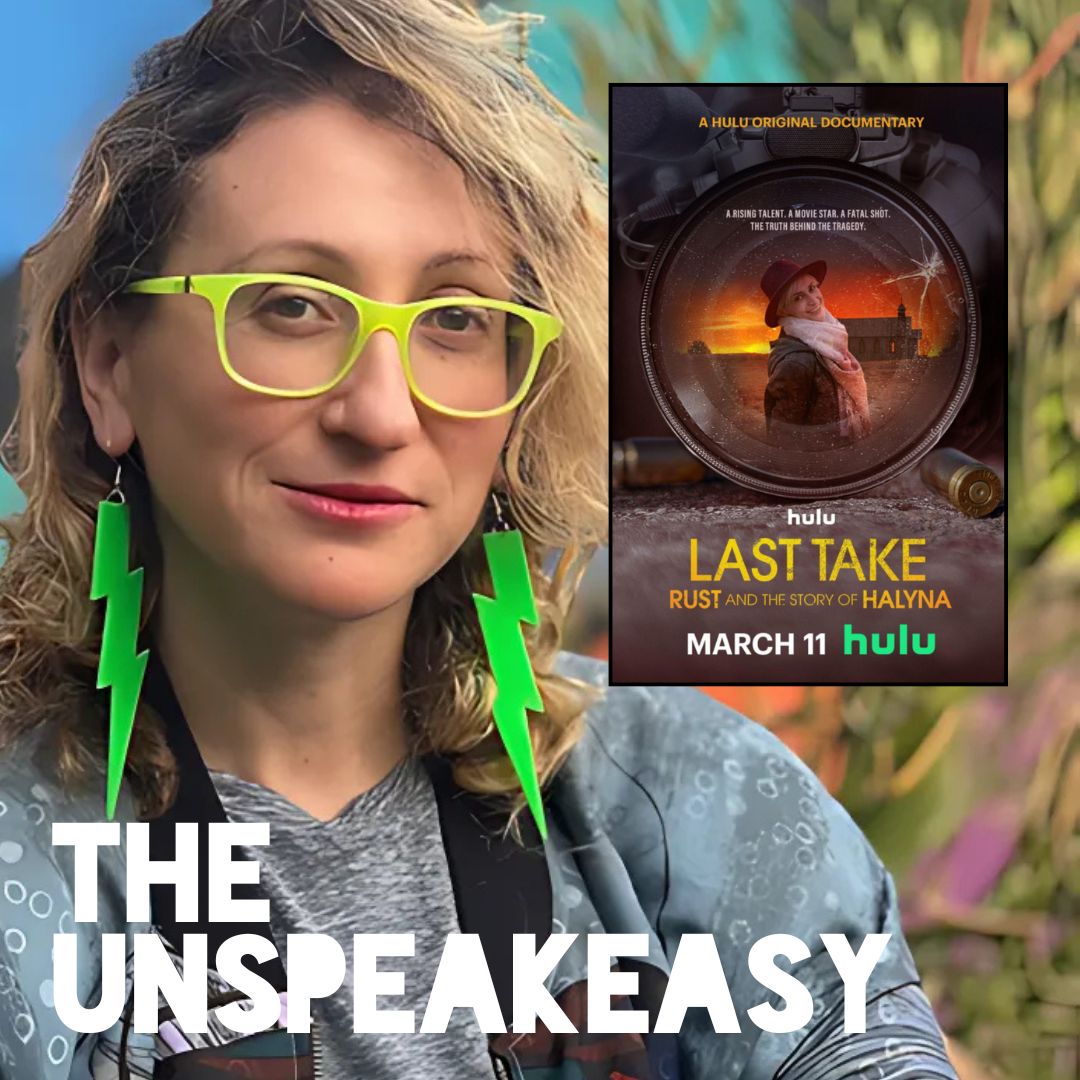

What if the tragic death on the movie set *Rust* wasn't caused by a single mistake with a gun, but by a series of systemic failures that placed the victim directly in the line of fire?
Filmmaker Rachel Mason, a close friend of the late cinematographer Halyna Hutchins, reconstructs the catastrophic chain of events. She reveals a chilling insight: a protest walk-off by the camera crew earlier that day forced Halyna into an unusual and dangerous position. Mason argues this event, combined with an overwhelmed armorer and a culture of ignoring problems, created the conditions for a predictable and avoidable disaster.
Key takeaways
- The filmmaker behind a documentary on Halyna Hutchins wore her friend's hat—the same one worn on the 'Rust' set—throughout the entire production as a tangible link to her memory.
- On film sets, a pervasive culture exists where people may notice something is wrong but don't feel it's their responsibility to act, especially if it's outside their department.
- The intense time pressure of filmmaking means projects can be greenlit with only a week's notice, forcing key crew members like the cinematographer to immediately shift into a logistical 'technical mode.'
- The role of an armorer on a film set is absolute: they must know the location, handling, and exact contents of every gun at all times. The presence of a live round was a catastrophic failure of this basic duty.
- A crew walk-off earlier in the day forced Halyna Hutchins to stand directly in the line of fire. Without her team, she had to manually frame the shot, a position she otherwise would not have occupied.
- The fatal shot occurred during an unplanned rehearsal, a direct consequence of the day's schedule being thrown into chaos by the crew walk-off.
- The tragedy wasn't seen as a single person's malicious act but a catastrophic outcome of collective negligence, where many people saw warning signs but the system failed to act.
- The 'stay in your lane' mentality on film sets, while efficient, can prevent cross-departmental safety concerns from being addressed, as crew members focus only on their specific jobs.
- The gun was passed through a chain of command, with multiple people supposedly checking it. However, a thorough inspection—removing each round to examine it—never occurred.
- The core assumption on any set is that a gun will never contain a live bullet. This belief made the actual danger of the situation unimaginable to everyone involved in the moment.
- After being shot, Halyna Hutchins was airlifted to the hospital but died en route. Her friend poignantly described it as her having 'died in the sky'.
The story of Halyna Hutchins's hat
The conversation centers on the tragic death of Halyna Hutchins, the director of photography killed on the set of the film Rust in 2021. Her friend, Rachel Mason, has created a documentary about her and the incident.
Rachel shares a deeply personal connection to Halyna. During the interview, she points to a hat behind her, revealing it was Halyna's. In fact, it was the very hat she wore on the 'Rust' set.
That's the hat she was wearing on the set of Rust. And when she died, her widower gave me so many important possessions and things of hers. Not just because he wanted me to make this documentary, but because, in the moment of grief when you're dealing with the volume of stuff of a person, you don't know what to do.
Halyna's widower, Matt, gave Rachel many of her belongings. Rachel wanted to ensure nothing was thrown away. She wore Halyna's hat throughout the entire process of making the film, including during courtroom sessions and interviews, as a tangible link to her friend. Rachel expresses the depth of her personal loss, saying she could spend a lifetime talking about Halyna.
How Halyna Hutchins approached her final film
Rachel Mason explains that she didn't know many details about Halyna Hutchins's final project as it was happening. Their relationship was more personal, centered on friendship and their children, rather than professional debriefs. Rachel learned about Halyna's process for the film after her death, by going through her notebooks, emails, and text messages.
Things come together very quickly in the film industry. You often don't know you have a job until the last minute. The director, Joel Sousa, was interviewing several people, and suddenly the job was confirmed.
Suddenly you're like, 'Oh my God, I got the job. Cool. When does it start? In a week?' Get your shit together.
Once a project got the green light, Halyna would go into what Rachel calls "technical mode." She would be busy assembling her crew—her gaffer, her ACs—and managing the budget. She wouldn't be calling friends; she would be focused on the technical and logistical aspects. NDAs are also common, especially when a celebrity like Alec Baldwin is involved.
Rachel admires the unique combination of skills required for an indie cinematographer like Halyna. It's not just about creative vision and talent. It also demands a practical side, including having a Rolodex of reliable people and understanding budgets. Halyna's text messages and handwritten notes from that time show her meticulously planning and reaching out to her top crew choices.
For Halyna, this project was a fantastic opportunity. According to her agent, getting to shoot a Western was a cool milestone in her career. She also had an instant creative connection with the director, Joel Sousa. Rachel describes him as a cool, creative, and interesting director. She imagines their first meeting was full of excitement and shared vision.
She would have met him and been instantly bonded, like, 'Let's get some wide shots.' Just creative pulses. Just, boom, boom, boom. Let's do this.
The armorer is responsible for all guns on set
The film "Rust" was an independent Western being shot in New Mexico in 2021. It was not a high-budget production. As a Western, the film involved guns on set for shooting scenes, which requires a specialized job called an armorer. The armorer's job is to maintain the guns and manage everything related to them.
The armorer is responsible for guns on set, plain and simple. If there's a gun on set, the armorer is responsible for it, meaning they need to know where it is at all times. They need to know how it's been handled. They need to know what is in it. Exactly what is in it in each gun on set.
On a large production like "John Wick," there might be hundreds of armorers. However, on a smaller budget project like "Rust," the resources are more limited.
The chilling culture of inaction on film sets
On the set of the film Rust, the armorer, Hannah Gutierrez Reed, was very young and was also assigned double duty as a prop assistant, which is highly unusual. The fundamental rule on any set is that there should never be any live ammunition. The presence of a real bullet was a chilling failure, but the deeper issue was a systemic one. Filmmaker Rachel Mason observed a widespread ability for people to notice something was wrong without feeling a responsibility to act on it.
I kind of started to observe that there was this ability for everyone to maybe note that something didn't seem right and not have much of a sense that they needed do anything about it. And that, I think is a something that afflicts sets everywhere in the world.
Film sets are high-intensity environments with fast-paced schedules. On Rust, there were loud complaints about numerous issues, including safety, COVID protocols, and lodging. The gun safety concerns were just one item on a long list, which may have diluted their urgency. During the trial, it became clear that many people saw that the armorer seemed overwhelmed and sloppy. Guns were left unsecured and bullets were visible on carts, which was abnormal. However, the film industry has a strong culture of staying within one's own department.
In the film industry, you sort of don't go out of your department. While I'm in the costume department, I'm going to focus on costumes. I'm not supposed to get into the armory. It makes sense because it's highly specialized work. And also you're on a time crunch.
Rachel concluded that the tragedy wasn't the result of a single person's malicious intent, but rather a catastrophic outcome of negligence. The people involved will carry the weight and guilt of this for the rest of their lives.
How a crew walk-off led to a fatal on-set accident
A specific incident on a film set involved a cascade of events that led to a tragic outcome. The director of photography, Halyna Hutchins, was standing in a position she normally would not have occupied. Usually, a cinematographer is off to the side looking at a video monitor, but that was not the case in this moment.
The primary reason for her position was a camera crew walk-off that occurred earlier that day over safety concerns. Halyna was very upset that the crew, led by assistant camera operator Lane Looper, left without informing her directly. As the cinematographer, she felt a responsibility to complete the task and had to scramble to continue the shoot without her team. Because the crew had walked off, the person responsible for setting up her monitor was not there. This forced Halyna to stand directly in front of the gun to frame the shot with her own hands.
Halyna would not have been standing right there had those people not walked off... Therefore, Helena's standing there in front of the gun, just with absolutely nothing but her hands as she's framing up the shot.
The fatal moment occurred during an unplanned rehearsal. The walk-off had thrown the day's schedule into disarray, forcing the remaining crew to improvise. This improvisation led them to work on a scene they might not have otherwise. This impromptu situation may have contributed to the danger. No one involved would have ever imagined there was a live bullet in the gun.
On no planet would a gun have a bullet in it. That wouldn't have been a thought. So that's what happened. She was standing right in front of a gun at point blank range and it went off.
The tragic chain of events on the Rust movie set
The gun was handed to Alec Baldwin by the armorer, Hannah Gutierrez, following a supposed safety check. There was a chain of events for examining the gun. Hannah showed the gun to Dave Halls, who said he spun the cylinder, looked at the rounds, and assumed they were all dummies. A more careful inspection would have involved taking each bullet out to look at it closely, but that did not happen. The gun was then handed to Alec, who pulled the hammer back. He claims he did not pull the trigger, but it seems unlikely the gun could have fired otherwise.
A real bullet came out of the gun. It passed through Halyna Hutchins's body, creating both an entry and exit wound, and then hit the director, Joel Souza, lodging in his body. Halyna's body slowed the bullet down, which is why Joel survived and she did not. When 911 was called, the on-set medic valiantly tried to save Halyna's life, but she was not prepared for a gunshot injury since live rounds should not have been on set. A crew member named Matt Hemmer, who had army medic training, also jumped in to help.
Eventually, paramedics arrived. Halyna was airlifted to a hospital, and Joel was taken by ambulance. Rachel Mason shared the tragic detail of what happened next.
She flatlined and then was pronounced dead when she got to the hospital. And so I've always thought about that moment... I was right there, in the adjacent ranch, just thinking about that. The helicopter, you know, lifted off, and there was no ability to save her. So she died in the sky.