
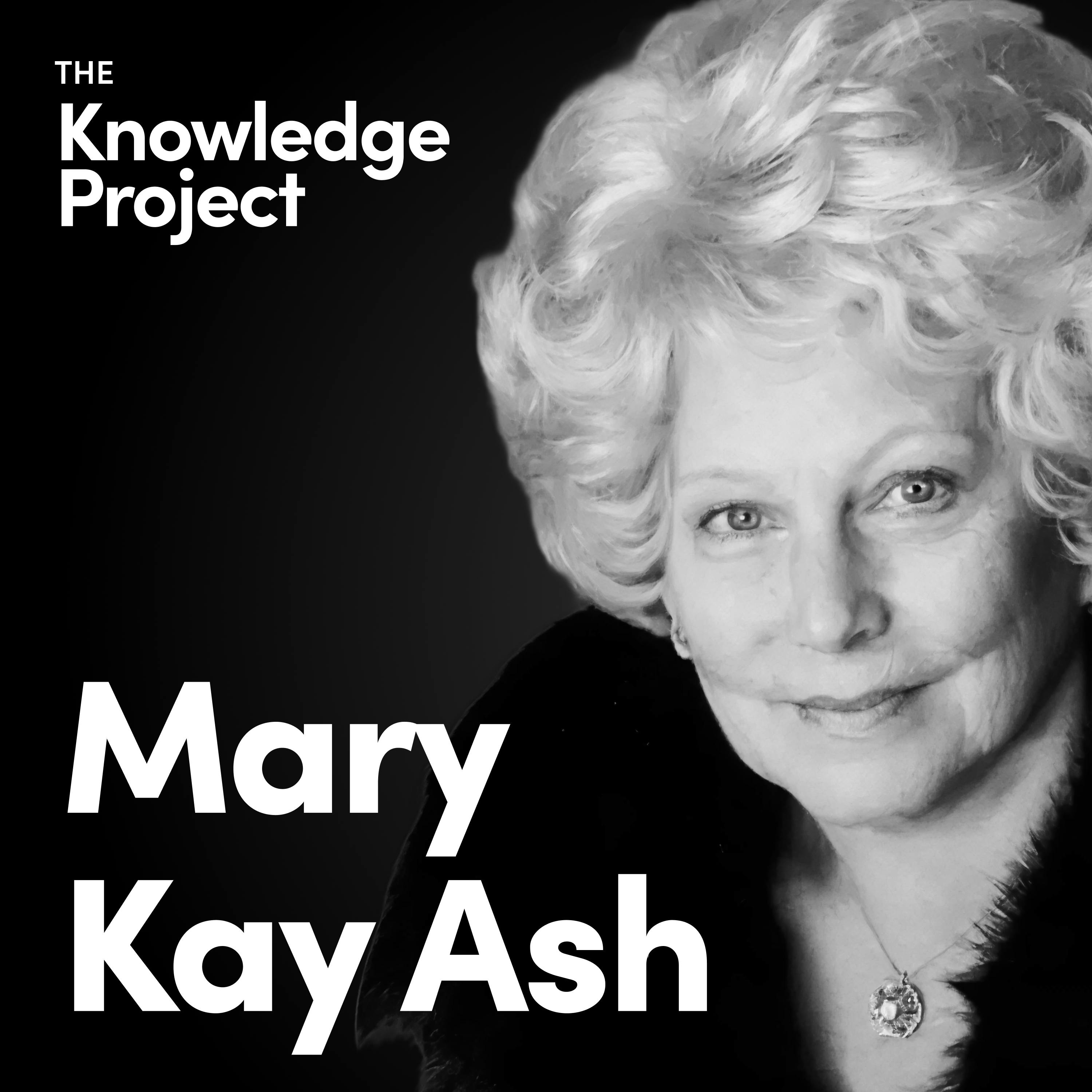

Frustrated by a system that consistently undervalued her, Mary Kay Ash built a two-billion-dollar cosmetics empire on a simple yet radical idea: meritocracy.
Her story breaks down the fundamentals of incentives and recognition that can get ordinary people to achieve extraordinary results in any business.
Key takeaways
- Frustrated by decades of being undervalued, Mary Kay Ash created her business plan by making two lists: one of all her negative work experiences and another imagining what her ideal company would look like.
- Operate as if everyone you meet has an invisible sign around their neck that says, 'make me feel important.'
- Adopt the six-item list system: Every evening, write down the six most important tasks for the next day and tackle them in order. Writing tasks down makes them tangible commitments.
- By creating competitions where everyone who hit a sales target won a prize, Mary Kay fostered collaboration instead of territorial conflict. This ensured consultants were incentivized to help each other, as another person's success did not diminish their own.
- Effective recognition should be public, specific, frequent, and tangible. Prizes that serve as status symbols can be more motivating than cash, which often gets absorbed into household budgets.
- The true value of an award is often not the prize itself, but the feeling of public recognition it provides. People craved the feeling of being celebrated more than the material object.
- Culture isn't what you say, it's what you systematically reward. Your policies and systems must reinforce the behaviors you want to see.
- People will support that which they help to create. Involve your team in new projects from the very beginning to avoid resistance to change.
- The Mary Kay pink Cadillac was not a gift but a two-year lease tied to ongoing sales performance, making it a 'rolling trophy' that served as both recognition and a continuous motivator.
- Qualities often dismissed as 'soft skills,' like empathy and relationship-building, can become a significant competitive advantage when made central to a business model.
- To criticize effectively, sandwich the critique between two heavy layers of praise. This allows you to address performance without destroying morale.
- The best companies develop their own managers from within. Frequently seeking outside management is often a sign of organizational weakness.
- Ordinary people can achieve extraordinary things if someone believes in them loudly, consistently, and relentlessly.
- Turn sales transactions into relationships by following up with customers without an agenda to sell. Simply check in to ensure they are satisfied, which builds long-term loyalty.
- Early business strategies can fail. Mary Kay's initial attempt to sell wigs was unprofitable, prompting a quick and data-driven pivot to focus solely on high-margin skincare.
- Mary Kay's business model succeeded by aligning incentives around genuine product sales, not just recruitment, through policies like generous returns and sales-based commissions.
Mary Kay Ash launched her company amidst personal tragedy
In August 1963, one month before she was set to open her cosmetics company, Mary Kay Ash's husband George died from a sudden heart attack at the breakfast table. Her entire life savings were invested in the business. Everyone, including her accountant, told her to stop, get her money back, and find a job, warning that she would go bankrupt if she tried to proceed alone.
Instead, Mary Kay buried her husband and turned to her family. She asked her youngest son, Richard, to quit his well-paying job to help her launch the company for very little money, and he immediately agreed. Her older son, unable to leave his own job, gave her a check for $4,500, which was every penny he had saved since he was a child. One month after the funeral, Mary Kay Ash opened the doors to her company.
The phone call that shaped Mary Kay Ash's philosophy
To understand what Mary Kay Ash built, you have to understand what shaped her. The story begins around 1925 in Houston, Texas, when Mary Kay was just seven years old. Her father had contracted tuberculosis and became an invalid, confined to bed. To keep the family from starving, her mother took a job managing a restaurant, working grueling 14-hour days, seven days a week, with no holidays.
This left young Mary Kay with immense responsibility. She had to cook, clean, do laundry, and care for her bedridden father. Every afternoon, she would call her mother at the restaurant for instructions. Her mother, while managing the dinner rush, would patiently walk her through recipes step-by-step. Each call would end with the same powerful encouragement.
You can do it, Mary Kay. You can do it.
The power of belief in Mary Kay Ash's early career
The phrase "you can do it" was deeply wired into Mary Kay Ash from years of phone calls with her mother. Her mother had no choice but to believe in her, and Mary Kay had no choice but to rise to that belief. This idea became the foundation of her future company: ordinary people can achieve extraordinary things if someone believes in them loudly, consistently, and relentlessly. But first, she had to endure 25 years in corporate America, which taught her exactly what she did not want to build.
After World War II, Mary Kay's husband left, leaving her a newly divorced single mother of three. As the sole provider in an economy that underpaid women, she needed flexibility to care for her children. She turned to direct sales with Stanley Home Products, which offered control over her schedule. The work was brutal. To make ends meet, she had to host three home parties a day, yet in her first three weeks, she averaged only $2 per show. On the verge of quitting, she borrowed $12 to attend the company's annual convention in Dallas. There, she watched the company president crown the "Queen of Sales" and present her with an alligator handbag, a powerful symbol of success.
After the ceremony, Mary Kay approached the president, looked him in the eye, and declared she would be the Queen of Sales next year. He studied her for a moment and said five words that changed everything for her.
Somehow I think you will.
In that moment, someone with real authority saw a struggling single mother and believed she could do something extraordinary. This ignited a fire in her. She went to work, memorizing the current Queen of Sales' presentation and writing her weekly sales goals in soap on her bathroom mirror. Her days were planned with military precision, revolving around her children's schedules.
When I first started supporting my family as a Stanley dealer, I only had room for three things. God, family and career. I had no social life... I got up at 5 o' clock so that I could do my housework before they arose. Then I gave them a good breakfast and got them off to school. After they were gone, I left too for my first party. I'd have another party in the early afternoon and then I would make certain to be home to greet my children when they came home from school... Then at seven o' clock I would leave for my evening party.
Surviving on five or six hours of sleep, she became what she called a "follow-through person." It started with basics like correspondence, an area where she believed most people fail. By answering every phone call and letter, she built trust. The real breakthrough, however, came from a story about efficiency expert Ivy Lee and industrialist Charles Schwab. Lee told Schwab he could increase his executives' efficiency. His offer was simple: pay him nothing unless it worked. After three months, Schwab could send a check for whatever he felt it was worth. Lee then gave each executive a simple, 90-day task: before leaving the office each day, write down the six most important things you need to do tomorrow.
The power of a simple list and consistent follow-through
Mary Kay Ash's success was built on a simple system of follow-through she learned from a story about consultant Ivy Lee and steel magnate Charles Schwab. The system involved writing down the six most important tasks for the next day, numbering them by priority, and then working through them one by one. Mary Kay adopted this practice for herself. As a single mother of three working from 5 a.m. to 10 p.m. for little pay, the daily list kept her sane and on track.
Every evening, she would list six things, covering everything from her children's schedules to customer follow-up calls. She found that writing something down transformed it into a tangible commitment. It provided the discipline to do necessary but unpleasant tasks that most people put off. She warned against relying on memory alone.
Don't trust it to memory. If you don't write it down, you'll never get around to doing even the most well-intentioned task.
The most crucial application of this follow-through principle was with her customers. Unlike other salespeople who disappeared after making a sale, Mary Kay built relationships. She would call customers regularly, not to sell them more products, but simply to check in and see how the products were working. This allowed her to address any problems immediately. These calls turned every sale into the beginning of a relationship, not the end of a transaction. She believed that serving the customer was the single most important factor for success in sales.
I would conclude that servicing the customer is the most common denominator shared by all great salespeople and sales managers.
This system worked. Her sales grew steadily as she learned what worked best. However, she never became complacent and believed in a lifetime of self-improvement. She was constantly testing, refining, and improving her methods, which ultimately led her to become the queen of sales.
The experiences that shaped Mary Kay's business philosophy
Mary Kay Ash was thrilled to walk up to the stage, hearing the applause after beating every other dealer in her company. She had proven herself. But the prize she received was a trophy, not the alligator handbag she had dreamed of for a year. While she accepted it graciously, a seed was planted. She decided that when she built her own company, recognition would be meaningful. Women would receive diamond rings and pink Cadillacs, prizes that announced their success to the world.
For now, she had proven that her system worked. This system involved follow-through, writing things down, and treating customers like relationships instead of transactions. Then, she discovered the power of recruiting at Stanley Home Products. The company offered small commission percentages on sales made by people you recruited. Most dealers ignored this, but Mary Kay saw the potential for scale. If she recruited 100 people, the small percentages would compound into real money.
She began recruiting systematically. When women at her parties asked if they could do what she did, she would say yes and share everything she had learned. She eventually built a network of about 150 salespeople. This is where she learned the basic structure of multi-level marketing. A recruiter's success depended entirely on the success of their recruits. If you helped them succeed, everyone in the system made money.
Her success led to a promotion and a move to Dallas. However, Stanley Home Products had a 'pennywise, pound foolish' policy. They refused to continue paying her commissions from the 150 women she'd recruited in Houston, as commissions were tied to geography. She had to choose between refusing the promotion or abandoning her income stream. Frustrated, she moved to Dallas and started over. This bitter experience later led her to eliminate geographic restrictions in her own company's compensation structure.
After Stanley, she joined World Gift Company and spent 11 years building their direct sales operation, expanding it to 43 states. She was one of their most valuable employees. Then came the moment that changed everything. She trained a man to work under her. Within months, the company promoted him to be her supervisor, at approximately double her salary. She had recruited him, trained him, and taught him everything, only to have him become her boss for twice the pay.
Mary Kay Ash built her dream company from a list of frustrations
In 1963, when Mary Kay Ash protested unequal pay, she was told that men needed more money because they had families to support. This was despite her being a divorced single mother of three. This incident was not isolated. Throughout her career, when she brought ideas to the all-male company board, they were dismissed with variations of the same phrase: "Oh, Mary Kay, you're thinking just like a woman." This was not meant as a compliment, even though her "thinking like a woman" had helped increase revenue by 50% that year.
After watching this pattern repeat for 25 years across multiple companies, Mary Kay resigned at age 45. She called it retirement, but it was a refusal to participate in a system that would never properly compensate or recognize her. With no pension or savings, her one asset was a lifetime of experience watching how not to run a business. She decided to write a book and sat down at her kitchen table to make two lists.
The first list included every negative experience from her career: being passed over for promotions by men she had trained, having her ideas dismissed because of her gender, unequal pay, and being talked over or ignored in meetings. The second list described her dream company. It would have fair pay based on performance, promotions based on merit, credit for good ideas regardless of who proposed them, public recognition, and flexibility for family. It would be a support system where women helped each other instead of competing.
As the second list grew, she had an epiphany. She thought, "Wouldn't it be marvelous if someone would actually start such a company?" followed by, "Why not me?" This wasn't just material for a book; it was a business plan. She would start that company herself.
The challenging launch of Mary Kay Cosmetics
The context of 1963 was challenging for women in business. They couldn't get credit cards without a male co-signer, and job ads were segregated by gender, with management roles listed under "Help Wanted Male." Only 5% to 7% of U.S. businesses were owned by women. Key legislation like the Equal Credit Opportunity Act was still over a decade away. Mary Kay Ash saw these systemic barriers not as obstacles, but as motivators to create change.
Her first step was finding a product. She recalled a homemade skin cream she had learned about a decade earlier at a Stanley Home Products party. The cream was developed by a hide tanner who noticed his hands remained soft despite working with harsh chemicals. Mary Kay had used the cream herself and it transformed her skin. The tanner had passed away, but she contacted his family and, after negotiation, bought the formula with nearly every penny she had.
She and her second husband, George, planned to launch the business together, with him handling administration and her managing sales. They set an opening date for Friday, September 13, 1963. However, just one month before opening, George suffered a fatal heart attack. Her attorney and accountant advised her to abandon the venture, but stopping meant financial ruin. Inspired by her mother’s motto, "You can do it, Mary Kay," she pushed forward. Her 20-year-old son, Richard, quit his job to join her for almost no salary.
On September 13, Mary Kay Cosmetics opened in a 500-square-foot storefront in Dallas. The location seemed ideal, situated in a complex with 5,000 female workers. However, these potential customers rushed past the store on their way to and from work, never stopping. To attract attention, Mary Kay decided to sell custom wigs, a popular trend at the time. The strategy backfired. The models hired to showcase the wigs attracted men, not women, and customers often returned the wigs after their families reacted poorly. More importantly, the economics didn't work. Richard calculated that each wig sale required about eight hours of labor for a low-margin, high-return product. In contrast, a one-hour skincare demonstration resulted in high-margin sales with almost no returns. They quickly abandoned the wig business to focus on skincare.
Mary Kay's business model was an answer to her past career injustices
In the early days of her company, Mary Kay Ash learned some crucial lessons through trial and error. Initially, a line of wigs meant to attract customers became a distraction. Once they were removed, sales jumped by $20,000 as consultants could focus on what truly worked: intimate skincare demonstrations. Other mistakes were more embarrassing, like passing around the same jars of cream for multiple women to use at demonstrations. A key lesson was the importance of keeping the basic skincare set together. The five items were designed as a system, and selling them individually led to poor results and bad reviews. One negative review could kill ten potential sales.
Breaking up the basic set in this manner was like giving you my recipe for chocolate cake and leaving out the chocolate or the sugar. It just isn't going to be my cake. We finally concluded that we would not break the basic set. We decided we would rather face a customer's initial ire than having her fail to get the desired results.
Mary Kay was very hands-on, conducting facials in customers' homes. However, she discovered her presence as the owner made the company seem small and unimpressive, which hurt the brand. This painful lesson led her to step back from direct sales and focus on training her consultants and designing the business model.
Her genius shone through in this design, as every policy was a direct response to negative experiences from her own career. The business was built on "Golden Rule, leadership": treat people the way you want to be treated. Her core strategy was reciprocity: help other people get what they want, and you'll get what you want. She believed that if she helped women achieve financial independence and success, her company would succeed as a natural consequence.
This philosophy led to specific policies that inverted traditional business practices. After being repeatedly passed over for promotions, she created a pure meritocracy where performance was the only thing that mattered for advancement. To solve the problem of losing a customer base when moving, a common issue for military wives, she established no sales territories. Consultants could sell anywhere and keep their teams, fostering collaboration instead of competition. Mary Kay also redesigned competition itself. Instead of having only one winner, company contests were structured so that everyone who hit a high sales target won the prize. This meant consultants were motivated to help each other succeed, as someone else's success did not diminish their own.
Mary Kay Ash solved the problems women faced at work
Mary Kay Ash built her company by systematically solving the problems she faced as a woman in the business world. Struggling to balance work and motherhood, she designed a system where women could set their own hours, work from home, and scale their efforts up or down as life demanded. This was decades before the term 'work-life balance' became common.
When male bosses dismissed her ideas for 'thinking like a woman,' she made those very qualities a job requirement. Empathy, intuition, and relationship-building, often devalued as 'soft skills' in traditional corporations, became essential at Mary Kay. The ability to make someone feel valued was prioritized over a hard sell.
Having experienced a lack of recognition for her own exceptional performance, she created an elaborate system to celebrate achievements. She operated on a fundamental principle:
Everyone has an invisible sign hanging from his or her neck saying, make me feel important. Never forget this message when you're working with people.
Recognition was designed to be public, specific, and frequent. Prizes were tangible status symbols like diamond rings and pink Cadillacs, not cash, which could disappear into household budgets. These awards served as constant, visible reminders of success.
The company's growth was explosive. Starting with nine personal friends, it grew to 200 consultants in the first year. Mary Kay then set a seemingly impossible goal of 3,000 consultants for the second year, a target they exceeded. Sales grew from $198,000 in the first full year to $800,000 in the second.
The business model was based on direct sales, which collapses the traditional retail chain (manufacturer to distributor to retailer to customer). In this model, the consultant buys directly from the manufacturer and sells to the customer, keeping a larger margin. The real money, however, is in multi-level marketing (MLM): recruiting other salespeople and earning a commission on their sales. The transcript notes that MLM can be brilliant or predatory. Predatory versions focus on forcing consultants to buy large amounts of inventory, making money from the consultants themselves rather than from sales to actual consumers.
Building a business by prioritizing people and genuine sales
Mary Kay Ash built a system where consultants could earn life-changing income through direct sales, with 50% margins on products. While recruiting other consultants offered override commissions of 10-15%, the structure was carefully designed to prioritize selling actual products to customers. This prevented the predatory dynamics common in other companies.
Several policies ensured the incentives aligned correctly. There were no inventory requirements, and a generous return policy allowed consultants to return unsold products for 90% of what they paid. Commissions were based on the sales of a consultant's team, not on the number of people they recruited. Titles were earned through sales performance over time, not purchased. This meant a recruiter's success was directly tied to their recruits' success as sellers, which ultimately depended on customers wanting the products.
Beyond the financial structure, Mary Kay's strategy was centered on people.
Good people are a company's most important asset. People are more important than the plan.
She believed that people support what they help create, so she developed the "Mary Kay way," a step-by-step training system refined with input from consultants. The core of this system was the "beauty show," a 90-minute home demonstration with a precise sequence. It began with education about skin types, positioning the consultant as an expert. Then came customization, with each woman trying products suited for her specific needs. The demonstration provided tangible results, as women could see and feel the difference in their skin. Finally, a no-pressure "soft close" was used to make a sale.
This model was self-perpetuating. At the end of each show, the host would ask guests if they wanted to host their own show in exchange for a free product, which kept consultants' calendars full. The entire process was documented with scripts and techniques, creating a proven, scalable system. However, Mary Kay knew training wasn't enough. She obsessively built a culture of recognition, sending handwritten notes to top performers and publicly praising them at meetings. These personal touches made people feel seen and valued, becoming a powerful source of motivation.
The power of the pink Cadillac and public recognition
Mary Kay Ash used public celebrations of success as a teaching tool to show others how to replicate achievements. The company's recognition system was tiered. Selling $10,000 in a month earned you a special pin. Hitting career sales goals resulted in diamond rings and designer watches. The ultimate recognition was the iconic pink Cadillac.
The pink Cadillac wasn't initially part of the plan. In 1967, Mary Kay went to buy a luxury car, but a salesman condescendingly told her to go home and get her husband. This experience, similar to what prompted her to start her company, led her to a Cadillac dealer. She requested a car painted to match the coral pink blush in her makeup compact. The car turned heads and served as a mobile advertisement. When top sales directors saw it, they wanted one too and bought their own, proving success in a way a bank account could not.
By 1969, the company began awarding new pink Cadillacs to its top five salespeople. The program was cleverly designed. The cars were two-year leases, not outright gifts. The company made the monthly payments only as long as the recipient maintained their sales performance. This made the car a rolling trophy that had to be continuously earned, blending recognition with motivation. General Motors even officially named the exclusive color 'Mary Kay Pink Pearl', creating a trademark that became a major corporate symbol.
This genius for recognition culminated in the annual conventions. What started as a modest meeting of 200 people grew into a massive, three-day event at the Dallas Convention Center. It was a unique blend of a revival meeting, awards ceremony, and training event. The first two days focused on training and new products, but the final day was dedicated entirely to recognition. The day built from smaller awards in the morning to the main event in the evening, where Mary Kay herself presented awards to top directors. The climax was the announcement of the next year's pink Cadillac recipients. For many attendees, this was the first time their professional achievements had been publicly celebrated. Mary Kay understood that the recognition was more valuable than the prize itself. The car was just a symbol. The real reward was the feeling of being seen and appreciated, of standing on a stage while thousands applauded your success.
Protecting company culture from Wall Street pressure
Mary Kay Cosmetics scaled rapidly due to clear training, fair compensation, and elaborate recognition. By 1976, just over a decade after opening, the company exceeded $100 million in annual sales. This growth presented new challenges. Mary Kay could no longer personally train the tens of thousands of consultants. Her son, Richard, became invaluable by building the operational machinery while Mary Kay focused on culture and training.
Richard implemented cutting-edge computer systems to track sales and commissions, established distribution networks, and professionalized accounting and legal operations. The company went public in 1968, which provided capital but also created tension. Wall Street analysts wanted predictable quarterly earnings and viewed the company's heavy investment in recognition, like pink Cadillacs and conventions, as wasteful extravagance. Mary Kay, however, saw these as essential to the company's culture.
This conflict came to a head in the early 1980s when analysts pressured the company to cut spending on recognition. Refusing to compromise the culture she had built, Mary Kay and Richard took the company private again in 1985 in a $315 million leveraged buyout. This allowed them to operate according to their values rather than shareholder demands.
By the 1980s, Mary Kay Cosmetics was the largest direct sales cosmetics company in America, creating an economic engine for hundreds of thousands of women. It offered income and flexibility to single mothers, military wives, and women in rural areas. In a merit-based system, women who were told they lacked the right background could succeed. By the mid-1980s, dozens of top sales directors were earning over $50,000 a year, more than double the median household income of $23,000 at the time.
Mary Kay Ash's principles for people-first leadership
The impact of Mary Kay Cosmetics extended beyond finances. Mary Kay Ash tracked metrics showing that divorced women in her sales force had higher remarriage rates, which she attributed to the confidence gained from earning their own money. Their children were also more likely to pursue higher education, inspired by watching their mothers build a business and achieve goals. Furthermore, the bankruptcy rate among her consultants was lower than the national average, indicating the business provided real financial stability.
The company faced criticism, with some pointing out that most consultants made only a modest income. This was true, as Mary Kay never promised everyone would get rich; earnings were based on effort. Others suggested the focus on recruitment made it resemble a pyramid scheme. However, the company's legitimacy stemmed from its revenue coming primarily from product sales to customers, not from recruitment. Consultants maintained reasonable inventory, not garages full of unsold products.
Mary Kay's legacy is built on several key proofs. She proved that collaboration can be scaled and that recognition systems are powerful performance drivers. She showed that getting incentives right matters more than having the smartest people. She demonstrated that you don't have to choose between principles and profits, even buying her company back from Wall Street to avoid compromising her values. For her, culture wasn't what you say, but what you systematically reward. Her most important lesson was that belief is contagious, a lesson passed down from her own mother.
Before she died, Mary Kay distilled her philosophy into 23 principles. Here are the first six:
1. The Golden Rule leadership. This is one of the world's oldest philosophies, and it is still powerful in today's complicated world.
2. You build with people. Good people are a company's most important asset, more important than the plan.
3. The invisible sign. Everyone has an invisible sign hanging from their neck saying 'make me feel important.' Never forget this message when you're working with people.
4. Praise people to success. Recognition is the most powerful of all motivating techniques. Let people know you appreciate their performance, and they'll respond by doing even better.
5. The art of listening. God gave us two ears and only one mouth, so we should listen twice as much as we speak. Listening provides necessary information and makes the other person feel important.
6. Sandwich every bit of criticism between two heavy layers of praise. Direct criticism at the act, not the person, to avoid destroying morale.
Key principles for leadership from Mary Kay Ash
A series of principles outlines a philosophy for leadership and business success. A core tenet is to be a "follow-through person"—someone who can always be counted on to do what they say they will. This rare quality is held in high esteem. Another key principle is that enthusiasm moves mountains. Great things are achieved with enthusiasm, a contagious quality whose Greek origin means "God within."
Leaders set the pace for their teams. This idea is captured by the phrase, "The speed of the leader is the speed of the gang." True leaders lead by example, demonstrating strong work habits and a positive team spirit, thereby establishing patterns that make everyone think about success. To foster a supportive team, it's crucial to involve people in projects from the early thinking stages. People will support what they help create, and they often resist change when left out of the decision-making process.
An open and equitable environment is vital. At Mary Kay headquarters, an open-door philosophy means there are no titles on executive doors and everyone has access to all levels of management. Every person, from the mailroom clerk to the chairman, is treated as a human being. This extends to a broader principle: help other people get what they want, and you will get what you want. Go out of your way to make others' dreams come true, and your own will follow. Through it all, it is essential to stick to your principles, as they are the one thing that should never be compromised.
Instilling pride is a manager's job. Everyone in an organization should feel pride in their work and their association with the company. However, one cannot afford to become complacent. As Mary Kay Ash said, you can't rest on your laurels.
Nothing wilts faster than a laurel rested upon.
Everyone should have a lifetime self-improvement program because in today's world, you are either moving forward or backward. This forward momentum requires taking risks. Leaders must encourage their people to take risks and understand that nobody wins all the time. Punishing failure too harshly will only discourage people from trying.
The work environment should be positive and productive. It is important to have fun while you work; good managers encourage a sense of humor, as enjoyment leads to better results. Leaders should also strive to create a stress-free atmosphere, as stress stifles productivity. The foundation of any organization is sales, and everyone must understand that "nothing happens until somebody sells something." Everyone should support the sales effort.
Leaders must be effective problem-solvers who can distinguish real issues from imaginary ones and take decisive action. They should never hide behind policy without a good explanation, as this infuriates people. The best companies develop their leaders from within, seeing it as a sign of weakness to frequently hire outside management. Finally, it's essential to live by the Golden Rule, maintaining one moral code for both professional and personal life. Conduct business with the same principles you would want your children to observe.