
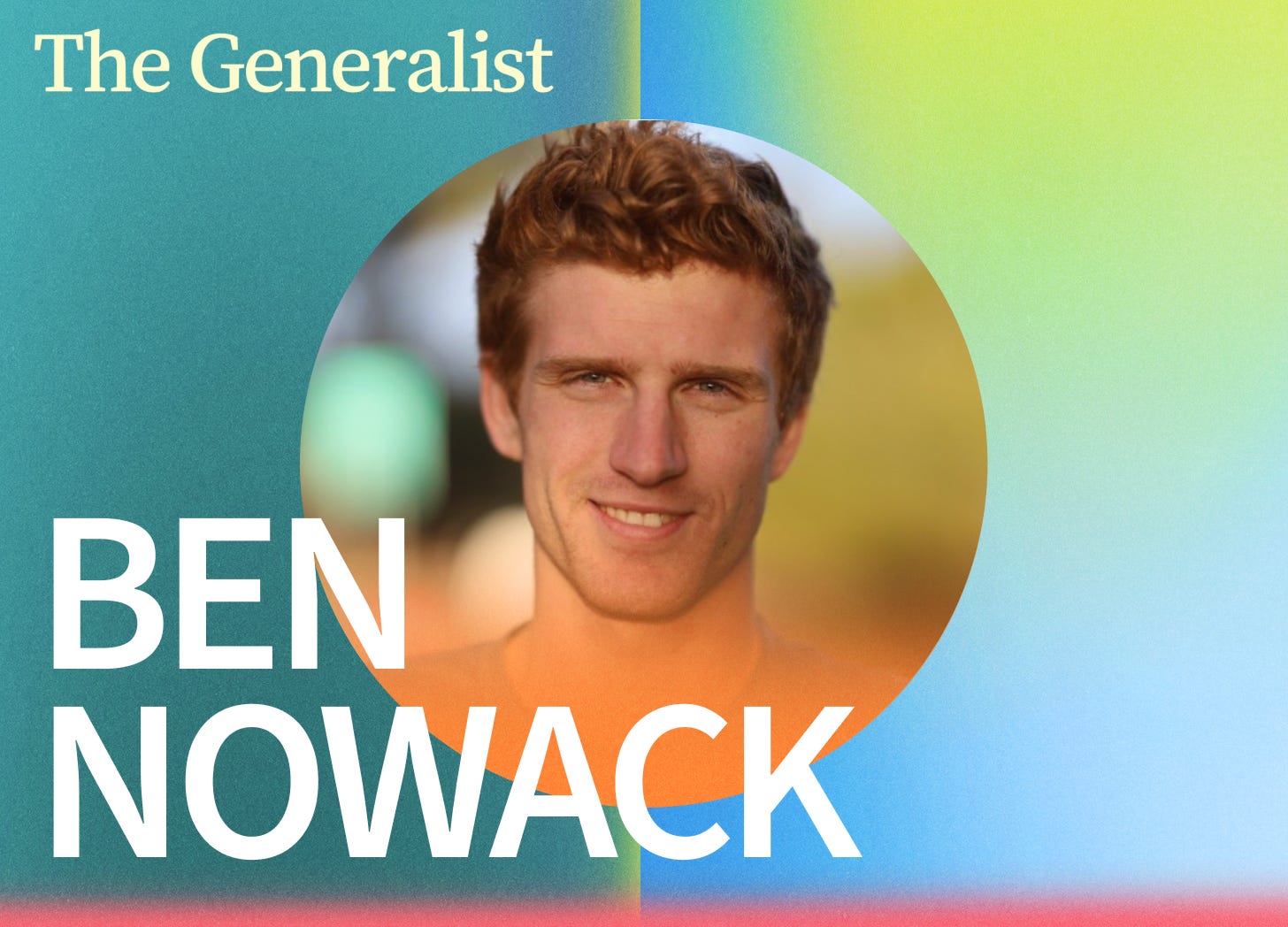

Ben Nowack, founder of Reflect Orbital, is developing a constellation of satellite mirrors that redirect sunlight to Earth after dark.
His work turns sunlight into a programmable resource that can power solar farms 24/7 and provide instant illumination for emergency rescue teams.
Key takeaways
- Reflecting sunlight from space is a modern version of an ancient Egyptian technique of using mirrors to illuminate shadowed indoor areas.
- Reflect Orbital uses ultralight mirrors just a few thousand atoms thick, allowing a massive 18-meter surface to weigh less than two kilograms.
- Providing moonlight-level brightness is significantly more profitable and easier to achieve than competing with commodity electricity.
- Providing children with real tools instead of toys builds genuine competence and a sense of agency from a very young age.
- A positive feedback loop is created when young people build impressive things. Each successful project increases the trust and resources provided by the community.
- Making a dirty industry even one percent more efficient can have a larger immediate impact on the world than pursuing idealistic but unproven technologies.
- Fusion on Earth lacks the natural advantage of gravity that the sun possesses, making it an incredibly unstable and inefficient struggle against physics.
- Sunlight should be treated as a tradable resource. Beaming light from space to ground-based solar farms can triple their energy production.
- The economics of space-based solar reflection are now viable because launch costs have dropped by 97 times and global solar capacity has grown from 200 megawatts to nearly 2 terawatts since the 1990s.
- Being early in a market is functionally the same as being wrong if a company cannot remain solvent until the market matures.
- Orbital mirrors offer a better economic return than space data centers because they are lighter and generate significantly more revenue per hour.
- Space reflectors can scale power by having thousands of satellites point at the same target simultaneously without needing to communicate with each other.
- Competing in commodity markets like energy requires massive scale and low costs that are impossible to achieve without first finding a high margin niche.
- Prioritize speed over individual part costs. Buying multiple options at once to find the right solution immediately is often cheaper than waiting weeks for sequential shipping.
- The most expensive part of a company is usually the burn rate of engineering payroll. Anything that removes friction for top talent saves more money than it costs.
- Intentional training for discomfort can build the mental resilience needed to handle financial or physical hardship during a startup journey.
- Small-scale experimentation can reveal the fundamental scaling flaws in massive energy projects like fusion.
- High-precision reflection technology ensures sunlight reaches only intended customers, preventing unwanted light pollution in neighboring areas.
- Emergency response is the most urgent market for orbital mirrors because they can provide instant illumination for search and rescue or night firefighting.
- Shifting from large engineering demonstrations to smaller, revenue-generating vehicles allows a startup to reach commercial viability much faster.
Podchemy Weekly
Save hours every week! Get hand-picked podcast insights delivered straight to your inbox.
Ben Nowack on controlling sunlight from space
Reflect Orbital is developing tools to control sunlight by deploying a constellation of satellites. This technology allows for the redirection of sunlight to Earth during the night. The applications are vast, ranging from agricultural growth to providing constant power to solar farms. The system is designed to be highly scalable. Thousands of satellites can work together, all pointing at a single location to increase the power delivered to that spot.
We are building the tools to control sunlight. Right now it is completely impossible to control the amount of sunlight you get at night. We are building a constellation of satellites to change that. You can use it to grow plants. You can use it to power on solar farms at night.
Ben developed the agency to tackle such a massive project through a history of obsessive personal projects. As a young person, he built underwater vehicles and jet boats. These experiences provided the confidence that any goal is achievable with enough effort. This mindset led him from building a fusion reactor in high school to founding a company that aims to change how light reaches the planet.
I would get obsessed with ideas. I did all these weird projects. I made a jet boat. I just went kind of crazy. And that gave me a ton of confidence that I could do basically anything if I just tried hard enough.
The concept of space mirrors is not entirely new. In the 1990s, Russian engineers successfully bounced a beam of light from space to Earth with the brightness of a full moon. The modern challenge lies in turning this scientific possibility into a viable business. Success requires moving beyond a science project to meet customer demand and generate profit.
Controlling sunlight with satellite constellations
Ben is building a system to control sunlight. His company, Reflect, is creating tools that allow people to program when and where they receive sunlight. Currently, it is impossible to get natural light at night. Ben plans to change this by using a constellation of satellites that act as mirrors. These satellites reflect sunlight that misses the Earth back down to specific spots on the ground.
We are building the tools to control sunlight and allow people to program when, where, what sunlight they are going to get. If you put a mirror right here, you can reflect the sunlight that misses the earth down onto a specific area.
The system uses rings of satellites in specific orbits. As one satellite passes over a location, it reflects light down before handing the task to the next satellite. This allows for continuous light throughout the night. The precision is high, and the brightness can be adjusted. It can range from the level of a full moon to the intensity of full sunlight. The light can be directed to a location within 30 seconds of a request.
This technology has many applications. It can power solar farms after dark, help crops grow, and assist with mining or safety operations. It could even increase forest growth to help absorb more carbon dioxide. Ben points out that sunlight is the most fundamental resource in the solar system. Even fossil fuels are just sunlight with extra steps. While people currently have no control over whether it is sunny, this project aims to provide that control for the first time.
Sunlight is the source of 99 percent of life on Earth. It is one of the most fundamental resources. The sun is the most powerful resource in the whole solar system. It is powering basically everything. Even fossil fuels are sunlight with extra steps.
The necessary technology is now available to make this vision a reality. Rapid advancements in rockets and satellite components have provided the missing pieces. Ben expects to launch the first vehicles in the coming year.
Understanding the geometry of sun synchronous orbits
The Terminator line marks the transition where the shadow begins on the back side of the Earth. If you imagine holding a basketball in the sun, the side facing away is in shadow and the line between light and dark is the terminator. This geometry is the starting point for reflecting light. While the technology uses rockets today, the concept is ancient. Egyptians were reflecting light into dark indoor spaces using mirrors thousands of years ago.
The ancient Egyptians were doing this back, like, 3,000 years ago. They would put mirrors outside and they would reflect light into shadowed areas. We're doing a very similar thing. We're just going up a lot higher because we have access to these rockets.
To provide consistent coverage, the system uses sun synchronous orbits. These are specialized orbits often used by Earth observation telescopes to ensure they always take photos at the same time of day. This orbit takes advantage of the fact that the Earth is not a perfect sphere. Because the Earth is slightly squashed, or oblate, it creates a specific pull on the satellite. By choosing the right angle, Ben can make the satellite rotate exactly once per year, staying perfectly in sync with the sun.
This creates a unique situation where satellites are locked to a time rather than a place. A satellite might be set to 6 PM. As it travels, it passes over the East Coast at 6 PM, then the West Coast at 6 PM, and then Europe at 6 PM. It follows the sunset around the globe, providing a timeless presence that matches the local time of every region it passes over.
Reflect Orbital's mission to deploy giant space mirrors
Ben is launching three satellites a few months apart to test a new vehicle design. Each satellite is a compact bus that weighs about 130 kilograms. Once in space, it deploys into a massive mirror measuring 18 meters by 18 meters. The deployment uses special carbon fiber booms that function like large tape measures. These booms are incredibly strong and pull the reflector tight. They can hold about 220 pounds in compression.
The quality of the mirror is very important because it keeps the spot that we are reflecting very sharp. That keeps sunlight from going into neighboring customers. When you are serving one person, it reduces light pollution. If you are serving one city, you actually won't see the satellites because their reflectors are so perfect.
The mirror itself is made of a thin plastic coated in aluminum. It is only a few thousand atoms thick. Despite its large size, the entire 60 foot by 60 foot mirror weighs less than two kilograms. It includes ripstop layers so that micrometeorites can pass through without destroying the entire surface. This precision is vital for delivering light only to specific customers while avoiding light pollution for everyone else. Ben is focused on ensuring the technology delivers photons only to the people who bought them.
Commercializing sunlight with small satellite constellations
The initial plan for the first satellite launch was a simple engineering demonstration to measure brightness. However, Ben realized it was feasible to build a revenue-generating vehicle from the start. This shift happened after discovering a significant market for light that is much dimmer than direct sunlight.
It turns out it wasn't that hard to just build the one that can make a lot of money on the first vehicle. Part of that was realizing there was a market for much lower brightnesses than we initially expected.
While the original goal was to power solar farms, Ben found that moonlight-level brightness is incredibly useful for activities like surfing, hiking, or landing aircraft in remote areas. This level of light is hundreds of thousands of times less bright than noon sunlight. It is much easier to achieve with a few small satellites rather than a massive constellation.
The economics of lighting are also more attractive than commodity energy. Customers are willing to pay thousands or even hundreds of thousands of dollars per hour for targeted lighting. This makes the project commercializable immediately. After the first three satellites, the plan is to launch up to 150 vehicles on a single Falcon 9 rocket to provide continuous service.
With these lighting customers, people are willing to pay thousands of dollars per hour per spot. It can be hundreds of thousands of times easier to build. So we realized actually this is fully commercializable right now.
Building agency through real tools and early projects
Ben grew up in an environment that prioritized real tools over toys. When he was only two or three years old, his father, a carpenter, bought him a real metal saw and hammer instead of plastic versions from the toy section. By age four, Ben was already using a table saw and a drill press to build small wooden cars and blocks. This early exposure to real craftsmanship allowed him to develop technical skills long before most children.
In middle school, Ben moved on to building RC planes. He started by taking apart old toy cars and using foam board to create airplanes, teaching himself to fly through YouTube tutorials. He eventually built dozens of planes, some of which could reach speeds of 150 miles per hour. This experience was a major turning point for his self-confidence because he did not previously see himself as capable.
I actually thought I was really, really dumb in these years. So that was a huge confidence builder initially is building these planes that people were really impressed by, and I think that was really special.
By high school, Ben was building increasingly complex machines, including an X-ray machine using parts found on eBay. He discovered a school hack when a teacher offered him credit for his independent projects rather than traditional assignments. This support grew into teachers helping him purchase professional equipment like a metal lathe. Ben also spent summers scavenging at the local dump, melting down aluminum from discarded grills to make new objects. This constant cycle of building and sharing his work created a snowball effect where people trusted him with more resources as his projects became more impressive.
Building confidence through obsession and the path to SpaceX
Ben describes a period of intense building that gave him the confidence to tackle almost any challenge. He would become obsessed with specific ideas, such as underwater vehicles, and teach himself the necessary skills through YouTube videos and technical documents. For one project, he used Arduinos and an Xbox controller to create a control system. He spent weeks writing code and hours crafting a specialized fiber optic tether just to see the project through.
Once you build enough stuff and everything builds on itself, you have this huge base of things you know how to do. You also have this track record where everything you wanted to build, you were able to build. You just end up with this confidence.
Early exposure to real tools like saws and hammers played a significant role in this development. When adults treat a child's interests seriously at a young age, it creates a formative foundation for future innovation. This pattern of building complex projects early in life is common among successful engineers and founders, including those on the founding teams of major tech companies.
His career trajectory was shaped by his early projects. After someone at SpaceX saw his videos, Ben secured an internship during his freshman year of college. He worked on Dragon 2 propellant tanks and rocket engines but eventually realized he preferred the earliest stages of development. Instead of joining the large Starship team, he chose to join a small startup as one of the first employees to learn how to take a project from nothing to something.
What I am the best at is starting brand new things and doing stuff that is super hard. I wanted to take something from almost nothing to something.
Ben Nowack on consumer markets and engineering pragmatism
Ben worked on a project to create folding bike helmets. The goal was to address why people do not wear helmets. If a helmet is easier to carry, more people might use it. Ben found the idea of a helmet that fits in a water bottle container or looks like a baseball cap very interesting. He wanted to see how consumer markets worked. While the rocket industry is exciting, Ben felt that consumer products could provide value for people immediately rather than twenty years in the future.
The helmet project faced challenges because the market was small. It was impossible to put SpaceX-level resources into a folding helmet. Ben tried to balance his final semesters of school with intense work at the company. He eventually reached a point where he realized his own limitations. He thought he could fix any problem or do everything perfectly, but the experience was humbling. He learned that some limits are real.
I realized, actually I am not as good as I thought. I cannot do everything. I was kind of a jerk before that. Honestly I was like I can do literally everything. I can fix any problem. I am the perfect human being. Like I will do everything perfectly. When I was there I was like, oh, I cannot find a way here. There are limits and they are real.
Following this, Ben worked on technology for the oil and gas industry. His team embedded electronics in pipelines to improve data collection. Standard methods only allowed for a few bits of data per minute. Their technology allowed for megabits per second. This allowed operators to find oil more accurately. Ben felt this was a pragmatic choice. Even though he disliked fossil fuels, he believed that making the industry more efficient would create a large positive impact today.
I also hate hypocrisy where like people drive to work in a Prius and complain about the climate crisis. Like, what if we could make the oil and gas industry a little better? If you could make it even like 1% more efficient, you are making a huge difference today.
Why building a basement reactor led to fusion skepticism
Ben built a functional fusion reactor in his basement during high school as a project to earn school credit. He constructed a Farnsworth fusor for about a thousand dollars by teaching himself how to TIG weld and sourcing specialized components like high vacuum feedthroughs and stainless flanges. The process required him to register with the Nuclear Regulatory Commission to obtain deuterium. While the build was successful, the hands-on experience made Ben skeptical about the viability of fusion as a primary energy source.
I knew this fusion reactor was going to be terrible and never going to produce power. I kind of realized the real ones are basically the same thing and they're struggling with a lot of the same problems. It's just so much less efficient than what the sun does.
The difficulty of measuring neutrons and the dangers of X-ray radiation highlighted the inherent inefficiencies of the process. On Earth, we attempt to force fusion using magnets or lasers that must be perfectly balanced. If a target in a laser-based reactor is off by even the width of a bacteria, the reaction becomes unstable. Ben realized that without the massive gravity of the sun to assist, creating the necessary pressure is like trying to push two opposing magnets together. This complexity led him to believe that fusion might not be a better practical solution than solar power or even fossil fuels in the near term.
Moving sunlight as a tradable resource
Ben views sunlight as a movable resource similar to oil. While working at Zipline, he realized that moving sunlight from one location to another could create massive value. For example, a solar farm in Germany produces significantly less power than one in Africa. If sunlight can be reflected from space to a farm in Germany, that farm could triple its energy output and revenue.
Sunlight is a resource that you can move around and potentially get paid for. I just saw it like it was oil or a resource in a way that I had never seen it before. If you could just move sunlight from here to here and get paid for that, you could create real value.
The goal is to provide electricity at a lower cost than fossil fuels or batteries. Ben initially struggled to make the economics work in his models. The breakthrough came when he realized that satellites in sun-synchronous orbits could serve hundreds of different solar farms. This approach spreads the high cost of a satellite across many customers, making the technology financially competitive. Ben also looked at NASA's ACS3 vehicles, which use very thin, lightweight materials, to prove that the necessary technology already exists.
Technology has changed significantly since the Russian Znamya experiments in the 1990s. Launch costs have dropped by 97 times due to companies like SpaceX. Furthermore, global solar capacity has exploded. In the 1990s, there were only 200 megawatts of solar installed worldwide. Today, there are nearly 2 terawatts. This massive increase in ground infrastructure provides a ready market for reflected sunlight that did not exist thirty years ago.
The history of space reflectors and building a founding team
The concept of space reflectors is not new. It has been a topic of interest since the 1920s. The Russian Znamya project was an early attempt to use this technology, originally funded to provide light to mines in Siberia. This idea is especially appealing in northern regions like Scandinavia that experience extreme darkness during winter. However, the Znamya program ultimately failed due to a combination of funding issues and technical errors during its second mission.
The reflector just like hit the antennas and then ripped up and then that killed the entire program and it is like, common in space for things like this to happen because you are so constrained, and it is very easy to make mistakes like this.
Space missions are incredibly fragile. Even when a reflector is successfully deployed, environmental factors like heavy cloud cover can prevent a successful demonstration. If the light is not bright enough to break through clouds or if the spacecraft only has one pass over the target area, the mission might fail to prove its value. Despite these early setbacks, Ben saw an opportunity to revive the technology.
To build his company, Reflect, Ben partnered with Tristan, a former colleague from Zipline. Even as a high school student, Tristan was known for his exceptional problem-solving abilities and high productivity. He eventually left Stanford to join Ben, helping to simplify the core technology and define the market for orbital lighting. Their partnership is built on a shared perspective and the ability to find clarity in complex technical environments.
He can explain this in that way and pull out this insight from this impossible thing and, like, really just find the path in the complete darkness. Tristan is amazing.
The economics of space and the risk of being too early
Ben explains that he was aware of Baiju Bhatt's interest in space before he became an investor. They bonded over a shared love of technology and a desire to see commercial businesses thrive in low earth orbit. Ben does not view other space companies as direct competition. Instead, he believes a rising tide raises all boats. More companies in space mean higher launch demand. This drives down the cost of rockets and improves satellite technology. The space market is worth trillions of dollars, and there is plenty of room for different players to capture value in separate industries.
While many companies are pivoting toward orbital data centers to capitalize on the AI hype, Ben is choosing a different path. He acknowledges that space data centers could eventually be cheaper than those on the ground, but he believes the timing is wrong. Being early can be the same as being wrong if a company cannot stay solvent for decades. Ben mentions that Elon Musk is willing to take those long-term risks with projects like Mars, even when there is no immediate market.
Being early is the same as being wrong. I think Marc Andreessen says that. Can you make your company last while it is insolvent for 50 years? That is going to be pretty hard to do.
The math for orbital data centers does not currently make sense for Ben. An H100 GPU rents for a very low hourly rate. It would take decades to pay back the investment with solar power in space. In contrast, the orbital mirror technology Ben is developing is lighter and requires less power while generating thousands of dollars per hour. He believes that while it is harder to raise money for ideas that people do not yet find valuable, the economic potential is far superior to following the latest trends.
How parallel satellites scale space-based power
Space is becoming a hub for new businesses. Companies like Google and NVIDIA are exploring orbital data centers and AI. While some propose complex on-orbit computing, another focus is using space-based reflectors to send energy to Earth. Skepticism is common in this field. Ben views this as a positive sign. He believes that initial doubts often stem from looking at a specific version of a technology rather than the iterative adjustments that lead to a final product.
A major misunderstanding about space reflectors is how they scale. Many people miss the fact that thousands of satellites can work together to increase power. They do not need to communicate or fly in a strict formation to do this. Instead, they all simply point at the same target simultaneously. Ben describes this as a stupidly parallel system where the individual elements require very little interaction to be effective. It is like having hundreds of people pointing flashlights at the same spot to increase the total brightness.
The value of even dim sunlight is also insane. The ability to add the satellites together is also a really big one. I think people miss that constantly. You can just keep adding satellites together and keep increasing the power. You can have 4,000 satellites working together at one time. They all just point to the same spot. It's really simple.
These are not simple mirrors. They are full-fledged satellites that cost a couple million dollars each. They include propulsion systems, radios, and advanced sensors. These satellites are equipped with large reaction wheels that allow them to track tiny, precise areas on the ground and move the light spot in real-time. This flexibility allows for unique applications, like tracking a moving object or timing light changes to a specific event. Because the rotation is powered by solar energy and motors, retasking the mirrors is essentially free. This level of control allows the system to serve customers with high precision while avoiding areas that do not want the light.
We can fully move the spot. We can even move the spot while we're serving. Say there's a really big music producer that's writing a song. You can move the spot back and forth as the song is hitting. You can do all this stuff. You can move the spot around cities and areas so you can avoid different places.
The evolution of lighting and the satellite market
The development of a satellite-based lighting market mirrors the early days of electricity. Long before the power grid existed, people sought ways to light and heat their homes. Standard Oil initially grew by providing petroleum for home lighting. Even early light bulbs were powered by individual generators. J.P. Morgan was one of the first people to have an electrically lit home in Manhattan. It was an inefficient and loud setup that caused his neighbors to hate him. His walls were filled with wires that frequently caught fire. Despite the initial friction and skepticism, these early experiments eventually led to the creation of the modern power grid.
The point there is, it was lighting homes before energy. And it was a couple decades later that they actually started putting in the power grid. Let's do a power grid. And then it was the whole, like, AC versus DC thing and all of that. And then everything took off.
The current satellite project aims to be the next version of the light bulb. Just as people initially feared that electric lights would ruin sleep and destroy the night sky, there is modern concern about satellite light pollution. However, the value of lighting is significant for safety and for creating a vibrant city atmosphere. Ben notes that the energy of a place like Times Square at night comes from its illumination. These satellites can provide that same experience on demand without requiring physical bulbs on every corner. The system is also fully dimmable, allowing for controlled brightness rather than overwhelming sunlight at night.
Imagine walking around Times Square and it's lit up by satellites going to feel super cool. Or any city, right? And we can adjust the brightness. I think the other thing people miss is it's fully dimmable.
Applications and flexibility of orbital lighting
The light provided by these satellites is highly adjustable. It can range from a faint moonlight glow that helps security cameras see to the brightness of a standard streetlamp. Unlike traditional street lighting, which is often uneven with harsh bright spots and dark gaps, satellite light can cover an entire area with uniform brightness. This system is fully programmable. A city could schedule the light to dim gradually throughout the evening or turn off entirely at a specific time.
The dark skies folks say 3 lux is all you really need. Usually it is over bright and it is just very uneven lighting. So we can just light up the entire area to one even brightness. You can select 3 lux, you can select 10, whatever the city wants. We are fully programmable. It is just how many satellites are working at once. Our software just does that in two math operations.
The infrastructure required for satellite lighting is significantly simpler than installing physical poles. Setting up streetlights requires months of construction and trespassing on land. In contrast, the satellites can be controlled with a simple interface. This flexibility allows for creative uses, such as drawing shapes with light or lighting up specific regions of a large city. If a community changes its mind about lighting, the satellites can be turned off instantly with the press of a button.
While municipal lighting is a visible use case, Ben explains that the most immediate demand comes from emergency situations. In search and rescue operations, time is critical. If a person falls overboard in the ocean or gets lost while hiking, a satellite can illuminate the area within thirty seconds. This could also transform how we fight natural disasters. Currently, firefighters often have to stop work when it gets dark. Providing light from orbit could allow them to continue fighting wildfires through the night.
Our hungriest customers are folks having emergencies. You can just hit a button and be there in 30 seconds. You can see the entire area around you. You do not actually have to wait for the helicopter anymore. If you are lost hiking in the woods and your headlamp dies, we can light up that entire area for a couple hours so you can get back.
Another early application involves northern regions like Alaska and Scandinavia. These areas experience months of darkness during the winter. Ben notes that residents in these towns have expressed a desire for even a small amount of sunlight to boost morale. Even a single satellite could provide a few hours of light once a week to help these communities through the long dark periods.
Scaling from niche lighting to global energy markets
The path to revolutionizing energy and agriculture begins with finding markets where the margins allow for experimentation and early stage costs. While the long term goal is to capture a share of the multi trillion dollar global electricity and agriculture markets, entering these spaces directly is difficult because they are commodity markets. To compete with natural gas, nuclear, and existing solar, a company must be able to produce satellites at an incredibly low cost and high volume. Many companies fail because they attempt to jump straight to mass manufacturing without a proven revenue stream to support the growth.
Ben explains that the lighting market serves as a vital bridge. It allows for the deployment of a small number of satellites that are still relatively expensive to build. Because the margins in lighting are so high, these satellites can pay for themselves in just a few months while remaining operational for five to seven years. This revenue provides the capital necessary to scale up to the thousands of satellites needed to eventually compete in the energy sector.
The lighting market is so important because it gives us a way to build satellites that are expensive that we are testing. Some things aren't going to work, but it's going to be okay because we're making so much money off of these lighting markets that it's fine. The margins are so high.
The cost of using these satellites is comparable to hiring a small team of high end professionals. Ben notes that the hourly rate for satellite access is similar to the cost of a Zoom call with a few expensive lawyers, ranging from five to ten thousand dollars per hour. By starting with a unique service that people value based on utility rather than price per kilowatt hour, the business can stabilize its revenue before taking on the challenge of competing with established energy sources.
Hiring top talent and prioritizing speed in engineering
Reflect follows a high talent bar similar to companies like SpaceX and Zipline. Ben emphasizes that surrounding yourself with incredible people is critical to success. Once a room is full of top tier talent, the focus shifts to enabling them to do the best work of their lives. The goal is to remove any roadblock that might get in their way.
If you hire somebody who is bad, you almost want to get in their way. You say, please do not do any work. But as soon as you get somebody good, you do whatever it takes to keep them working on the project.
A key part of enabling talent is removing friction, particularly when it involves spending money. Ben notes that money is the fuel for building. If engineers cannot buy what they need quickly, they cannot make progress. He shares that his chief engineer spent millions on equipment in his first week, which saved months of potential delay. Speed is often more valuable than the cost of hardware.
Ben argues that many people waste time trying to save money on individual parts while the company burn rate continues. Instead of waiting weeks to test different options one by one, it is more efficient to buy every option at once. This approach prioritizes the total program cost over the cost of a single component.
What you should do to save money is buy all six options immediately. Get them all in the same week and try them out. Pick the best one and throw the rest away. Usually, that is the cheaper thing to do because it saves time.
Finally, keeping a team aligned is essential. This requires simple but effective infrastructure like spreadsheets for ownership and formal review processes. These systems help catch mistakes early. In hardware engineering, especially when building satellites, catching errors before they reach the vehicle is vital.
The exponential curve and financial risks of building a startup
Experiencing an exponential growth curve within an organization is a sensation that is nearly impossible to predict. Ben describes how his company grew from just two people to a team of 51 in two years, with the pace of change only accelerating as the headcount increases. This rapid scaling feels significantly better than one might imagine, as the momentum continues to build on itself month after month.
The thing with exponentials is they always get steeper. It is always, oh my God, things are happening so fast. And then a month later, it is, oh my God, they are happening even faster. That was completely unforeseen.
Before this success, there were moments of extreme financial uncertainty. While living in a van and working out of a garage, Ben found himself with only 300 dollars left in the bank. Despite the mounting pressure, a breakthrough in the technology provided the confidence to keep going. Choosing to fully commit, Ben accumulated 50,000 dollars in credit card debt to purchase the necessary tools to continue building.
I just started buying tools. I am going to figure out how to raise money. This is going to work. I know I can do it. I know I can build this. I am going full throttle.
This gamble paid off when a 350,000 dollar investment arrived just as the credit limit was nearly exhausted, with only 21 dollars of credit remaining. The decision to go into debt was driven by the belief that the only way to succeed was to create something truly valuable. At that stage, investors wanted to see more proof, so spending personal funds was the only way to move forward.
Training for the inevitable hardships of a startup
Before raising capital, a critical threshold involved a series of ground tests to measure mirror performance. Ben spent this period living in a garage, sleeping on a couch, and accumulating credit card debt. While the experience was isolating, he found it enjoyable to be creating something new. He kept his financial situation private out of embarrassment, as his peers were finding success at established companies.
I was kind of embarrassed, honestly. All my friends were pretty rich and had done well at their companies. I did not want to tell anybody that I was in credit card debt. That is pretty embarrassing.
Ben had spent years intentionally training for the possibility of homelessness and financial instability. During his time at SpaceX, he lived in a Miata for four months to prepare for the potential hardships of starting a company. This philosophy of physical preparation extended to other areas of his life, such as sleeping on a thin pad for six months before climbing Denali. By the time he reached the mountain, the sleeping conditions felt natural, allowing him to focus on the climb. This same mental and physical conditioning allowed him to maintain his poise while building his business from a garage.
I was ready to be homeless, scrappy, and in credit card debt. I was prepared for it. I knew it was something that everybody else would look down on, but I had been doing that for a reason and it paid off.