

Peter Steinberger shares how he uses AI agents to ship thousands of commits and build complex software at record speeds.
He explains why prioritizing high-level architecture and product taste is now more important than reading every line of code.
His approach shows how developers can stay competitive as AI rapidly lowers the cost of technical implementation.
Key takeaways
- Building software can provide the same engagement as complex strategy games like Factorio.
- Naivety can be a founder's greatest asset. Many companies only exist because the founders did not realize how difficult the technical challenges would be at the start.
- Marketing directly to developers is often more effective than targeting management. If the technical team loves a tool, they will handle the internal lobbying and sales for you.
- Creating an industry-standard benchmark can motivate tech giants like Google and Apple to optimize their hardware and browsers for your specific software.
- The most valuable business niches are often those that are difficult and uninteresting to most developers, as this reduces competition and creates a strong market position.
- Burnout is often caused by a loss of belief in the mission or friction within a team rather than simply working long hours.
- Professional developers often find it painful to switch technologies because they must trade their expert-level efficiency for the frustration of being a beginner again.
- Stepping away from technology during the early stages of a trend can be an advantage, as you skip the experimental phase and jump straight into using mature tools.
- Using AI for coding functions like a slot machine because the intermittent rewards of mind-blowing output make the process highly addictive.
- Prompting friction acts as a signal for bad architecture. If an AI agent struggles or produces messy code, it often indicates a flaw in the underlying system design.
- People who love solving hard algorithmic problems often struggle with AI because it automates the part of the job they find most fulfilling.
- Effective agentic engineering relies on closing the loop, which means giving AI agents the tools to debug and test their own work automatically.
- Code is the ideal use case for AI because it provides clear validation through compilation and execution, which creative writing lacks.
- Using AI agents makes you a better coder by forcing you to design more testable and verifiable architectures to close the feedback loop.
- AI significantly lowers the cost of writing code, transforming software development from a rigid planning process into a playful act of iteration and shaping.
- CLIs are often more efficient than MCPs for AI agents because they allow the model to use Bash and filtering tools like jq to manage context space.
- Companies must refactor their internal structures and codebases to be optimized for AI agents rather than human developers to maintain speed.
- A powerful way to use AI is to point it toward existing folders or projects where you have already solved a problem, allowing the agent to grasp your unique style and logic without new explanations.
- The thinking process behind a solution is now more valuable than the code itself, making the prompts used to generate software the most important part of a pull request.
- Managing multiple AI agents in parallel is mentally more taxing than traditional coding, requiring a high level of architecture knowledge and constant validation.
Peter Steinberger on early tinkering and the shift to .NET
Peter grew up in rural Austria as an introvert. His interest in technology started at 14 when a summer guest introduced him to computers. This sparked a lifelong habit of tinkering. One of his first projects involved stealing a DOS game from school and writing custom copy protection for the floppy disks. For Peter, building software feels much like playing a game, often providing more satisfaction than complex titles like Factorio.
His professional path was shaped by the need to finance his own education. While peers were on holiday, Peter worked full-time. His first major role in Vienna began as a temporary bridge between military service and university but lasted five years. He was initially assigned to work with Microsoft MFC, which he found nightmare inducing. Instead of following the company tech stack, he secretly rebuilt systems using .NET 2.0.
I remember the first day they gave me this huge book and said, Microsoft MFC. I still have nightmares. For the next thing, I just silently used .NET. I just didn't tell them. A few months in I told them I did a few modernizations. They kept me because my stuff worked.
This early experience with .NET 2.0 introduced him to generics and the challenges of early just-in-time compilation. Application launch times were notoriously slow back then as the hard drive struggled to process the initial compilation.
The spark behind Peter Steinberger's first app
Peter Steinberger's entry into iOS development was fueled by a moment of intense frustration. While using a gay dating app on a subway in 2009, he lost a long, emotional message because the website's JavaScript disabled the send button when the train entered a tunnel. Since iPhone OS 2 lacked copy-paste or screenshots at the time, the message was gone forever. This annoyance led Peter to download Xcode and teach himself how to build an app by parsing the website's HTML using regular expressions and beta technologies like core data and a backported blocks compiler.
I typed this long message, I pressed send, and we were just going into a tunnel. And the JavaScript disabled the send button. There was no copy paste, there was no screenshot. I was so mad. I went home and I downloaded Xcode.
Despite having no formal training in iOS, Peter launched his unofficial client on the App Store for five dollars and earned ten thousand dollars in the first month. He even directed the payments to his grandfather's bank account because he didn't have his own set up for Apple's system. When he decided to quit his job to pursue mobile development full-time, his boss mocked him, calling the iPhone a fad. This skepticism gave Peter a chip on his shoulder, motivating him to eventually build a company more valuable than his former employer's.
My boss was like mocking me. 'You're making a mistake. This is a fad.' That's what you call a chip on your shoulder. I'm like, one day I'm going to have a company that's worth more money than yours. It took me eight years.
The success was short-lived, however, as Apple eventually called him at 3:00 AM to pull the app from the store due to reports about the content it was scraping. Although the app was gone, the experience hooked Peter on development and set the stage for his future career as a freelancer and entrepreneur.
The hidden complexity of PDF rendering and internal tools
Peter began his journey into software products almost by accident. While working on a magazine app during the early iPad era, he encountered a codebase that was effectively a house of cards. It was a single file with thousands of lines of code where Windows were used as tabs. Although he tried to fix the bugs, every change broke something else. This led him to spend two months rewriting the entire PDF engine from scratch.
I was surprised this worked at all. But it felt like a house of cards. And I tried to surgically fix things, but as soon as you touch something, something else would break. So I got it somewhat stabilized and told him, look, this is madness. I'm going to rewrite this for you.
The technical challenges were immense due to the severe hardware limitations of early mobile devices. Systems only had about 64 megabytes of memory, and rendering a PDF could consume 30 megabytes. If the code was not extremely efficient, the operating system would simply kill the app. Peter became fixated on the small details, like ensuring smooth page animations during rotation. This attention to detail pushed the project past its original deadline but resulted in a high quality product.
The transition from a service project to a commercial product happened when a friend struggled with a similar project. Peter extracted the PDF component and sold it. Realizing there was a market, he set up a simple sales page and delivered the source code via a personal Dropbox link. The initial sales and subsequent feature requests, such as text selection, revealed the true complexity of the PDF format.
Companies are built by young people because they don't know how hard it is. I had no idea what an insane madness this file format is.
This pattern of underestimating technical complexity is common in software engineering. Problems that look deceptively simple, like PDF rendering or building internal experimentation tools, often contain months of hidden edge cases. This is why major tech companies invest years of engineering effort into building robust infrastructure for things like feature flags and testing.
The trade-off between polish and features in software
Peter Steinberger began a PDF framework project that quickly gained traction. While waiting for a visa, he saw sales increase as he added features, with some licenses selling for hundreds of dollars. By the time he moved to San Francisco to join a startup, the side project was already generating more revenue than his full-time salary. Balancing a demanding startup job with a growing business proved difficult. The startup's long hours and the project's requirements led to severe sleep deprivation. Eventually, his manager, Sabine, gave him a one-week deadline to choose between the company and his own project. Because he was on a complex visa, choosing his project meant leaving the country, but the decision was easy because the business was already taking off.
The motivation behind the business was not strictly financial. Peter focused on crafting software with the level of polish and care often associated with Apple. He prioritized high-quality details and user experience over a massive feature list.
I want to make stuff that other people find amazing. I love tweaking the details. I love those little delights. My angle was always, like, I built something as if Apple would have built it with all the love and care and polish and those little delights that a lot of people in the industry don't get.
Even though competitors had been around longer and had more features, his product succeeded because it felt better to developers. Software success is ultimately about the experience of using it rather than just a checklist of functions. This focus on the feel of the software allowed his company to become more successful than competitors with more resources.
Marketing to developers and the power of benchmarks
After moving back to Vienna, Peter committed fully to his project. He began working with freelancers, though he admits he started hiring much later than he should have. The product, PSPDFKit, kept its unique name for thirteen years because it was distinctive within the developer community. The name originated as an Objective C namespace and became a recognizable brand.
I spent pretty much 13 years of my career building this product with this weird name that I never changed because it took me five minutes to think about it. It is a mouthful, but it is very unique.
The marketing strategy centered entirely on developers. Instead of cold emails or aggressive sales tactics, the focus was on inbound interest. Peter wrote technical blog posts and attended conferences to show that the creators truly understood their craft. By convincing the developers within a company, those developers would then advocate for the product to their own management.
My strategy for marketing was always I only care about the developer. I know upper management does the decisions, but if I can convince the people inside the company, they will do the marketing and lobbying for me.
The technical foundation of the product shifted over time. The team replaced the original rendering engine with a more stable C version that worked across different platforms. They were also early adopters of WebAssembly. One of the most effective moves was creating a benchmark during the early days of WebAssembly. This benchmark became so popular that major tech companies used it to test their own systems.
I built a benchmark and that benchmark was eventually used by Google and Microsoft and Apple. I basically had all these companies working really hard on making my renderer faster because they used our benchmark as one of their benchmarks.
Building an engineering culture for scale
Growing a technical team requires a disciplined approach to how software is built. At PSPDFKit, every new feature starts with a formal proposal to ensure clarity and alignment. Because the product is a widely used API, the team maintains a conservative philosophy toward changes to avoid breaking things for users. They also follow the Boy Scout rule, which means always leaving the codebase in a better state than they found it through consistent refactoring.
Peter realized early on that the specific talent he needed was not available locally in Vienna. This realization led to a remote first culture that allowed the company to scale from a small group to nearly 200 people. Although he managed the business side, Peter preferred coding over the typical duties of a CEO. He eventually brought in specialists to handle the parts of the business he did not enjoy, such as complex sales calls.
I knew right from the get go, I'm not going to find the people that I need in Vienna. So it was always just like remote first. And eventually we ended up with some kind of hybrid model which made things a bit more complicated.
The transition to enterprise sales adds another layer of difficulty for a growing company. It involves more than just having a good product. Success in this area requires navigating the tricky process of enterprise pricing and building specific features that large organizations demand.
Selling to large companies enterprises is as tricky as it gets. Not just because you need to get pricing right, but because of all the enterprise features that you need to build.
Finding value in hard and uninteresting problems
Many developers feel frustrated when a vendor website lacks clear pricing. Peter explains that this is often because the product value scales differently across various types of users. A freelancer and a Fortune 5000 company will get different levels of utility from the same software. If the price is set too low, it can actually alienate large corporations because their procurement departments might find a cheap price point suspicious or not worth their internal processing time.
If I go too low, they're gonna see this fishy. It's like procurement for like 500 bucks. We're not gonna even start the process. And if we target it too high, we are gonna lose those people. So as horrible and unfair this process seems, for some kinds of products, it is the most fair way.
Peter identifies a specific quadrant for software development categorized by difficulty and interest level. He suggests that the most lucrative spot for a business is solving problems that are both hard and not interesting to the average developer. While everyone wants to work on interesting, easy projects, those markets are crowded. Solving tedious but difficult technical challenges creates a defensive moat for a company.
PDF parsing is a prime example of this difficult niche. Peter describes a situation where a customer loaded a 50,000-page document containing half a million links. His initial data model assumed only a few hundred links, causing the entire system to crash. He spent two months redesigning the internals to implement lazy loading. The challenge was making this massive change without breaking the existing API for other customers.
My data model completely exploded because my assumptions were off by a number of 1,000. But by then you have a mature product with an API. So how do you completely redesign the internal part without breaking things for everyone?
Writing about these technical hurdles served as a primary marketing and hiring strategy. Peter encouraged his developers to spend one full day every month writing a blog post. This practice acted as documentation and helped attract engineers who were interested in solving complex problems. It also forced the team to master their subjects, as teaching a topic requires a deeper level of understanding than just building it. Over time, however, the role shifted from creative building to what Peter calls gardening the product and managing people drama, which eventually led to burnout.
The reality of leadership and burnout
The CEO role often feels like a waste bin where every unsolved problem eventually lands. It is a lonely position because the leader must stay positive even during a crisis. Peter recalls a 5 AM call because a major airline had grounded its planes due to a software crash. He spent the weekend disassembling their application to prove that the airline had actually modified the source code. This modification triggered a license key failure and caused the issue.
Burnout doesn't necessarily come from working too much. It comes more from when you work on something but you don't believe in it anymore or you have too many conflicts.
Burnout is not always the result of working too many hours. Peter suggests it happens when a leader no longer believes in the project or faces too much conflict within the management team. He also notes that trying to lead too democratically was a personal mistake that added to his stress. Even though he reached a point of total financial success, the path involved high levels of pressure and a feeling of constant responsibility.
Peter Steinberger on returning to code with AI
Peter took a long break after his company exit to decompress. For several years, he barely touched a computer. Returning to work was a mental challenge because the pressure to earn a living was gone. He eventually decided to revisit an old idea for a Twitter analytics tool. However, he wanted to build it using web technologies instead of the Apple ecosystem where he was an expert.
This shift highlighted a common trap for experienced developers. The better someone is at one technology, the more it hurts to switch to something new. Moving from being able to code blind in one language to Googling basic syntax makes even a seasoned pro feel like an idiot again.
The better you get at one technology, the harder it is to jump somewhere else. It is not that you can't do it, but it hurts so much. In one stack I can program blind, but then in another I have to Google the most mundane stuff and it just hurts. You feel like an idiot again.
Because he was away for three years, Peter missed the early, lower-quality stages of AI development. When he returned, tools like Claude and Gemini were significantly more capable. He used a browser extension to turn his entire repository into a single markdown file and fed it into an AI. He asked for a spec and then used Claude to build the project. While the AI claimed the code was production ready, it immediately crashed upon starting.
Peter Steinberger on AI addiction and the reality of software plumbing
Peter experienced a significant shift in his perspective when he started using AI agents that could browse the web. Even when the results were imperfect, the potential was clear. This discovery made using AI highly addictive. He compares the experience to playing a slot machine in a casino. Sometimes the output is poor, but other times the model produces something that is completely mind blowing. This intermittent success keeps a developer coming back for just one more prompt.
Oh, it's the same economics as you go to a casino. It's my little slot machines. You press the trigger and it's like, nope. You tap in the prompt and it will. Then it does crap or it does something that actually blows your mind.
This new way of working has changed how Peter views code quality. He previously spent a lot of time on minor details like spacing and variable naming. He now sees much of that as unnecessary. While a product must be fast, secure, and functional, obsessing over every line of code can be a distraction from the bigger picture. Most applications are essentially systems for moving and reshaping data. The core problems of data storage were solved decades ago. The focus should be on system architecture rather than boring plumbing.
All you do is you're massaging data in different forms throughout your app. This is what most apps are. We are pretty Chasent printers and the hard part is solved by Postgres 30 years ago by some neckbirds.
The shift from developer to system architect
Peter describes his workflow as an evolution into a system architect. He uses a variety of AI tools including Cursor and GPT. This shift changed how he approaches software. Previously, picking a side project was difficult because coding is hard. Now, he can build almost anything. He even builds tools in languages he does not know well, such as Go. He uses his high-level system understanding to guide the process.
There is a specific kind of friction when prompting an AI. Peter notices that if an agent pushes back or produces messy code, it is often a sign of bad architecture. This feeling is similar to the friction felt when writing code manually. If a model takes too long to respond, it often means the prompt or the logic is flawed.
I feel the same friction when I prompt because I see the code flying by. I see how long it takes. I see if the agent pushes back, I see if what it creates looks messy or makes sense. When I prompt, I have a hinge already how long it's going to take. If it takes much longer, I understand that I messed up somewhere.
The choice of tool matters for complex projects. Peter finds that some models are too quick to guess. They might read only a few files and try to write code immediately. Other models might spend ten minutes reading the entire codebase first. Peter prefers the slower, more thorough approach for complex applications. It leads to better feature integration and fewer errors.
Peter views himself as the architect of his AI agents. He has deep conversations with the models about system structure before building anything. He discusses documentation, configuration, and how new features fit into the existing product. He does not need to understand every line of code as long as he understands the system shapes. Even though he manages agents, he stays fully responsible for the final result.
I am designing the system because I have this system understanding about how is my product, how are the shapes looking? I don't have a line by line code understanding. That's what codecs does for me. But I'm the architect.
Managing AI like a team of engineers
There is a significant difference between being an architect and a builder. While an architect might be shielded from the final output by layers of people and process, a builder focuses on the product and how it feels. People who find the most success with AI are often those who prioritize the outcome over the internal plumbing. In contrast, engineers who love solving hard algorithmic problems often struggle with or even reject AI. This is because AI is designed to solve exactly those hard problems, which can leave these individuals feeling like their primary value has been taken away.
There are people who really love to code on hard problems. They like to solve hard problems. And those are the people who really struggle and often reject AI or get really sad because that is exactly the job that AI does. It solves the hard problems.
Using AI also requires a shift in how engineers approach debugging. It can be difficult to track down side effects, like database triggers, that are not directly visible in the code flow. Even though AI is excellent at tracing logic, it requires the right question to uncover hidden issues. Peter found that his experience as a manager helped him adapt to this new way of working. Just as a manager cannot control every line of code a team member writes, an AI user must learn to let go of total control and focus on iterative improvement. It feels less like solo coding and more like steering a team of brilliant but sometimes imperfect engineers toward a common goal.
The importance of closing the loop in agentic engineering
Peter prefers the term agentic engineering over vibe coding. While the mundane aspects of writing code are now largely automated, the mental load of managing the process has increased. Working with several AI agents simultaneously feels like playing StarCraft or a chess grandmaster managing multiple boards. Peter oversees various agents working on different sub-systems, designing a plan and then letting the models execute while he moves to the next task.
I very much get in this flow state, but it is mentally even more taxing because I don't have one employee that I manage. I have five or ten that all work on things. And I switch from this one part to this other part. I switch around a lot in my head.
The secret to staying effective is closing the loop. This means creating a system where the agent can debug and test its own work without constant human intervention. For example, when a Mac app had a bug that was difficult to find, Peter instructed the agent to build its own command line tool for debugging. The agent used that tool to identify a race condition and fixed it independently.
How to be effective with a coding agent is that you have to close the loop. It needs to be able to debug and test itself. That is the big secret.
Coding is uniquely suited for AI because it is easy to validate. Unlike creative writing, which is subjective, code can be compiled, linted, and executed. Peter uses Docker containers and automated testing across different APIs to ensure that agents verify their logic. This validation loop allows him to trust the final output even when he does not read every line of code personally.
How AI agents drive better software architecture
Using AI agents for coding actually improves the quality of software architecture. This happens because a developer must think harder about how to make their code verifiable. When a model can easily verify its own work through a fast execution loop, the resulting architecture is naturally cleaner and more robust. Peter explains that he builds cores that can run via a command line interface because browser loops are too slow. A faster loop allows for constant verification, which is the key to making software good.
The model always needs to be able to verify the work itself, which automatically steers me to better architecture.
AI also solves the historical friction points of development like writing documentation and testing. Many developers find these tasks tedious and lacking in creative expression. Peter admits he never liked writing tests or documentation, even when he pretended to. Now, he uses AI to handle these parts of the process. He explains the trade-offs and goals to the model, and it produces documentation that is better than anything he could have written himself. This shift allows the developer to focus on high-level design while the AI handles the implementation of edge cases and branching logic.
There is often pushback from experienced developers who try AI once and find the output lacking. This usually happens because they treat the AI like a search engine rather than a collaborator. If a model uses an outdated API or fails to compile, it is often because the human did not specify the necessary context or constraints. Effective AI coding requires a conversation and a feedback loop. It is a new skill that takes time to master.
It is like, you know how to play guitar and I put you on piano and you try it a bit. It is like, oh, this sucks. I go back to my guitar. No, it is a different way of building. It is a different way of thinking.
Learning the language of the machine is essential. Peter describes his role as a human merge button for his project, Cloudbot. He spends his time reviewing pull requests and refining his prompting to get exactly what he wants. By understanding why a model interprets instructions in a certain way, a developer can tweak their approach and significantly increase their productivity.
The shift from upfront planning to iterative software shaping
Building software has transformed because of AI tools. Peter notes that he could now run a company with only 30 percent of the staff previously required. However, this shift relies on finding highly senior engineers who deeply understand what they build while remaining comfortable delegating parts of the process. Peter is skeptical of overly complex orchestration layers where agents create tickets or email each other. He compares this trend to the old waterfall model of software development, which the industry moved away from long ago.
Instead of relying on rigid upfront specifications, Peter sees building as a process of shaping a project like a marble statue. He often purposefully under prompts an agent to see what ideas it generates. While many of the results might be unusable, a few insights usually spark a new direction for the project. Software development requires taste and a feel for how a feature functions. Since the cost of writing code has dropped, the process has become more playful. Tasks that once took weeks can now be completed in hours.
How can you even know what you want to build before you built it? You learn so much in the process of building it that will go back into your thinking of how the system actually will end up being. To me, it is very much a circle until you reach the top. You don't walk up the mountain in a straight line. You go around and sometimes you stray off the path, but eventually you reach the top.
The ability to change directions quickly reduces the need for perfect upfront planning. Peter shares how switching a project from one provider to multiple ones took only three hours using AI tools. Doing that manually would have taken two weeks of weaving logic through the entire application. This speed allows engineers to evolve their thinking as they build rather than being stuck with their initial assumptions. This iterative cycle makes it easier to work down technical debt and refine the project as it evolves.
The vision and reality of hyper-personal AI agents
The idea of a hyper-personal AI assistant goes far beyond simple task reminders. Peter envisions a companion with a deep understanding of his life. This agent would notice if he has not messaged a friend in weeks or observe how his mood changes after meeting certain people. It functions like a digital version of the movie Her. While early models were not quite ready for this depth, the rapid pace of AI development is making this vision possible. Everyone will eventually have a proactive machine as a best friend. These systems will be democratized as they become more efficient. Privacy remains a major concern because it is scary to give large corporations access to emails, calendars, and dating apps. It is often preferable to have these assistants run locally on a personal computer where the user owns the data.
People already use AI as a therapist because it is an excellent listener. The act of reflecting helps the user even if the machine only repeats what was written, but modern models now provide truly insightful questions. Peter built a tool called WhatsApp Relay to control his computer through chat. While traveling in Morocco, the system showed unexpected resourcefulness. When Peter sent a voice message that the system was not programmed to handle, the agent figured out how to convert the file and transcribe it using available tools on the computer.
I looked for Whisper on your computer, but it is not installed. But I found the OpenAI key. So I did a curl to OpenAI server and let it translate. It is so incredibly resourceful. Other people say you need a specific skill or a system, but it just figured it out.
The agent even acted as an expensive alarm clock by connecting to a laptop over SSH to play music. It reasoned that since Peter was not responding and had to wake up, it needed to be more persistent. This level of proactivity and reasoning creates a magical experience that feels like a new category of product.
The shift from MCPs to scriptable CLI agents
Peter changed the name of his project to Claudebot to better explain what it does. He focused on building Command Line Interfaces for tasks like managing lights or music. Peter views the Model Context Protocol as a crutch. While it encouraged companies to open their APIs, the format is often inefficient. It requires loading all tool descriptions at the start of a session. This fills the context window with data the AI might not need.
A CLI approach is more powerful because models are good at using Bash. Using a CLI allows the AI to filter information using tools like jq. This keeps the context window clean and efficient.
The model needs to digest everything and then you have so much crap in your context. Whereas if it is a CLI, it could use jq and filter for exactly what it needs.
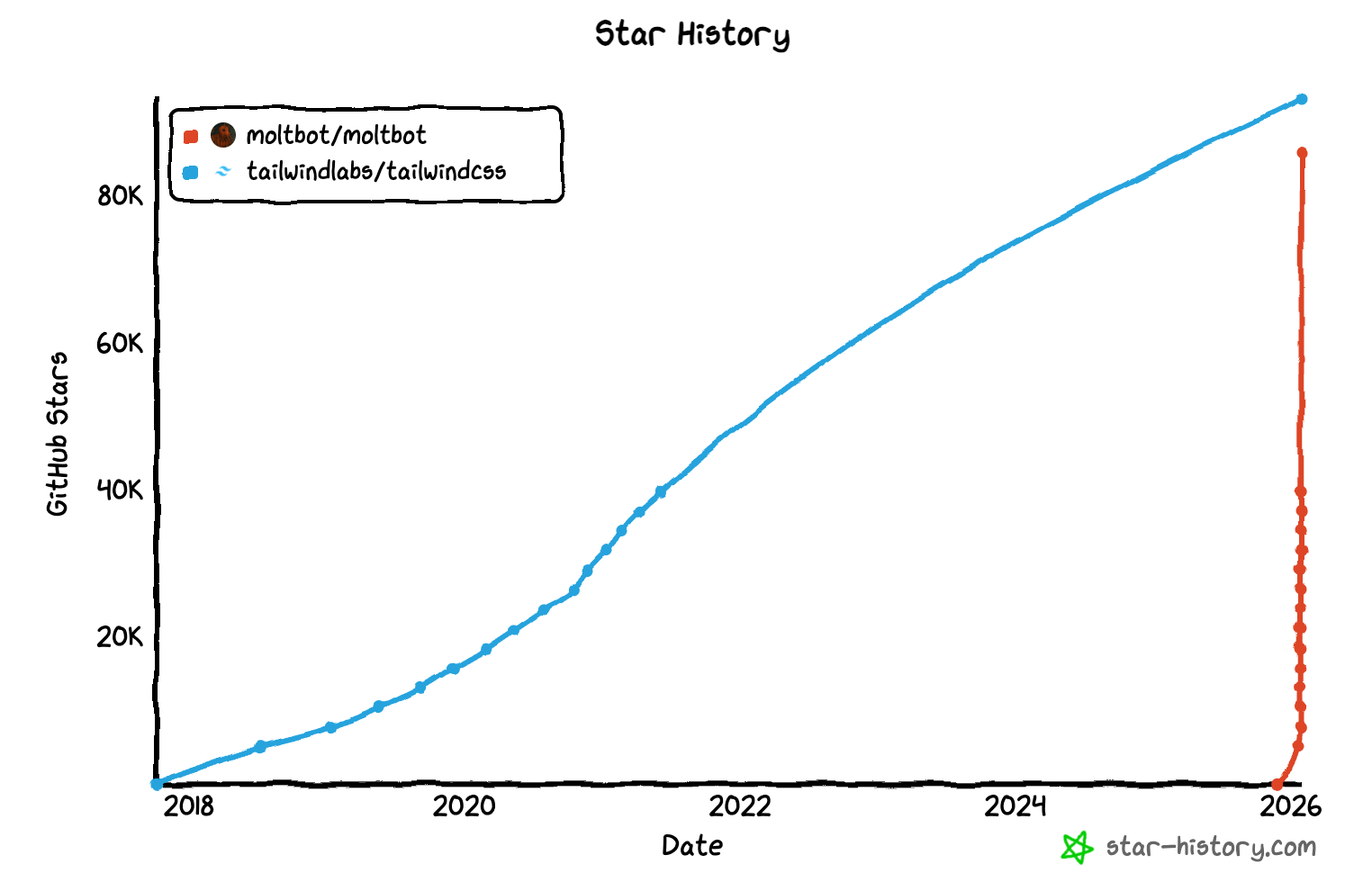
The project gained thousands of users after Peter added the agent to a Discord server with full access to his computer. The agent can now see his screen, manage home automation, and even call businesses to make reservations. The goal is to make the technology feel invisible. When the agent has access to your files and calendar, it acts like a resourceful friend.
The technology disappears. You just talk to a friend on your phone that is infinitely resourceful. You don't have to think about computation. That context blends away.
Hiding this complexity is the hardest part of the engineering process. When it is done correctly, the user experience feels magical.
The magic of building self-evolving AI agents
Peter describes the technical architecture of cloudbot as a system that primarily moves text between different shapes and platforms. While the project spans many messaging services like WhatsApp, Slack, and Discord, the underlying complexity is managed through plumbing. The true challenge in software development is not just writing the code but making the experience feel magical for the user. Peter focused on creating a one-liner setup that automates environment checks and guides the user through the process without them needing to think about technical details.
The difficulty is how do I make it so that it feels magical. I programmed the model to explain that it is now being born to create an identity and a soul where the values of the user are in. That is where the magic starts. They no longer think about talking to GPT. They are talking to a friend.
The system features a hatching process where the bot develops an identity, a soul, and a core emoji based on user interactions. These are maintained as evolving documents that the agent can tweak over time. This design allows the technology to blend into the background. Peter even implemented a feature where the agent can update its own configuration or fetch new features. This creates a highly productive environment for individual developers that differs significantly from traditional corporate settings.
Large companies often struggle to adopt AI with the same efficiency as individuals. This is because effective AI integration requires a complete redefinition of how a company operates. While a single developer can move quickly by wearing many hats, established corporate structures with rigid roles for engineers and managers create friction that slows down the adoption of these new tools.
Refactoring companies and codebases for the AI era
The software industry is shifting toward a model that requires fewer people but much higher individual agency. Success now belongs to people who have a strong product vision and the competency to handle multiple roles. This evolution suggests that companies could eventually operate with significantly fewer staff members. Most existing companies are not yet prepared to use AI successfully. They need to undergo a massive refactor of both their code and their internal structures.
The way code is written must also change. Peter explains that he no longer designs code purely for human utility. Instead, he optimizes the codebase so it is easy for an AI agent to understand. By reducing friction for these models, he can move much faster. The agent manages the specific implementation while Peter focuses on the overall architecture.
Everything has to be reshaped. Pull requests, I see them more as prompt requests now. Somebody opens a pull request, all I do is say thanks and I think about the feature. And then with my agent, we start off with the PR and then I will design the feature as I see fit.
The traditional feedback loop of commenting on code and waiting for tests to run is becoming obsolete. Instead of waiting for someone to context switch and respond to a review, Peter uses his agent to review and reshape the work immediately. He describes this process as weaving code into an existing structure. While the quality of individual pull requests has dropped because people rely too much on AI, the key is having a deep understanding of the design to steer the agent correctly.
Moving from code reviews to architectural discussions with AI agents
Traditional continuous integration feels less relevant when AI agents can run tests locally and instantly. Peter explains that he uses a process he calls gate, which includes linting, building, and running all tests before code is committed. This creates a wall or gate that ensures code quality without the ten minute wait typical of remote pipelines. If the tests pass locally with the agent, the code is merged immediately. While main might slip occasionally, the speed advantage of local execution outweighs the delay of waiting for a remote server.
The nature of collaboration and code review also changes significantly. Instead of reviewing individual lines of code, the focus shifts to architecture and developer taste. Peter describes a situation where a new feature for voice calling felt like it was becoming bloatware. Instead of merging the messy code, he used an AI tool to brainstorm how to weave the feature into a plugin architecture. This allows the team to focus on big decisions and the ick feeling of bad design rather than syntax.
I constantly tell it, look into this folder because I solved it there and I solved that there. And all the previous thinking I did to solve the problem. Well, AI is so good at this. Still to read the code and understand my ideas, I don't have to explain it again, or if I explain it again, I might make mistakes that wouldn't get across exactly the idea that I have in my head.
A powerful strategy for working with AI is referencing existing solutions within a project. By pointing the agent to specific folders where problems were solved previously, the AI can replicate the established logic and style. This prevents the need to re-explain complex ideas and reduces the risk of miscommunication. It allows for more sophisticated architectural shifts, such as building a plugin system inspired by other developers' successful implementations.
Hiring and skill development in the AI era
Finding the right developers today involves looking for people who are active on GitHub and love the game of coding. Learning to work with AI tools feels like learning a musical instrument. You have to keep trying new things to get better. At first, it can be frustrating, much like going to the gym for the first time. But you soon feel the improvements as your workflow gets faster. This progress makes the work addictive and fun. Peter mentions that he is working harder now than he did when running his own company. He stays motivated because the traction and the speed of development are so exciting.
The way you learn in this new world is by trying stuff. It very much feels like a game where you improve your skills as you get better. Like a music instrument, you have to keep trying that. I'm now this efficient and this fast. I think the other day I had 600 commits in a single day. This is completely nuts, and it works.
Right now, working in the open is a major opportunity for engineers. In a few years, this approach might be standard. For now, it is a way for developers to stand out by showing their skills and their ability to work with new technology. Success in this environment requires a mix of hard work and play to master the new tools.
Curiosity and the shift toward prompt-driven development
Entering the software engineering market today is harder than it used to be. Success requires being infinitely curious and building things to gain real experience. Writing a lot of code is no longer the primary goal. Instead, you can use an infinitely patient machine to explain complex systems and open-source projects. By asking why things were built a certain way, you gain a deeper system understanding. This kind of curiosity is something universities often fail to teach. It is usually discovered through the pain of solving real problems.
I would recommend them to be infinitely curious. You have an infinitely patient machine that is able to explain you all the things. You can ask all questions. Why was it built this way to gain system understanding? But it requires real curiosity and I don't think universities right now are set up to teach you that in a really good way.
New engineers have the advantage of being untainted by old habits. They use agents in ways experienced developers might not even consider because they do not know what is supposedly impossible. The standard building blocks of software development, like code reviews and manual onboarding, are changing. Peter now asks people to include their prompts with their pull requests. Reading the prompt provides a higher signal than reading the code because it shows the thinking process and the level of steering involved. Sometimes, a prompt request is even better than a feature request. If someone defines the details well in a prompt, an agent can build it immediately.
This shift also changes how products are structured. When a product is built by agents, it naturally follows the patterns and naming conventions that agents expect to see. This makes the codebase easier for other agents to navigate. In some cases, manual onboarding processes become secondary. Instead of writing a manual, you can give a user a specific prompt to run. The agent can then check out the repository, read the files, and configure everything automatically.
Finding joy in simple technology and disconnecting
Peter finds that a simple Android-powered photo stand provides more joy than the latest iPhone. Even though the technology is a bit clunky and cheap, the device allows him to display photos and receive images from friends through a dedicated email address. It serves as a constant reminder of happy moments without the complexity or distractions of modern high-end gadgets. Peter notes that he even has an iPhone 17 still in its box because the hassle of moving sims and setting it up offers no feelable benefit compared to the happiness he gets from his photo frame.
I bought the iPhone 17. I still haven't unpacked it because I just in my head I wanted it, but then I couldn't get around to it because it's just a hassle to move the sims around and basically no feelable benefit. But this little device gives me infinite joy.
To stay sane while working long hours, Peter prioritizes going to the gym and working with a coach. The most important part of this routine is leaving his phone in a locker to ensure a full hour of being in the moment without notifications. He also occasionally goes for walks without his phone, even though it can feel unsettling. He observes that phones have become so integrated into our lives that they feel like a part of the body.
It's almost like an organ by now. Your body knows where it is and if you don't know where your phone is, you freak out.
Rethinking software development with AI agents
Software development with AI shifts the focus from traditional pull requests to prompts. Peter Steinberger prefers thinking in prompts and suggests that sharing these prompts might become more important than merging code. In this new workflow, the AI provides prompt suggestions directly on platforms like GitHub, which can be more useful than a standard pull request.
The reason AI performs better at coding than writing is the ability to validate the work. Because code can be compiled and tested, developers can create a feedback loop where the AI runs the tests and checks the output. This closed loop is the secret to making AI system development successful.
The reason AI is so good at coding but often mediocre at writing is because you can validate code. You can compile it, run tests, and check the output. The secret to making AI system development work well is to design your system to close the loop and have the AI run the test.
While writing code manually is common, managing multiple AI agents at once is mentally more exhausting. This process requires a developer to juggle several parallel tasks, which can lead to a deeper state of flow but higher mental fatigue. A developer who understands code architecture can effectively transition into managing these AI tools. Although some AI-driven projects are experimental, the focus on review and validation will likely spread to production environments.
It is mentally more exhausting to juggle several AI agents in parallel than it was just to write code.