
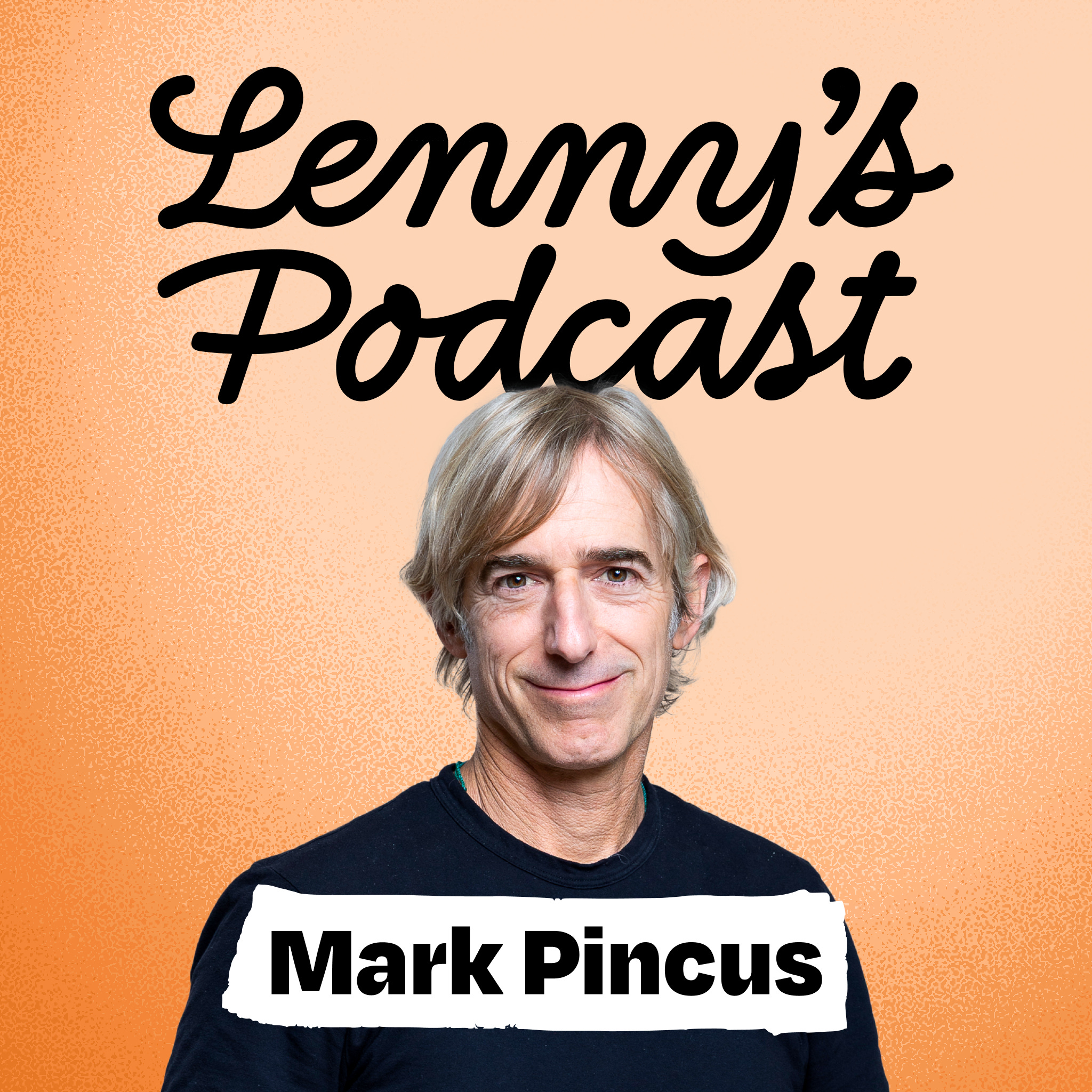

Mark Pincus is the founder of Zynga and the creator of massive hits like FarmVille and Words With Friends.
He shares his framework for building successful products by mastering proven ideas and focusing on small wins that lead to massive growth.
These principles help founders ignore the ego of pure originality to find the hidden patterns that create products people cannot live without.
Key takeaways
- If you are questioning whether a product is high quality, it likely is not. True success is unmistakable and feels like everything is working in unison.
- To reinvent social media, creators should focus on building the digital equivalent of a rowdy cocktail party where users feel a genuine sense of excitement and presence.
- Human instincts are right 95 percent of the time, but specific ideas are wrong 75 percent of the time.
- To successfully innovate, you must first master the proven elements of a product category before layering on refinements and one new concept.
- Moral arbitrage is the advantage gained by founders who are willing to copy proven ideas while others are held back by the ego of wanting to be purely original.
- Successful product development often follows a Proven Better New framework, which involves taking a successful concept and making it slightly better for the consumer.
- To build something truly massive, you must be humble enough to start with an embarrassingly small product that solves a specific use case.
- A startup's greatest advantage is the ability to pursue small, flaky ideas that do not yet look like a business, which is something large incumbents cannot afford to do.
- Hope is confidence without basis. Founders should use AI as a failure machine to test hundreds of ideas quickly and find true signal rather than betting on a single viable idea.
- High virality cannot save a product with poor retention. Tracking long-term metrics like day 365 retention and reciprocal social interactions is the only way to build an enduring company.
- If you have to ask whether your product is an 'A' idea, it is likely a 'B+' or lower. True signal feels like lightning in a bottle where you and your users are naturally addicted to the product.
- The current AI landscape is a lonely cocktail party. The next major social breakthrough will come from making agentic AI experiences socially productive and interactive.
- Management is the art of getting people to do the right thing when you are not in the room.
- The primary job of a CEO is to be right, as picking the right strategy or market matters more than perfect execution of the wrong idea.
- Focus on teaching children to be generative rather than consumptive by encouraging them to create and put new things into the world.
- Teach children that they are defined by their reactions to the world rather than the events that happen to them, which helps them avoid a victim mentality.
- An internet treasure is a service so fundamental that people cannot remember life before it or imagine life without it.
- The greatest ambition for a product creator is to build digital skyscrapers that the next generation cannot believe anyone ever lived without.
The instinct test and the future of social products
Success in product development often requires a counterintuitive approach to ambition. For those who are truly ambitious, trusting personal instincts is often more effective than following a traditional path. While instincts are usually correct, specific ideas are frequently wrong. Many founders make the mistake of heroically sticking with a losing idea for too long. A clear sign of a successful product is that the creator does not have to wonder if it is working. If there is any question about whether a product has reached a high level of quality, it likely has not. When a product truly has lightning in a bottle, the signal is undeniable and everything begins to work.
If you're asking whether or not your product is an A, it's not an A. When you have lightning in a bottle, when you have true signal, everything works.
A common trap for entrepreneurs is seeking validation from their peers rather than their users. True innovation happens when ambition is defined through the eyes of the consumer. Instead of trying to win awards or respect from other tech founders, creators should focus on winning the hearts of everyday users, such as nurses. This shift in perspective allows for a kind of moral arbitrage where the goal is utility and connection for the audience rather than status within the industry.
The current state of social media has lost its excitement, leading to a latent demand for something new. Many people now feel a sense of pride in avoiding social platforms because they do not feel like they are missing out on a party. To reinvent this space, builders should look for the digital version of a great cocktail party. A successful social app should feel rowdy and alive, creating an environment where people are genuinely glad to be present. While people are currently spending time with AI tools, these experiences often lack the communal energy found in a great social gathering.
We know it when we see a great cocktail party. You feel it. You're like, oh, I'm so glad I'm here. Today we're all hanging out on our Claude, on our GPT, but there's no cocktail party. My challenge to your listeners is figure out how to make it rowdy.
The Proven Better New framework for product success
Mark Pincus shares a core product philosophy called The Proven Better New. This framework relies on the idea that human instincts are usually right, but specific ideas are often wrong. Instincts are right about 95 percent of the time, while ideas fail 75 percent of the time. The goal is to isolate a strong instinct and then test many ideas around it without failing for the wrong reasons.
My rule of thumb is your instincts are right 95 percent of the time. Your ideas are wrong 75 percent, or at best, right 25 percent of the time. The framework takes that philosophy and says, let's isolate your innovation zone. Let's isolate that thing you have in your gut and test many ideas around that.
The first step is mastering the proven elements. This means identifying best of breed approaches that already work on a specific platform and copying them. For example, a new camera app should not try to reinvent basic camera controls or icons. Mark suggests that product creators need to earn the right to innovate by first getting a PhD in what is already proven. Even legendary designers can fail when they ignore proven standards, such as a first time user experience that requires too many clicks.
The next layer is making the product better. A better feature is something that 10 out of 10 existing users would immediately appreciate. These are usually small increments or pieces of polish, such as making a service free or removing a download requirement. Finally, the new element is the novel idea that gets people to try the product. This new idea is the most likely to fail, so it is important to have multiple new ideas ready to test.
We haven't earned the right to innovate on the camera until we are the world's leading PhD on the best mobile cameras that already exist. Better is usually very small increments and innovations and better is something that 10 out of 10 of your existing users would say, yes. What you think is better is called new. We usually are too ambitious on the new.
Using this framework acts like a time machine for founders. It allows them to avoid common mistakes, such as ignoring established user behaviors or onboarding flows. Success often comes from taking a behavior people already like and making it more accessible or social. Mark notes that being precise about what is proven on a specific platform is essential for success.
The moral arbitrage of copying in product design
Mark explains that product makers often feel a moral resistance to copying because it feels like cheating. He calls the act of overcoming this moral arbitrage. Many founders enter the field to be innovators and want to win respect from their peers. However, true ambition should be defined by the consumer. If the goal is to win the hearts and minds of users, a creator should be willing to take the best ideas from anywhere to serve them better.
If you define your ambition in the eyes of your consumer, not your peers, you're not trying to win awards and respect from your peers. You're trying to win the hearts and minds of nurses in Indiana. You're going to define innovation differently and you're not going to worry about whether you're taking the best ideas wherever you can find them if they are in service of giving her an experience that she loves more.
Most successful products are better versions of things that already existed. Even iconic products like the iPhone or Chrome are evolutions. Mark references the approach of Proven Better New. This involves finding a proven concept and making it slightly better. A great example is Craigslist. Craig Newmark spent two years adding photos because he wanted to ensure the change did not disrupt the existing user experience. He understood that people rely on pattern recognition to use products quickly.
There are two main paths for product development. One is wildcat drilling, where you start with a blank whiteboard and innovate from scratch. This is what Rovio did with Angry Birds after 44 failures. The other path is finding something already proven and refining it. OMG Pop followed this second path to create Draw Something. After an original idea failed, they looked at what was working and adopted the turn-based system from Words With Friends to create a hit.
The paradox of ambition in product development
Building massive products often requires starting in an embarrassingly small, humble place. Mark argues that being too ambitious or visionary at the beginning can lead to missing product market fit. Many successful franchises began with a non-ambitious premise, such as Facebook starting as a simple way for students to check each other out at Harvard. This creates a paradox where the more ambitious your ultimate goals are, the smaller and more humble you should be willing to start. Mark experienced this personally when his ambitious attempts with Tribe failed, leading him to found Zynga by creating a simple poker app on Facebook. This was a move many thought lacked dignity for a successful founder at the time.
I made a poker game. People thought I had no dignity. They were like, Mark, there's so much you could do in the world. But my ambition came down to a 1,000-foot altitude, not 100,000-foot. And that was the key to that being successful.
This humility is a significant advantage for startups compared to large incumbents or even successful multi-time founders. Large companies like Meta must pursue billion-dollar opportunities because their existing revenue is so high, whereas a startup has the freedom to follow small threads that might not look like a business yet. However, multi-time founders often have too much rope to hang themselves because it is too easy for them to raise capital against a big vision before finding product market fit. Real founder mode involves the courage to tell your team and investors when a current project isn't working, even if it has some traction.
We are ambitious. We're so ambitious that we're not going to hold on to a B+. Even if we could get funding, even if it has some traction, we have a North Star. We are not going to stop until we find product market fit against our North Star. And this isn't it.
The danger of hope and the importance of retention
There is a major difference between belief and hope. Hope is often just confidence without a basis, a prayer that is not founded in data or lived experience. Many teams continue development hoping that the next release will be magical, but the most successful product makers focus on collecting winnings rather than making bets. They should know they have a hit before they launch. This requires moving away from the concept of a Minimum Viable Product because the word viable is where false hope often originates.
The viable is the word we have to kill along with hope because viable is where hope comes from. If it is viable, it might make it. There is a difference between getting in the market early to learn and putting a product out that you believe is going to be a hit.
AI is a powerful tool that should be used as a failure machine. Instead of using it to build one idea in three months, it should be used to test 100 ideas in a day. It is often better to build a product completely wrong just to get signal than to spend months building the wrong thing correctly. Mark explains that teams should find the lowest possible cycled version of a product to get feedback. At Zynga, this meant testing new features directly on the game board to see how many people clicked before actually building the expansion.
Zynga succeeded by focusing on retention rather than just virality. Many viral companies are like sinking speedboats that try to outrun their leaks. Success comes from tracking long term metrics like day 365 retention. Mark used a metric called ASN, or active social network, to measure round trips between players. If a user had one reciprocal interaction, such as a gift sent and received, there was an 80 percent chance they would return the next month. This focus on connecting people through shared actions created enduring products.
We looked at how many round trips you had with a friend or another player, meaning you took a turn and they took a turn back. If you went from zero ASNs to one, there was an 80 percent chance we saw you again in the next month. If we got you to a four, there was an 80 percent chance we would see you 22 out of the next 30 days.
Reimagining social and identifying winning product ideas
Building a successful and durable consumer social app is incredibly difficult. Many people have stopped trying because nothing seems to be working or going viral anymore. Mark views this as a sign of latent demand. He looks for categories where there is high interest but the current experience is too difficult or expensive. When he started Zynga, gaming was a multi-billion dollar industry, but most adults found it too hard to play with friends. He succeeded by making games free, accessible, and quick to play.
I believed adults want to give themselves permission to play, but I gotta make it so accessible, so cheap in terms of what it asks for them. Free, not just free even, which it wasn't. It was $60 to go buy a game. So I made it free and I said, I'm going to make it a game you already know, 3 clicks and you're in.
Current social platforms like Instagram and TikTok often feel like eating empty calories. People even feel a sense of pride when they quit these apps. Mark compares social networks to a cocktail party. A great party provides valuable leads, whether those are new music, dates, or jobs. Early versions of Facebook and LinkedIn offered high social productivity, but they eventually shifted toward wasting user time to sell more ads. Right now, using AI agents feels like a lonely cocktail party. The major opportunity is to find a way to make these AI experiences social and rowdy.
If you want to reinvent social, look for where the cocktail is, or you could host, and then think about how is lead generation happening. Today we're all hanging out on our Claude, on our GPT, but there's no cocktail party. It's a quiet, lonely cocktail party like the web was before social networking.
It is also important to be intellectually honest about the quality of a product idea. Mark argues that if you have to ask if an idea is an A, it is probably a B+. True signal feels like lightning in a bottle where the metrics work and users are addicted. He recently pulled the plug on a project called .earth after four years and $25 million because it never reached true product market fit. Killing a B+ idea can be painful but necessary to find the space for an A idea.
Distribution is the biggest hurdle for new startups today because discovery is broken. Most users install zero new apps per month. AI is not yet a new hardware or interface platform, so founders are still competing in the crowded mobile and web ecosystem. Success requires baking distribution into the strategy from the start rather than hoping for word of mouth. Mark suggests looking at agentic services that were previously too expensive for humans to provide, such as a 24/7 personal travel agent, as the next frontier for consumer value.
Scaling through ownership and staying close to the metal
Mark believes that management is often a necessary evil for product makers. He arrived at his management principles through desperation because he does not enjoy managing people. To him, the goal of management is getting people to do the right thing when you are not in the room. One way to achieve this is by making everyone at the company a CEO. This means giving individuals a specific objective or hill to take, along with the operating control and budget to do it their own way. This approach is especially motivating for people who feel like expert witnesses. These are talented contributors who are close to the data but lack decision-making power. By making them CEOs of their own domains, they can finally prove their ideas are right.
All of management is just how do we get people to do the right thing when we are not in the room? So I was like, okay, if I give them a hill to take and if I make them a CEO, make them a real CEO, I mean, they have operating control, degrees of freedom to take that hill however they want.
Mark also advocates for staying close to the metal, which involves being deeply involved in minute product details. He suggests that the best product CEOs should not outsource the most important user experience decisions to their least experienced employees. Instead, they should be the first and last mile for the product. This often requires micromanagement, which Mark views as a positive tool for as long as it is sustainable. At one point, he held two hour standups for 50 people to ensure everyone was on track. To scale this personal touch, he suggests a teaching hospital model where staff sit in on meetings to absorb his approach. He also recommends hiring a technical assistant to follow the CEO for a year, effectively creating a mini-me who can eventually take on bigger roles.
We as founders need to be the first and last mile for the product. Our best use of our time is making these minute decisions that change the product user experience.
Ultimately, Mark argues that the most important job of a CEO is simply to be right. A great strategy in a good market is more valuable than perfect execution in a dead market. He prefers to hire misfits who are right over people with a perfect style who might be wrong about the direction of the product.
Parenting and education in the age of AI
The traditional model of mass-produced education is reaching its end. Schools were originally designed to create factory workers and then knowledge workers, but that era is over. Mark believes we need to shift from teaching children how to know answers to teaching them how to think critically. He encourages his children to look at the deeper context of what people say and to understand their underlying agendas or lived experiences.
I'm trying to teach them to ask better questions, not know more answers.
A major focus is encouraging kids to be generative rather than consumptive. This means finding ways to put something new into the world instead of being a passive consumer of content or experiences. Mark also emphasizes meeting children at their current level while treating them as fellow humans. By engaging with them at their specific altitude, you can often guide them toward sophisticated concepts that might seem beyond their years.
To pass down his values, Mark maintains a running document of life philosophies for his daughters. One core idea is that nothing is personal. If you assume a situation isn't a personal attack, you will likely handle it correctly even in the rare cases where it is. He also teaches them to avoid a victim mentality. The world happens around people, and their character is defined by their reactions rather than the events themselves.
We are defined by how we react to the world, not by the events that happen to us.
Building internet treasures for future generations
Finding a personal why can take a long time. For Mark, it took until age 41 to identify his purpose. This mission is to create an internet treasure. An internet treasure is a service so essential that people cannot remember life before it. It is a product that users cannot imagine living without.
What does our soul need to do before we die? What do I need to be working on and know that I gave everything I had against it? It is to build an internet treasure, which is a service we can't remember life before or imagine life without. I believe as product makers that that is the greatest ambition and the greatest thing that we can offer the world.
Product makers have a unique opportunity to build digital skyscrapers. These are treasures that the next generation will view as essential parts of existence. Sharing these philosophies and playbooks helps the entire craft of product making move forward. This collaborative learning allows everyone to improve the digital tools they offer the world.