
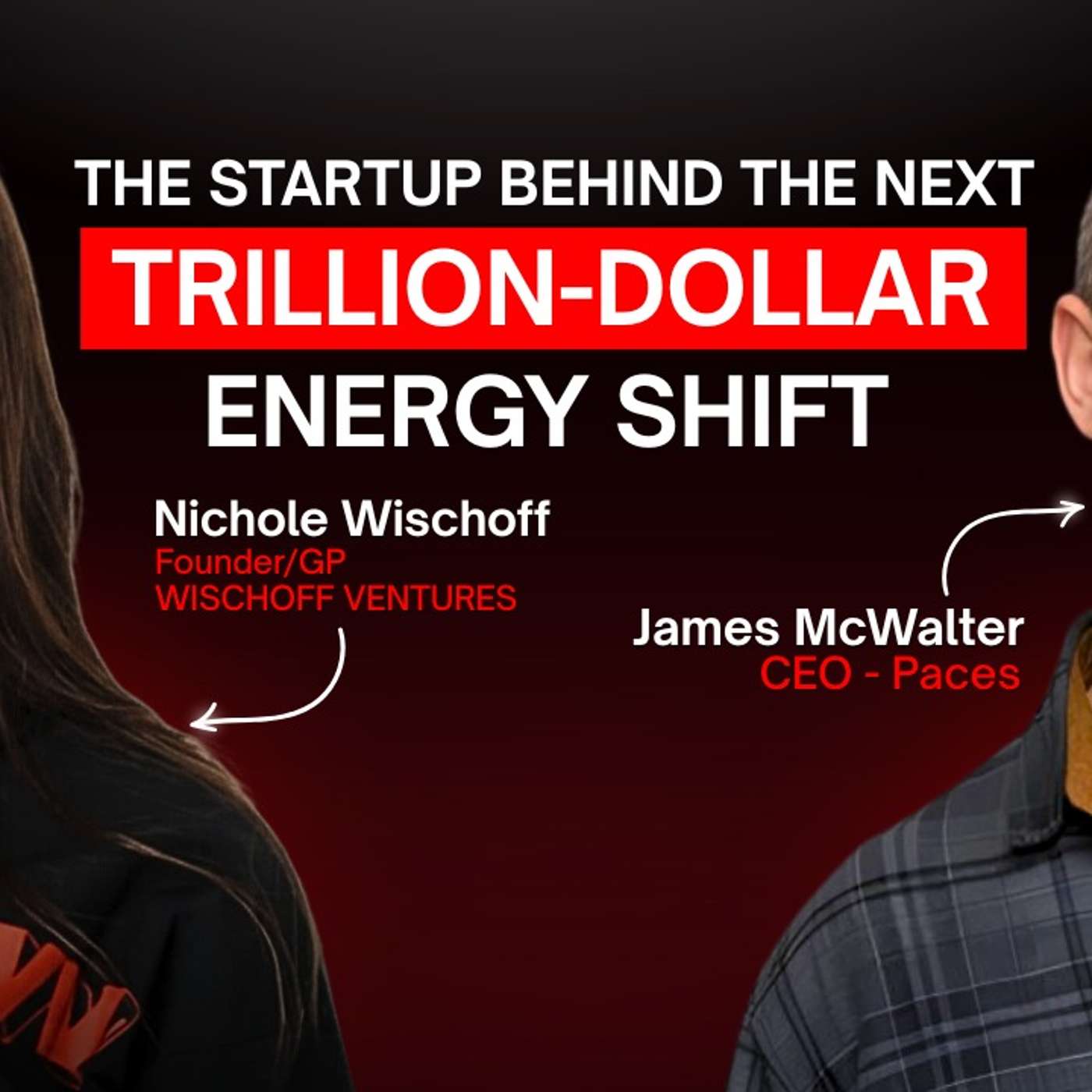

The founders of Paces explain how they use AI to navigate the 28,000 permitting jurisdictions across the United States.
They discuss how automating energy workflows helps developers bypass grid bottlenecks to build data centers and renewable projects in record time.
This technology is essential for meeting the massive power demands of the trillion dollar infrastructure boom.
Key takeaways
- The complexity of 28,000 US permitting jurisdictions can be overcome by using AI to automate the traditional development workflow.
- The primary value of Y Combinator is the intense speed pressure it places on founders, which is more important than just finding customers within the network.
- Electrification is forcing unrelated real estate types to compete for the same scarce resource: access to the electrical grid.
- The primary benefit of a startup accelerator is the social pressure to report progress every week.
- Founders can sustain growth by creating artificial pressure through regular investor updates and check-ins.
- Scaling a data product often requires starting with a very narrow niche, such as solar developers in a single state, before expanding based on customer demand.
- Using LLMs is essential for parsing 28,000 different permitting jurisdictions where local laws are unstructured and inconsistent.
- Speed is crucial for project profitability, so using AI to simulate utility systems can reduce power capacity discovery from months to just a few days.
- Utility connection deposits are being used as a throttle to manage demand, with some fees jumping from 200,000 dollars to 6.5 million dollars in less than a year.
- To overcome local opposition, data center developers can pair their projects with job-creating initiatives, such as using waste heat to power greenhouses.
- Speed is now the primary factor in energy decisions, causing many companies to deprioritize their decarbonization goals to meet immediate AI demand.
- Renewables offer a speed advantage over fossil fuels, as solar and batteries can be installed in months compared to a five-year wait for gas turbines.
- Unlimited capital can bypass supply chain delays, but starting from zero requires buying out existing supply at a significant premium.
- The electrical grid is a major bottleneck where scaling from 100 to 400 megawatts can increase wait times from six months to six years due to utility procurement hurdles.
- Founders should look past the crowded market of vertical AI and instead focus on the physical onshoring of hardware and energy infrastructure.
- Texas is a strategic choice for energy startups because it offers a much easier path for grid connection and asset certification compared to other states.
- As AI and robotics automate the technical workflow of infrastructure, the human edge shifts toward high-level decision making and relationship management.
- A billion dollar one person company is becoming possible in the energy sector by automating over 90 percent of the project development workflow.
- Traditional B2B SaaS models are breaking down, forcing startups to rethink their operations and move faster.
- Success in early-stage startups often comes from hungry individuals with fresh perspectives rather than those with decades of traditional experience.
The path to a one person billion dollar power company
The United States has 28,000 different permitting jurisdictions. This makes building infrastructure a very complex task. Paces has built a massive dataset to help navigate these requirements. This data infrastructure supports the idea of a one person billion dollar power company.
This concept follows a prediction by Sam Altman about the rise of startups run by a single individual. In this future, technology handles the heavy lifting of business operations.
We are moving to a world where data centers build data centers. And so we at Paces, we have already basically automated very, very large components of the development workflow.
The goal is to automate the difficult workflows involved in energy development. If one person can use AI and large datasets to manage work that used to require an entire department, the scale of productivity changes. Automation allows a small entity to function like a massive power company.
The value of speed pressure at Y Combinator
The most significant value of joining Y Combinator is the intense pressure to move quickly. While many believe the primary benefit is accessing a network of potential customers within the program, the real advantage is the pace of development. This speed pressure forces founders to make progress faster than they might on their own.
I think the most understated reason that folks get value from YC and the number one reason we got value because there was not any customers really that we could meet. The real thing came down to the speed pressure that you are on today.
Paces launched in early 2022 with a focus on renewable energy development for data centers. This timing was critical, as it occurred just before the massive surge in AI technology. Starting early allowed the team to establish a foundation in the energy sector before the demand for data center power increased significantly.
The growing competition for grid access
A background in tech and data science led to an interest in solving business problems through AI. While exploring the decarbonization of agriculture, it became clear that many soil carbon ideas were not suitable for venture backing. However, this research connected the speaker with developers building large-scale power projects on farms in the American Midwest. These conversations revealed the specific constraints that dictate where energy projects are built and why certain remote locations are prioritized over cities.
As more parts of the economy electrify, you will have these historically non competitive real estate asset classes all competing for scarce resources primarily due to access to the grid.
A new thesis emerged centered on the competition for grid access. As the economy electrifies, different types of real estate that never previously competed are now vying for the same limited resources. This issue is compounded by the fact that most power projects are developed using manual and low-tech processes. The contrast between the critical need for energy infrastructure and the slow, outdated methods used to build it creates a significant bottleneck.
The value of speed pressure in startup growth
Many founders join Y Combinator for the brand and the network. The most important value is actually the intense speed pressure. This pressure forces teams to make hard decisions. It makes them move faster than they would in any other setting.
The real thing came down to the speed pressure that you are under. You end up doing a set of things that you would probably in any other context not do in order to force your way into actually taking hard decisions and moving faster.
Comparing progress with other startups is a strong motivator. Seeing peers grow their revenue every week creates a sense of urgency. It is difficult to report zero progress multiple weeks in a row. This environment is like a hothouse for growth. It is helpful to recreate this pressure after the program ends. Regular updates to investors can help keep the same fast pace.
Building a national dataset for power and permitting
The product started with a very narrow focus on solar developers in upstate New York who were building small projects. This focus lasted for the first few months until the business reached a milestone in recurring revenue. Growth happened through customer requests. When a client asked for data in a new state like Illinois, they were offered a contract with a six week deadline. This method helped the team slowly build a data platform that now covers power and permitting for the entire United States.
We started super narrow solar developers upstate New York, building projects below 5 megawatts. And that was all we focused on for the first like three to four months. And we got our first few customers. We got to about $100,000 in annual recurring revenue with that work.
Gathering this information is difficult because data is geographically segmented and often regulated. There are 28,000 different permitting jurisdictions across the country. Many of these jurisdictions are in rural areas where projects are built in the middle of nowhere. Building a comprehensive dataset required a year of work just to get access to regulated utility data and the creation of a large data operations team.
Technology plays a major role in processing these records. The team uses LLMs to parse local legislation and zoning maps which can be hundreds of pages long. These documents are inconsistent. A single letter might mean prohibited on one page and permitted on another. Using AI to interpret these nuances is necessary because every jurisdiction writes its own rules from scratch.
We have to build all these internal tools using LLMs to parse these textual data. None of them are the same. It is not like every single jurisdiction in the country just writes it from scratch. We have to do a ton of sophisticated LLM based work just to get the data collection to make sense.
Accelerating power capacity discovery for data centers
Finding power for data centers used to involve simple phone calls to utilities. A developer could check a substation and get a verbal confirmation about capacity within a week or two. That environment has changed completely. The massive demand from data centers has overwhelmed utilities, particularly in major markets. What used to be a quick verbal check now takes months because internal processes are bogged down. Even if a utility gives a verbal answer, it often takes three months to respond, while a formal study can take seven.
Data centers have just completely changed the game. You have these tier 1, 2 and 3 markets where the utilities are absolutely overwhelmed. Now their internal process to answer that question without going through the formal study process is something like three months.
Timing is everything in project development. The internal rate of return for these projects is extremely sensitive to delays. A project that makes a high profit but takes an extra four years to finish can be a disaster. It is often better to have a smaller upside with a faster turnaround. To solve this, new internal tools use restricted datasets and AI software to simulate how utility systems work. This allows developers to estimate capacity at specific substations for today and several years into the future.
This actually allows us to say, hey, at this substation there is capacity, 50 megawatts today, 80 megawatts next year and 400 megawatts in three years. It is something that we can turn around in a couple of days versus waiting weeks, months or years for a utility.
The rising cost and political complexity of power connections
The cost of securing power studies and grid connections has reached staggering levels. While some utilities used to offer these services for free or at a low cost, fees in places like the Tennessee Valley Authority have climbed to 250,000 dollars. In certain regions of Texas, the deposit required for a study queue surged from 200,000 dollars to over 6 million dollars in just a few months. Utilities are raising these prices largely to manage an overwhelming volume of requests from bitcoin miners and AI data center developers. These utility teams often lack the technological tools or staff size to handle the current demand. They use high fees as a way to reduce the number of projects in their queue.
Encore territory in Texas is now 6.5 million dollars for your deposit. It was 200,000 dollars in May and now it is 6.5 million dollars. Utilities take two years to make a decision usually. So you have all these things compound where they are going to continue to up the prices of these deposits in order to actually just reduce the amount of volume.
Beyond the financial hurdles, data centers face significant political and social pushback. Unlike traditional industrial projects, data centers consume vast amounts of electricity while providing relatively few jobs. This discrepancy makes local governments and residents wary. To navigate this, developers should engage with economic development groups within utilities. These groups can offer insights into local concerns. For instance, in one state, developers are encouraged to use waste heat from data centers to power adjacent greenhouses. This approach preserves agricultural interests and creates the jobs that local communities demand, helping projects move through the permitting process more smoothly.
Speed and sustainability in data center energy
The main driver for energy decisions today is speed. Many companies once focused on clean energy goals. Now, the rush to meet AI demand has changed priorities. Most tech giants have moved their decarbonization teams to the background. Google is an outlier. They still make hard choices to stay clean, even if it means more flexible power loads.
Solar energy and batteries are the quickest to build. You can get solar panels and batteries in about six months. In contrast, gas turbines now have a five year wait. The challenge is uptime. Solar only provides power about 22% of the time. Natural gas and nuclear plants offer about 80% uptime. Data centers need constant power, so they require a mix of these sources.
The number one thing for all of this is speed. Even if you are trying to promote as clean an energy transition as possible, saying that this type of power source is cleaner doesn't really matter anymore. It really mattered two years ago. Now, everyone has moved away from that and said they will figure out decarbonization in six years.
A system can use 80% renewables and still be fast and affordable. This approach can cut carbon emissions by 90%. Natural gas is still vital for stability and backup. However, developers do not have to choose between speed and being green. Using even a small amount of renewables can lower emissions significantly.
Capital and infrastructure bottlenecks in energy procurement
The primary bottleneck in current supply chains is capital at the correct development stage. Unlimited capital can solve almost any problem today. For example, projects like the XAI campus and the Crusoe project in Abilene, Texas, were built and energized in remarkably short timeframes. These successes happened because the teams already secured the necessary technology before breaking ground.
If you have unlimited capital at unlimited prices, everything can be solved today.
Starting from zero is much more difficult and expensive. To move quickly without pre-existing equipment, a developer must buy someone else's supply at a premium. Beyond procurement, the electrical grid poses significant challenges. A utility might offer a 100 megawatt connection in six months, yet require six years for a 400 megawatt connection. This delay often occurs because small or rural utilities lack the staff or procurement history to order large transformers. Success requires an obsession with timing each stage of a project to create a positive compounding effect.
The lesson with all this is to get absolutely obsessive with timing each stage right. If a stage that took nine days could take one day, you can get into the next stage faster.
The shift toward hardware onshoring and novel energy
Startups should reconsider their focus on generic artificial intelligence. There are already dozens of large companies building the same vertical AI models. A more valuable direction for new founders is to look at hardware and the onshoring of physical technology. Companies like Heron Power and Redwood Materials are already making strides in this area. Redwood Materials, for instance, utilizes the expertise of former Tesla employees to build and onshore massive parts of the technology stack. It is a necessary shift to move away from software and toward the physical components that power our world.
I would love less startups to be looking at the generic 57th AI version of vertical AI thing that there's already 50 companies that are very big doing and more really looking at hardware and onshoring of hardware.
A comprehensive look into the electric tech stack can be found in the essay titled The Electric Slide by Patrick McCormack and Sam D'Amico. It provides a thorough walkthrough of the infrastructure needed for onshoring technology. For those developing novel energy projects, the primary challenges are certifying equipment and connecting it to the power grid. When it comes to deploying these real world assets, Texas stands out as a preferred location because the regulatory and connection processes are much simpler than in other regions.
It is absolutely fascinating working through how do you certify, how do you connect to the grid. Always do it in Texas because it is way easier to do these things in Texas versus other places.
The rise of the one person billion dollar power company
Sam Altman recently predicted the first billion dollar one person tech startup. This concept is now moving into the physical world of energy and infrastructure. AI is beginning to build its own underlying deployment systems. At Paces, the development workflow for building projects is already 75 to 80 percent automated. This figure is expected to reach the high 90s within the next year due to technical breakthroughs.
AI is building the actual underlying infrastructure for its own deployment. If you were trying to build a project, we have automated maybe 75, 80 percent of what human work would necessitate. We will be at the high 90s in the next year.
When most of the technical workflow is automated, the competitive edge shifts. Humans remain superior in decision making, capital allocation, and building relationships. Knowing a local mayor or a utility provider becomes more important when the friction of the technical stack is removed. The future of development will rely on these human elements while robotics and software handle the physical deployment and planning.
Rethinking startup models and hiring for AI
Traditional B2B SaaS models are no longer the standard for how to run a startup. The current environment requires a complete rethinking of these old frameworks to prioritize speed and innovation. James suggests that at the early stage, it is more important to move fast and challenge existing norms than to follow a traditional playbook.
The old B2B SaaS models are just all breaking down for how you run a startup. We don't need 30 years of experience. We want folks who are really, really hungry and are thinking in new ways and are applying these tools in their day to day.
When building a team, a fresh perspective is often more valuable than decades of industry experience. James looks for individuals who are hungry to learn and are already integrating AI tools into their work. This shift in hiring values excitement and a unique perspective over traditional credentials.